Mississippi Outdoors
3704 Humphreys County Canada Goose Hunt, Sardis Lake Crappie Fishing
9/26/2026 | 26m 46sVideo has Closed Captions
We hunt Canada geese in Humphreys County, then head to Sardis Lake for crappie fishing.
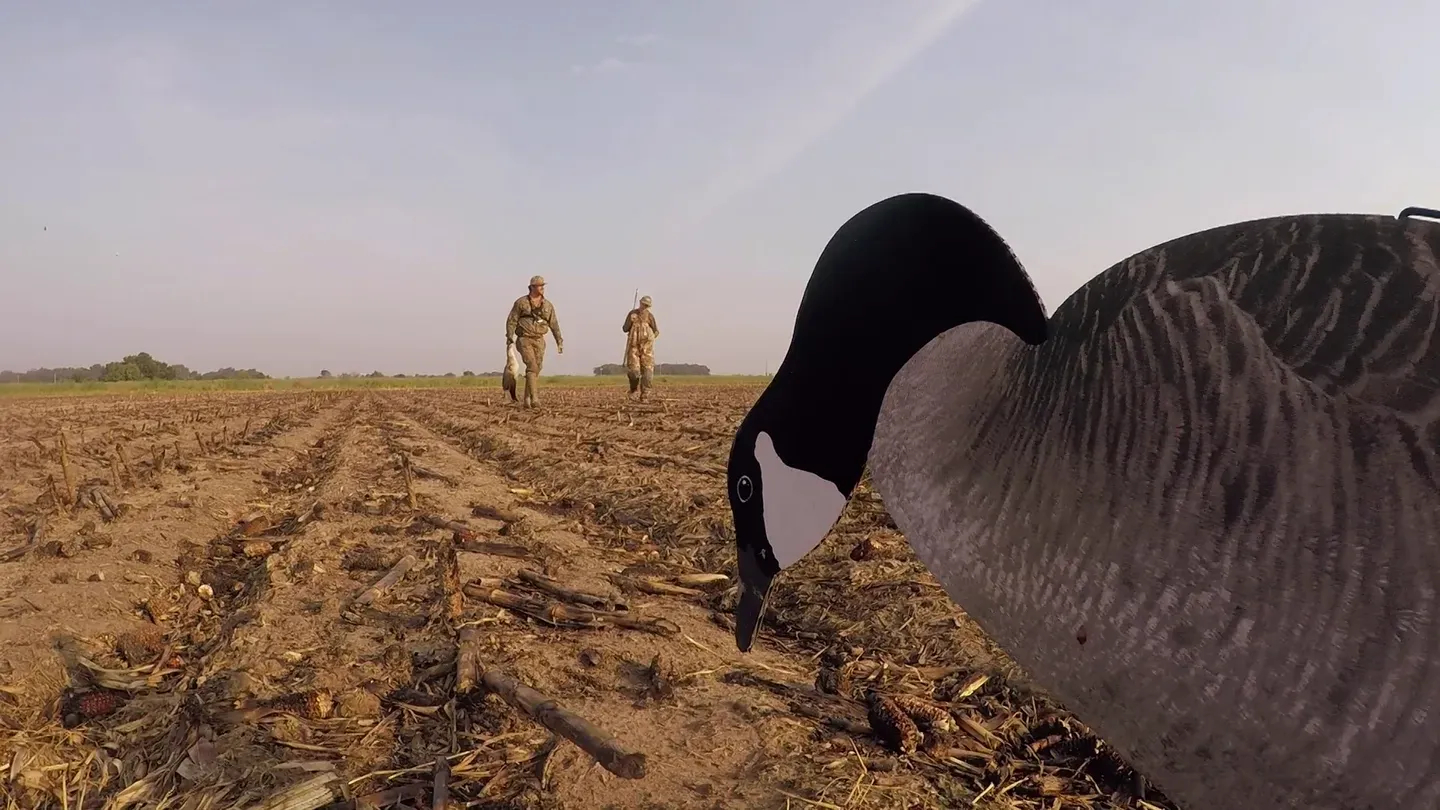
We head to Humphreys County with Chris McCurdy for an early-season Canada goose hunt in the Mississippi Delta. Then, we travel to Sardis Lake in Lafayette County for crappie fishing with Bob Gault, casting swimbaits and using LiveScope to target fish on one of the country’s top crappie lakes.
Problems playing video? | Closed Captioning Feedback
Problems playing video? | Closed Captioning Feedback
Mississippi Outdoors is a local public television program presented by mpb
Mississippi Outdoors
3704 Humphreys County Canada Goose Hunt, Sardis Lake Crappie Fishing
9/26/2026 | 26m 46sVideo has Closed Captions
We head to Humphreys County with Chris McCurdy for an early-season Canada goose hunt in the Mississippi Delta. Then, we travel to Sardis Lake in Lafayette County for crappie fishing with Bob Gault, casting swimbaits and using LiveScope to target fish on one of the country’s top crappie lakes.
Problems playing video? | Closed Captioning Feedback
Where to Watch Mississippi Outdoors
Mississippi Outdoors is available to stream on pbs.org and the PBS app.
Providing Support for PBS.org
Learn Moreabout PBS online sponsorship(calm country music) ♪ Riding through the Bayou, heading for the sky blue ♪ ♪ Back out on the trail again and again ♪ ♪ Talking and hunting and fishing the land ♪ ♪ Time is time well spent ♪ ♪ We'll take you through the delta ♪ ♪ Down through the great wide shore ♪ ♪ There's so much to see and do Mississippi Outdoors ♪ ♪ Mississippi Outdoors ♪ ♪ The great outdoors ♪ - [Narrator] "Mississippi Outdoors" is brought to you in part by the foundation for Wildlife Fisheries Parks and Marine.
(calm country music) - Welcome to "Mississippi Outdoors."
I'm Amanda Mills.
- And I'm Kevin Meacham.
Thanks for joining us.
- In our first story, we're headed to Humphreys County.
- Amanda and I are going on an early season Canada goose hunt.
- Let's go.
(cheerful country music) (upbeat music) (upbeat music continues) This morning we're in Humphreys County with Chris McCurdy and we've done this hunt before, Chris, a couple years ago.
- I think it was two years ago.
- And if it's anything like that was, it's going to be really good.
- We hope so.
The geese have definitely been in here.
- Yeah, you sent us a video.
So they coming from the west?
- Yes, coming from the west over some ponds.
I guess they roosted on some catfish ponds.
- Okay.
- To our west and so we have a southwest wind today.
- So they should circle in and come right over us.
At least, won't have the sun in their eyes, that's a good thing.
- That's a good thing.
- So we have the decoys out, ready to go?
- Yep, we're ready to go.
Yesterday morning they came in, I would say around 7:15.
- Oh, okay.
- It's when they really started coming.
So it's going to be plenty of groups coming.
And I really think they'll work the decoys better if the sun gets up and you know- - Gotcha.
- Got a little bit more light on the decoys.
- Well, last time we were in lay down blinds, but I noticed this time we're actually set up in the ditch and- - A-frames and some burlap cover.
Just worked out that anytime you got a good little depression right here - - It helps the hide.
- It helps the hide a lot.
Now, the hide's really the most important part of this whole setup.
- So this morning we got decoys on both sides of the ditch.
So hoping the geese kind of circle in and come over and shoot.
We don't know if we're going to shoot behind us or in front of us.
We'll have to figure that out.
- That's good thing about being in a setup like this, you can shoot both directions.
- That's right.
- Versus a lay down, you're pretty much, you know, limited to where- - Yeah, last time we were in the lay downs, we kept moving because the wing kept shifting so that's the thing about this time of year.
You don't ever know about this wind.
- The geese like to kind of come over the decoys, and look at them and then turn back into the - - That's right.
- Before they land.
- I'm ready.
Opening season here in Mississippi.
Let's get them.
- It's my first hunt of the year.
(gentle music) Be respectful who's next to you.
Let's try to keep it, you know.
- [Kevin] Gotcha, yeah.
- We're not shooting over anybody's heads.
I mean, there'll be, I think, plenty of opportunity, if we see how they're doing, they're doing it on one end better, then we'll move around, make sure everybody gets some shooting.
Paper on the ends, help the dog out.
The dog will be getting some.
We'll be getting others.
- Yeah, my dog's out of shape.
This is his first time.
(group laughs) I plan on at least having 50 something, He ain't going to pick out 50, so we have to have a few people.
(gentle music) (gentle music continues) - Y'all got snakes up here?.
(hunter laughs) (gentle music) (Chris honks) (geese honk) (Chris honks) (guns fire) (indistinct) - [Hunter] Right here.
Right to the right.
(Chris honks) (indistinct) (Chris honks) - [Hunter] You want me to shoot him, McCurdy?
(gun fires) I didn't want to shoot.
I really didn't want to shoot over his head.
I didn't want to shoot over his head.
- [Hunter] I don't want to hear no excuses.
Those were killable.
- So years ago, Mississippi introduced Canada geese and their populations have flourished ever since.
And now we have established a pretty good residential population.
When I talk about residential Canada geese, I'm talking about geese that are born and raised here in Mississippi, and spend almost their entire life here in Mississippi.
They don't migrate south for the winter like you would think about the more northern migrant Canada geese.
(geese honk) Every year the geese will nest and they'll have a clutch size up to about five, eggs per clutch.
And those eggs will hatch sometime in April or early May.
(geese honk) (gun fires) - Oh, you got him.
- I don't think that was mine.
(upbeat music) (gun fires) (hunter honks) - [Kevin] I almost think we need to be in that ditch.
- That's what I'm saying.
They do that time for two more, we're going to get in that ditch.
Okay, we'll get in that other ditch.
Y'all going to get one more group.
- [Kevin] I'm pretty confident that the other ditch would be great.
- [Chris] It's deep.
I think the vote is, let's move to the ditch.
Right now.
I might sit back here.
I would just take my chair.
- Shells.
- The shells.
- Don't run with the wind.
- Okay.
(hunter honks) (gun fires) - I'm about to call the coroner.
(Chris honks) (Chris honks) (Chris honks) - Get 'em.
(gun fires) (geese honk) (gun fires) (Chris honks) (gun fires) - [Chris] All right, we need to pick up geese.
(upbeat music) - Right here.
(geese honk) (hunter honks) (gun fires) - So over the years, the population has increased.
They've moved from kind of that rural area to the suburban and these urban areas.
Think about your parks, golf courses, or homeowners associations that have ponds.
We have an increased number of human conflict there.
And also there's situations where the geese become aggressive and they will show aggression towards people as well as people's pets and things like that.
During the fall, that's the time of the year when these geese kind of start using different habitat types.
You know, start looking for feeding areas.
They're looking for areas that are, like harvested agricultural crop such as corn or soybeans.
Mississippi does offer a early September goose season and it runs from September 1st to September 30th.
You can harvest up to five Canada geese per day.
With a little bit of scouting and pinpointing what habitats they're using throughout the day, you can pattern their movements, and you're going to set yourself up for a pretty successful hunt that way.
(guns fire) - Heads up for this one.
They're killing McCurdy behind us.
- I didn't have my gun.
I don't want to drop it.
- Are they dead out there?
- I don't know.
- They ain't healthy.
(upbeat music) (upbeat music continues) - [Cameraman] You shot any this morning?
- I have.
I've shot at a few and I think I've gotten two.
Maybe.
- So why'd we move?
- Well, typical waterfowl hunting, it never goes to plan.
You always want to be at the other spot.
And I've said this before on video, but there's only two rules to duck hunting, and they apply for goose hunting as well.
Number one rule is be where the geese want to be.
Number two rule is don't forget rule number one.
And that's basically what it is.
So you watch the first couple of groups, see where they want to be, adjust for the wind, the sun in your eyes and they kind of follow a pattern after that, but it's just a, it's kind of a crap shoot with the waterfowls.
But if you're in a spot, you in the game.
But if you out of the spot, you're just a spectator.
(geese honk) Single, single right here.
(gun fires) - There we go.
- Oh, man.
- Get 'em.
(gun fires) - [Kevin] There we go.
(bright music) (gun fires) - [Hunter] Good girl.
We're obviously fanatics.
- Yeah, oh yeah.
- All we had was (indistinct) Granddaddy always had Irish spring.
I felt like a grown man when I took a shower over there.
- We in the money, I think.
You never know.
They might come in this next time and go behind us.
Here they come.
All right, we got a big group coming in from the east, which is most of them are coming from the southeast, but they right here.
Oh yeah, this is going to be fun right here.
(geese honk) (gun fires) - That's how it's supposed to go down right there.
- I know I got a couple.
I might've got the third one too.
- Oh yeah, that was the one I was worried about.
- Somebody get a broom It's a mess out here.
(Kevin laughs) - For more information about residential Canada geese go to our website mdwfp.com and check out our waterfowl program webpage for more information.
- Kevin, that was fun.
- Yes, it was.
We almost got our whole limit.
- Yeah, we did pretty good.
- You even shot.
- A lot.
- I know, you shot the first goose of the morning.
- Well, you know.
If you find yourself outdoors, come on down to the Mississippi Delta.
- Yeah, right here in Inverness, Mississippi.
Little secret spot.
(bright music) - In our next story, we're headed to Lafayette County.
- The Outdoors crew's going crappie fishing at Sardis Lake.
(gentle music) (upbeat music) - [Angler] Come on, buddy, come on.
(upbeat music) (gentle music) (gentle music continues) Sardis Lake is nationally recognized as one of the top crappie lakes in the country.
Join me and my good friend Bob Gault as we go crappie casting today on Sardis Lake.
(gentle music) Bob, what are we looking for?
You've been doing this a lot.
What are we looking for out here?
- The fish have somewhat started to move out to more of a summertime pattern.
Little deeper water.
The water's cleared up, - Yeah.
- which has made them be a little deeper than they were.
- When you say deep, what depth are we going to be looking for?
- We're going to be looking in that 15 to 20 foot range today.
How deep are the crappie going to be?
- Well, they're all depths.
Ideally, where we like to find them is that in that five to 10 foot range in that 15 to 20 foot depth.
- Okay, so we're fishing deep, but the crappie is suspended, post-fawn, the water's clear.
So we're not trolling, we're not jigging.
We're actually going to be casting little baby swim baits for these fish.
So looking forward to getting started.
You know, what I really like about this kind of fishing is it reminds me of bass fishing.
Pretty simple setup.
This is a seven foot one piece B'n'M ultralight spinning rod.
Size 20 spinning reel, eight pound test line.
I think this is a quarter ounce head with just a baby, little baby slab hunter swim bait.
Shad colored.
We're finding these fish with live scope.
We're casting right to them and hopefully, we'll be able to show you what it looks like on the screen and you'll see these fish come up and hit these swim baits.
That's a good one.
- Yeah, that's a good one.
- Boy, I tell you what, it's not easy throwing into the wind either.
- You're going right down.
- Yeah, yeah.
- There he comes.
- See, he come off, he come off.
Dang, that wasn't good.
- Well there he is up there.
- If you can.
(indistinct) I know that.
Where'd he go?
There you go, get him.
- Well, he's got him.
- Yeah, you fixing to get cattywampus.
- Yep.
(Larry laughs) - Oh he's swimming now.
- Yeah.
- He said I'm out of here.
I'm going to see him up here.
(bright music) - You changing baits on me?
- Oh, a little heavier head.
That's a 3/16 ounce head.
The fish are a litle deeper and obviously the wind is blowing more than we would prefer.
And this is a little heavier head quarter ounce.
It'll get down to the fish quicker.
We'll see if that makes a difference.
(bright music) Here he is.
- Got him?
- Yeah, I don't know what I got, Scooter.
Little old bitty feller.
- Man, he ain't that little.
Let's put it this way, he's a lot, he's bigger than some I've been catching.
(Larry laughs) This lake's full of six and eight inch fish.
- Not the size we're looking for, but it's a good start.
The wind is making things problematic on us, but we got to start somewhere.
The fish here have got to be 12 inches.
And that's a big old crappie.
So hopefully we're going to be able to We have to make a move to get out of the wind.
But hopefully we're going to be able to get on some better fish, especially if the wind delay a little bit.
Catch some good ones.
Golly, Bob, that was perfect.
You did good.
Get him.
Spot lock it.
- I think it's easier for me to try to stay on the fish and you to cast.
- We're going to give him another chance, Scooter.
- [Scooter] Okay.
- Well.
(bright music) Oh Larry, Larry, Larry.
No.
Dang, that's tough.
- He blew me off of it.
- That's all right.
(bright music) There he is.
Good luck.
All I can tell you.
(bright music) - Right there at 15.
Here he comes.
Fish on.
- Fish on.
Can you see?
Why do some of them do that?
- I don't know.
(bright music) Keeper.
Close to it.
- In the top of the mouth too.
He's been eating good.
Uh-oh.
- [Bob] He's probably not quite a keeper, but.
- [Larry] Nope, he is 11 and a half.
Come on, got to be 12.
- Let's go see if we can get out of this wind a little bit on around the bend.
(bright music) - Oh, good pick, good pick.
(gentle music) - Is it a crappie?
- Put it on spot lock.
(gentle music) - That is a Sardis crappie.
That is a big crappie right there.
- Looks like a drum.
- Say what?
- [Bob] I said it looks like a drum, he's so big.
- [Larry] He was so big I wasn't sure.
Don't have to measure that one, do we?
(gentle music) - One pound, eight ounces.
- Sweet.
Yeah, nice one.
Spot lock.
(gentle music) - What you're looking for with the crappie is when you see one out here floating and he just kind of sits still.
Most of the time when you see one of these zip across the screen or something, it's probably a white bass or something like that.
We call them floaters.
Just kind of sits there and you float your bait by him and- - And one thing to know, and I'm no expert at this, but what I have found fishing with Bob and other people is you've got to keep that bait.
You always taught growing up, keep your bait above the fish, the crappie.
Even growing up fishing at Eagle Lake, we fish with quarks.
You wanted that minnow above the crappie.
They will not, very seldom will feed down.
They will feed up.
They will not feed down.
So you want to keep that bait just above them and they'll come up and get it.
- [Bob] Come up.
(gentle music) - You want me to check him?
(Larry laughs) (gentle music) Scooter, did you get that?
- Look at this.
- He's over 12.
- Bless you.
- That's a good keeper.
- Yeah, that's the size I really like to keep to eat.
You see my bait dropping right down on top of it there.
See, the fish just kind of swarming all around it.
There.
(gentle music) - [Larry] Good?
Looks like it.
- [Bob] Well, he's pulling pretty good.
- Yeah.
- These fish are so healthy.
I mean, just looking.
Hadn't missed any meals, that's for sure.
(upbeat music) - Good golly, that is a good.
- Got tarp in here.
(upbeat music) There's a tote.
- All right, Scooter.
Oh, lookey there.
Come off just in time.
Get you some of that.
(upbeat music) (upbeat music continues) Another keeper.
(upbeat music) - Oh my goodness.
- There's the line.
16th of an inch saves his life.
- Well, I say that's crappie.
I don't know.
Oh, yeah, yeah, that's a good one.
Coming in.
Big old black crappie.
There we go.
- I caught 10 of those out of these two.
- Yeah.
- No, nine.
I had nine out of these.
Saturday.
- That's a good fish to end the day on right there.
Sardis Lake crappie post-fawn casting swim baits.
The next time you find yourself outdoors, get you a live scope and some baby minnows, some spinning rod, come out here, catch you some of these like this.
(gentle music) Here you go.
- Hey, that's all the time we have for this week.
Thanks for sharing your time with us as we continue to take part in this great sport of hunting and fishing right here in Mississippi.
- Join us again next time for more exciting adventures.
Until then, I'm Amanda Mills.
- And I'm Kevin Meacham.
See you outdoors.
- See you outdoors.
♪ Riding through the Bayou, heading for the sky blue ♪ ♪ Back out on the trail again and again ♪ ♪ Talking and hunting and fishing the land ♪ ♪ Time is time well spent ♪ ♪ We'll take you to the delta ♪ ♪ Down to the great wide shore ♪ ♪ There's so much to see and do Mississippi Outdoors ♪ ♪ Mississippi Outdoors ♪ ♪ The great outdoors ♪ (soft music) (soft music continues)
- Science and Nature

Miles O'Brien travels the world searching for solutions to today’s most urgent challenges.










 Recently Added

Support for PBS provided by:
Mississippi Outdoors is a local public television program presented by mpb