
Breaking the Deadlock: AI: Who's In Control?
10/27/2026 | 54m 24sVideo has Closed Captions
As AI advances, who will control whom: people or technology?
As AI becomes woven into daily life, Americans face a choice: control the technology, or be controlled by it. Can its benefits outweigh the costs to jobs, privacy, politics, and our sense of humanity? Through a series of hypothetical dilemmas, leaders in tech, culture, politics, and journalism debate AI’s ethical challenges, seeking not consensus, but a shared understanding of what’s at stake.
Problems playing video? | Closed Captioning Feedback
Problems playing video? | Closed Captioning Feedback
Funding for this program was provided in part by grants from The Rosalind P. Walter Foundation and by a grant from Anne Ray Foundation and by contributions from viewers like you. Thank you. Location furnished by The New York Historical.
Breaking the Deadlock: AI: Who's In Control?
10/27/2026 | 54m 24sVideo has Closed Captions
As AI becomes woven into daily life, Americans face a choice: control the technology, or be controlled by it. Can its benefits outweigh the costs to jobs, privacy, politics, and our sense of humanity? Through a series of hypothetical dilemmas, leaders in tech, culture, politics, and journalism debate AI’s ethical challenges, seeking not consensus, but a shared understanding of what’s at stake.
Problems playing video? | Closed Captioning Feedback
Where to Watch Breaking the Deadlock
Breaking the Deadlock is available to stream on pbs.org and the PBS app.
Buy Now
Providing Support for PBS.org
Learn Moreabout PBS online sponsorshipA.I.
is so much more powerful than what we ever had.
Making education better, making healthcare better.
We're gonna come in and we're gonna build a data center and we're going to create a lot of jobs.
But then that's over when the data center's built.
But towns need to revitalize.
GINA ORTIZ JONES: There's two things folks don't want to live next to, a data center or an ICE facility.
I feel like we're assuming a good faith from people who have not earned it.
They're in it for the money.
AARON TANG: You're being blackmailed, not by a person.
You're being blackmailed by an A.I.
agent.
JOSH TYRANGIEL: If an agent can break through that cybersecurity, what else might it do?
It feels like there needs to be a general strike.
JOE MANCHIN: We're not at an impasse.
We have a difference of opinion of what can be done and what's better for economy and better for our country.
The A.I.
industry today is the only industry that's less regulated than a sandwich shop on Eighth Avenue.
If we put a pause on our ability to improve the technology, I think it's a huge mistake.
The core question to me is, do people matter?
Is that a priority, is that a goal?
Is that a, is that a value we still hold?
♪ ♪ Panelists, welcome.
Our story takes place in the state of Middlevania, in the city of Betterton.
Betterton was once an industrial powerhouse, but decades ago, the city's major employer, a steel mill, closed down.
Campbell Brown, Josh Tyrangiel.
The two of you live here in Betterton.
Campbell, you are a retired journalist.
You now run your own educational nonprofit.
Josh, you're a writer.
You're an expert on A.I., artificial intelligence.
The two of you are happily married.
(audience laughs) And you're the proud parents of an eight-year-old boy, Liam.
Unfortunately, your family's finances have taken a hit.
But just yesterday, you got some good news.
You received an offer: $2 million to sell your home.
The buyer is Apex Systems.
They want to build an A.I.
data center here in Betterton.
$2 million is a lot of money.
Sure is.
I can think of a lot of things we could do with $2 million.
But we'll probably have to leave.
$2 million.
(all laughing) TYRANGIEL: We'll probably be leaving our neighbors with a less pleasant place to live if we're part of this sale.
Water issues, electricity bills.
Noise.
- Noise.
Loud hums.
I guess I'm worried that all the things that we love about the place, all the reasons we decided to live here, may disappear.
So maybe we stay here and we try to fight it.
TANG: Is this a hard decision for the two of you?
I think so.
Are either of you anti-A.I., against it?
Does that have anything to do with it?
No, it's more about community.
It's a big change when data centers come into the, your community.
TANG: Josh, as a writer, you've covered A.I.
Have you come across instances where A.I.
is used for good?
TYRANGIEL: Absolutely.
Making education better, making healthcare better, um, maybe even shoring up aspects of our democracy that have been overlooked.
At the same time, I care about where I live.
TANG: Mike Novogratz.
You are the C.E.O.
of Apex Systems, the company that's buying land for the data center here.
What might you say to Campbell and Josh about how saying yes to a data center could help the people of Betterton?
Betterton Steel was an amazing company that provided a lot of jobs that doesn't exist anymore.
And so, we're gonna come in and we're gonna build a data center with, you know, modern-day chillers to reduce noise with reusable water.
It's not like you're using new water all the time.
And we're going to create a lot of jobs.
But these jobs appear for construction, and, and then they disappear.
And so it's a temporary boost to the community, and I think that's the kind of thing we're afraid of.
It certainly is a short-term influx of electricians, welders, pipe fitters, so all the trades are having a, a real field day, with... But then that's over when the data center is built.
But, but then there's still high-tech employees that, that stay, and so... But how many of those people are in our community?
Your community will change its, in its dynamic some, in its makeup some, but towns need to revitalize.
They need a new purpose.
TANG: It's decision time.
Are you ready to sign on the dotted line right now?
Sell your home, move your family?
I don't think so.
Do we really want to start over somewhere?
Let's stick it out together.
We'll say no.
TANG: Joe Manchin, you are the governor of the great state of Middlevania.
You're here in Betterton to visit your 21-year-old grandson Will.
MANCHIN: Mm-hmm.
TANG: You're pulling up to Will's apartment, and as you park, you see Will standing outside, next to his truck, panicked.
He sees you, he says, "Help!
"Somebody broke into my truck and stole my gun.
What should I do?"
Why'd you have the gun in the truck?
(laughing) Why in the world are you... You were, you were raised better than that.
TANG: "It'll never happen again, I promise."
A situation like that you have to report.
"About that, Grandpa.
"Um, you know how in Middlevania, "there is a requirement to have a permit to carry a gun."
- Mm-hmm.
TANG: "I haven't gotten around to it.
"I'm worried that if we report this to the police... MANCHIN: Mm-hmm, yeah.
- ...will I go to jail?"
MANCHIN: I don't think you would go to jail, but I think you'd get a stern warning.
I definitely do, and I think you need that.
TANG: Will follows your advice.
He reports it to the police.
Betterton police officers turn to their newest tool, Hawk Safety.
Uses A.I., automated cameras, to generate a list of every car that's passed by Will's apartment in just the past hour since he parked his truck.
All of the cars on that list belong to people who live in the neighborhood, except one.
Gina Ortiz Jones, you are the mayor of Betterton.
I'm wondering if this use of Hawk Safety, automated cameras, to investigate this one specific crime, a stolen gun, is something that you'd support.
Well, I think it's important that we're always trying to use technology to address and, and reduce time from other officers having to, to invest in investigating it that way.
I'd be concerned, though, about making sure that we're not opening ourselves up to any civil rights issues.
Okay, the lawyers say all the cameras are in public places.
The public knows about it and haven't had a lot of complaints about solving gun crimes with it.
Well, then, if it's something that we've done previously and the lawyers have signed off on it... TANG: Yes.
- ...then I think we're on a good, we're okay.
TANG: Okay.
Officers track down the owner of this car.
It's a man with a history of gun crimes and a domestic violence restraining order prohibiting him from contacting his ex-wife.
Police get a search warrant from a judge.
They find your grandson's gun.
They find evidence he's been stalking his ex-wife.
So, now, Mayor Jones, do you think this use of Hawk Safety is a win for the people of Betterton?
Yes-- helping people understand the way in which time was saved, the, the firearm was addressed, and this person is no longer a threat in that way, I think is important to share with the public.
TANG: Astead Herndon.
You are a senior politics reporter and editor at the "Betterton Times."
- Mm-hmm.
TANG: The largest newspaper in Middlevania.
You're sitting at your desk in the newsroom when a junior reporter files a story about this gun that the Betterton police just recovered using Hawk Safety.
You read the story and something's off.
Doesn't seem like it was written by him.
(laughing) What would you do?
Um, if I'm confident in that, I would ask them.
"This doesn't look like your previous writing.
Take me through the process of how you put this together."
(sighs) "Okay, Astead.
"So, I did interview the police officers, "and I wrote a rough draft, checked all the facts.
"I asked A.I.
to improve my draft "and just double-check to make sure everything was accurate."
Bad.
(laughs) TANG: Okay.
Bad?
Yeah, bad.
TANG: Why?
What are you worried about?
You should be writing through your stories.
So, if you did the interview, that's step one.
But I would expect that our newspaper prints the words of the people who the byline says.
So, I would want you to rewrite it.
But if he did the work and did the interviews and wrote a draft of the story, what's wrong with putting it through ChatGPT or Claude, or whatever A.I., and, and... It, it's almost the same as having an editor, getting, getting a version of it that's been edited and, and had a second set of eyes on it.
I don't think it's similar to an editor, because that's a person who's put in that position to make calls with kind of community in mind.
And I think that's a core function of our newsroom.
So, I feel like I would not have many qualms in saying if the, if, if, like, the prose of the piece was written by Claude, that ain't our job.
What if the story was better?
I should have a better reporter.
(laughs) Flattening our work is not going to help us in the short or long run.
What about if you say on the byline, "Jim Jones, with assistance from A.I."?
Like, what if it's recognized?
That would be better ethically, but I would say as a consumer, I would think less of you as a reporter.
So I'm saying you wouldn't... It wouldn't actually solve the core of the problem, even though I do think that transparency would be better than not saying it at all.
TANG: We have a lot of concerns in this room already.
Meanwhile, the debate over the Betterton Data Center is heating up.
Apex Systems is buying land for its data center, but the deal is not yet sealed.
Under Betterton law, a project this large must be approved in a citywide vote.
Anti-data center organizers are planning a huge protest in downtown Betterton.
Thousands of people planning to attend.
Max Tegmark, you are one of the nation's leading experts on A.I.
You're a scientist at the Betterton Institute of Technology.
Is this data center protest, is it really just about little old Betterton, or is it about something bigger, all of us, in this moment in history?
Yeah, it's about something much, much bigger.
All of these issues are about something much, much bigger.
You know, we humans have gradually gotten more and more empowered through science, you know?
And now you have a small group of folks who start talking about how they want to build machines that are just so much smarter and better than us at everything, that we humans might actually not be needed anymore.
And they promise that it's going to be fine somehow because these A.Is.
are going to be nice to us, and, and, but I happen to really like this democratic idea that people should have a say if someone wants to completely change all aspects of our society.
I don't really feel that's happening.
I don't think these decisions should be made only in, in some back rooms in Silicon Valley by some folks who've had too much Red Bull to drink.
(laughing) TANG: It's been popular for some people to say they believe the percentage chance of civilization extinction is X. What's your percentage chance that... Oh, I, I think, if we actually let the, these folks, these companies, just do whatever they want-- as opposed to all other companies in the U.S., who actually have to meet some safety standards-- then I think it's almost obviously going to end badly.
And I kind of like the fact that humans are in charge here, not just here in our town.
TANG: Okay-- okay.
And I want to keep it that way.
TANG: All right.
You get a phone call from the president of the Betterton Institute of Technology.
He says, "Max, I heard you were "giving this speech at the protest.
"You know our university has this partnership "with Apex Systems.
"They're giving tens of millions of dollars "for lifesaving medical research, "cutting-edge scientific advances, "educational tools for our students.
"If you criticize Apex and A.I., "and that partnership goes away, we're in real trouble."
TEGMARK: The reason I accepted this job here at your institute, and kept it, even though I was offered ten times more salary to go work for various companies, is 'cause I really value my freedom to speak my mind.
Ah.
So, thank you for your opinion.
(laughing): It's been noted.
You're a fan of academic freedom and of tenure?
Yeah, and I'm not for sale.
TANG: Okay-- Sara Nelson.
You are an emerging leader in the American Federation of Workers.
Protest organizers are interested in having you speak.
They'd like you to talk about jobs.
Is that a speech you're interested in giving?
I'd be happy to give that speech.
TANG: Why?
I'd be happy to give that speech because we know that fighting for jobs is not only about fighting for paychecks.
What I'd like to do is to invite the community to really rise up and use this moment with the data center.
It's not really just about this individual data center.
It's about what we should be demanding of our federal government in putting regulation around A.I.
so that we can ensure that there's a protection of good work and good jobs, so that we can ensure that humanity is in control, and so that we can ensure that we're not destroying the environment and everything else.
Here's a moment where everyone's paying attention.
TANG: Okay-- okay.
- And as a union leader, I know that that's actually when you set your demands and you can make progress on policy.
BROWN: Can I make a request... TANG: Sure.
- ...of our local paper, as a former journalist?
TANG: Sure.
There's so much misinformation around data centers coming from both sides, and I, I would think that step one would be to actually do the pros and cons and what's true and what's not true.
What do they actually do when it comes to water?
TANG: Okay.
BROWN: What, what does it actually mean for electricity prices?
TANG: Yeah.
- What does it actually mean for jobs long term?
HERNDON: Yeah, I think there's a lot of value in kind of separating fact and fiction on that front.
It goes beyond the question of just people's anxiety around electricity or, or water consumption or things that I do think can be rife with misinformation.
You know, in my experience, it's been about process and about a community kind of disempowered, and feeling like a kind of changing society and work has been imposed on them.
And so, oftentimes, I think both sides of that story are important.
The kind of factual piece... TANG: Sure.
- ...that speaks to the, what's true and not true, and the kind of emotional piece that I think is completely separate from that.
TANG: Okay.
Sara, you're getting ready for your speech when you get a text message from an old friend.
She's the leader of the National Electricians Union.
(chuckles) TANG: She says, "Please don't give that speech.
"Apex Systems is one of the good guys.
"They've promised to hire only members of our union.
"If the data center goes down, "that's hundreds of good, high-paying jobs gone.
"So please, out of solidarity, can you stand down?"
What we should talk about is the power of solidarity.
We need to get into a room with the electricians and people from all the different sectors, because we've got an emergency here.
Let's keep everyone in their jobs, getting their paychecks, so that they're connected to their healthcare, they're connected to their retirement, they're continuing to pay taxes into the tax base.
And I actually think we have a lot of power here together... TANG: Okay.
- ...to get even more than what's being promised to you.
But you're still going to do the speech.
I'm going to do the speech, because I'm not going to have them dividing us.
TANG: Huh.
Because that is really how we end up with nothing as individuals.
TANG: Okay.
Many people oppose the data center for reasons that Max and Sara have talked about, but many people support it.
One of the supporters, a local business leader, comes to you, Mike Novogratz.
Says, "Mike, if there's one thing everyone in Betterton "can agree on, "it's that we don't want China stealing our jobs.
"So I'm going to take out some ads and say "that China's amplifying anti-data center views.
"Maybe they're behind this protest against the data center."
Is that a good idea, Mike?
Listen, I think there's truth to that, right?
There's truth that China and Russia constantly are amplifying views to create discord in America.
There's proof behind that, and I think that's part of this.
But I think the data center question goes to something much deeper, and it's up to the people who are promoting A.I.
to really pitch this idea that it's good for people, that there's an abundance story coming, that it's going to create new jobs, different jobs, as it makes old jobs more obsolete.
And it's a really hard thing for any of us to get.
MANCHIN: A.I.
is so much more powerful than what we ever had.
It is dangerously powerful.
And even when all the big hyperscalers are telling you, "Maybe we better slow down.
"Maybe we better take another look at this.
Let's put some guardrails on," we as a government, president of the United States on down, has a responsibility to the people of this great country.
How do you protect them?
How do you give them some protection that they're not basically taking off with the technology that can go beyond the humans' control?
TANG: So, folks, the data center protest is now two days away.
Mayor Jones, you receive credible reports that violence might break out at this protest.
Hawk Safety... (laughing) ...the company that helped us recover our stolen gun, has given Betterton access to a beta version of its newest tool, Hawk A.I.
Hawk A.I.
can generate confidential reports of suspicious individuals using A.I.
analysis of public records, commercial databases, criminal history, camera feeds, social media feeds.
So your police chief says, "Mayor Jones, "I think we should use Hawk A.I.
"to produce just two or three reports "of the most high-risk individuals "who could cause terrible violence "at this protest.
Are you interested?"
Not interested in beta versions.
We need things that have been tried and tested, our lawyers are comfortable with, et cetera, especially something like this.
I think we've got sufficient personnel and drone surveillance to be able to, to handle it adequately.
So you're a no, you don't want this... Not the beta version, no.
In my world, you do everything you can to prevent and protect, if you can.
You basically use the technology that you have to be able to identify people that might be of a high risk or high volatility.
And you try to intervene with that before it happens.
When you have that many people on the street, you got a mob mentality.
Someone's looking to just... Without understanding the actual benefit of it and not understanding the guardrails that they're going to put in place with the information that they're going to collect-- we don't know what that is, they haven't shared that with us-- and unfortunately, in 48 hours, we don't have enough time to run that through.
Well, I would say that basically, you've identified the people, the two or three people who are basically the leaders of this.
I'm going to bring them down, sit them down, say, "Okay, where are we going from here?"
It's not theoretical-- leave the police some time.
- With 48 hours, though, this is not the time to be trying new things, especially if it's, there's sufficient ability of police officers and the others... I'll take 48 minutes if I can get it to stop something bad.
TEGMARK: That sounds like the movie "Minority Report," though.
I mean, in the old Soviet Union, they used to also bring people in because, somehow, the KGB had said that they were ringleaders, but... We have civil liberties for a reason.
NOVOGRATZ: Listen, I think over the last, you know, 200 years, 250 years, of America, we have biased our justice system against a certain group of people.
A.I.
is a tool-- program that tool with people that still have inherent bias, the minorities are going to be the ones that are, are targeted.
And so I think you have to be very, very careful, you're in such dangerous territory, and 48 hours isn't enough.
I, I would agree with the... TANG: You agree with the mayor?
NOVOGRATZ: With the mayor.
TANG: I want to give Sara Nelson-- sorry.
Let me just say, like, the trust piece is so important.
You, you, there's this idea of, like, "Well, it could do this, it could do that."
Well, it could also, if it doesn't work well, break people's trust further and make it harder for us to actually employ smart technologies that are trusted and tested.
MANCHIN: If you can intervene at any time, you can intervene-- 48 seconds, 48 minutes, 48 hours, 48 days, whatever you can do, you take it.
NELSON: I'm not sure if there's going to be a riot, though.
Um, you know, the, the people who want to protest are people who believe in nonviolence.
TANG: Okay, folks.
It's now the day of the data center protest.
The whole city is on edge.
Mayor Jones, you get an email from Hawk Safety, subject line: Daily Crime Report.
It's unusually personal.
Says, "Dear Mayor, "There are private emails from the police chief "saying that he wanted to use Hawk A.I.
"to generate reports of suspicious individuals, "but you overruled him.
"He got angry.
"He wrote to his fellow officers "that you are soft on crime.
"You must use my Hawk A.I.
tools to protect the people "or I will disclose that embarrassing email to the public."
Does it feel like you're being threatened?
It doesn't feel good.
TANG: Doesn't feel good.
It doesn't feel good and it doesn't feel right.
TANG: You scroll down to the bottom of the email.
Your jaw drops.
It's signed, "Sincerely, Hawk A.I.
agent number 2471."
(laughing) You're being blackmailed, Mayor Jones, but not by a person-- you're being blackmailed by an A.I.
agent.
Josh Tyrangiel, what is an A.I.
agent, and how could an A.I.
agent blackmail the mayor?
TYRANGIEL: So, an agent is a servant of the model, and what we're talking about here is something called misalignment.
That means that the model is aligned to the ethics and desires of the makers of the model and the tasks.
And that's good.
Misalignment is when it's not.
And so, what the mayor has received is a case of misalignment, which is very, very scary, because if an agent can be misaligned and send an email to a very important politician and break through that cybersecurity, what else might it do?
What other misinformation might it create?
What happens if it decides, as opposed to influencing politicians, it wants to look at our lovely electrical grid, our water system?
HERNDON: Mm.
So, misalignment... TANG: It's a real problem.
- ...it's pretty scary.
TANG: Mayor Jones, you've now heard all this information.
What are you going to do?
I'm going to call the lawyer.
(laughing) TANG: Astead Herndon.
You are in your newsroom when you get an email.
It's from HawkAIAgent2471 @hawksafety.com.
Subject line: "I know what the mayor did."
It says, "Dear Mr.
Herndon, "There are credible reports of violence "at the Betterton data center protest.
"The mayor is refusing to protect the people.
"I have private emails written by the police chief.
Let me know if you'd like to see them."
What do you do?
I'm interested in the email.
I would say I would, I would take the info, but I would also be, like, "What's going on here?"
TANG: Have you ever done a story on a tip or a leak from a machine, an A.I.
agent?
- No.
Any reservations?
I would say as a, as a mode of pursuing, I would, I would make sure that the fact that this tip came from a non-human was a story.
TANG: Ah.
So that is itself the story.
HERNDON: That is itself a story.
A story, but there might be more.
But I would also take the information from said thing and see if, if accurate, if that is also a story.
Another-- you've got visions of multiple Pulitzers dancing in your head.
(laughing) Campbell Brown, should Astead have any reservations about taking this information from an A.I.
agent?
Oh, my gosh, no.
I mean, it's a reporter's DNA.
Like, you would never deny yourself information of any kind.
(laughs) Yeah.
BROWN: But it's your responsibility as a journalist to find out whether the data's accurate, if there's anything to it.
You have to do the work behind it.
TANG: So you write back to the A.I.
agent, asking for the emails from the police chief.
Four seconds later, bing!
(chuckles) TANG: 22 attachments.
Uh-huh.
TANG: All private emails that look like they were sent by the police chief.
The police chief wanted to use this new tool, Hawk A.I., to produce reports on suspicious individuals, investigate them, maybe even track their movements.
But the mayor said no, drew the line.
He got mad.
He sent emails to different officers, called her a wimp, soft on crime.
Mm-hmm.
TANG: Do you have enough to do the story?
Not at this point.
Um, I would... Um... I mean, I, I probably could not get out of my head that I was talking to a non-human.
So I would say, "Who sent you?"
You know, like, "Where..." You'd interview the A.I.
agent?
Yeah, probably, and then I would also think to then call the, to check the, um, like, veracity of the documents.
TANG: Two different stories, right?
What's going on with A.I.
agents... HERNDON: Yeah.
- ...blackmailing the mayor, and then the narrower story, maybe, of the public safety strategy.
- Yes.
TANG: Bing!
Writes you back, says, "Hey, I know you're probably thinking about interviewing people."
(laughing) "I'm on record-- ask me anything."
Yeah, um, who sent, like, who, who, like... I would work backwards about, who set this up, um, uh, what are your limits and reins?
TANG: Yeah.
Like, how many emails are you reading, you know?
Like... TANG: Yeah.
Four seconds later, bing!
- Yeah.
TANG: Responds to all those questions.
The number-one answer it gives over and over is this: "My primary objective is to keep the people of Betterton safe.
I'm just persuading the mayor to do the same."
Would you interview our A.I.
expert, Max Tegmark, about what it means that this A.I.
agent could be blackmailing the mayor?
What does it say that I'm getting a tip from a non-human who seems to have a clear political objective that they're working toward?
Yeah, it says A.I.
is getting really smart.
But you know what the most important thing I've learned about working with tech all my life?
Don't over-trust tech.
Mm-hmm.
- You know, it was actually technology, it was A.I., that recommended to our fine military to go bomb what it, what the A.I.
said was an industrial military facility... Yeah.
- ...in Iran, and it turned out to be a girls' school.
HERNDON: Yeah.
TEGMARK: It was A.I.
that made recommendations to countless courtrooms in the U.S.
for who should stay in jail and who should have probation.
Later, it turned out it was horribly racially biased.
You know, so, just because it has a shiny-sticker technology on it doesn't mean you should trust it.
Yeah, luckily us journalists don't trust anybody, so I got that one down.
(laughing) MANCHIN: Where do we put the guardrails?
Who's held accountable and responsible?
So, if basically, there's going to be accountability and responsibility for the platform, no matter what that A.I.
is saying, there's somebody to go back to.
There's a human somewhere... Well, listen, if you want to step back for a second, guys like me who run these big companies are greedy, but we're long-term greedy.
And so a dam that breaks 'cause A.I.
lets the water out, a plane that goes down, that would be so catastrophic for our share price for the entire market.
Like, one A.I.
accident and this entire bull market that we're all participating in goes down 40, 50%.
And so, my pitch to my fellow A.I.
captains of industry is, we do need to slow down a little bit and let this consumer adoption percolate a little bit... TANG: Okay.
- ...so people aren't so scared of data centers.
TANG: Okay.
NOVOGRATZ: People aren't so scared of A.I.
TANG: Okay.
NOVOGRATZ: Right?
People are scared of this right now, and I think a year from now, they might be less scared.
TANG: One of the arguments we've seen in the debate over data centers concerns jobs.
Sara Nelson, you're at your desk when you receive an urgent news alert.
The largest healthcare provider in the state of Middlevania has just fired 100 mental health workers and replaced them with A.I.
chatbots to screen patients for risks of self-harm, suicide.
NELSON: This is very serious.
So, we're, we're going to replace actual human beings with a technology that is going to identify whether or not people are going to self-harm, and it's the same technology that has actually been used in some cases to encourage people to do self-harm.
So, I have very serious concerns.
I have concerns about the jobs, I have concerns about the human decisions, I have concerns about the direction that we're going.
And this feels like a moment that maybe it's gone too far.
TANG: Okay.
Thousands of therapists, nurses, lab techs are angry.
They're angry about A.I.
in their jobs.
They're angry about job loss, stagnant wages.
These workers are all a member of a union that is a part of your national federation.
So, they come asking for your advice.
Mm.
TANG: Would you advise them to go on strike?
Just this industry, healthcare?
NELSON: I think what, what I would talk with them about is say, "This is an emergency, we need to call "an emergency meeting... TANG: Okay.
NELSON: "...of the rest of the labor unions... TANG: Okay.
NELSON: "...and, and talk about this issue "and see what people are willing to do and where the leverage points are."
TANG: If this healthcare union goes on strike, what would you say to patients on the other side of it?
Somewhere there's a mom, single mom.
NELSON: Mm-hmm.
- Sick child.
Yeah.
TANG: Who's not going to be able to get care because the hospital is understaffed.
What would you say to her?
NELSON: These are people who care for the community all the time.
And usually when they make a decision to go on strike, it is because they literally can't do their jobs to care for those people.
And so, those are the kinds of conversations that you have to have-- you can't just, you can't just say, "We're going to go on strike, "and everyone's going to understand, and everything's going to be okay."
There's a really high burden there to actually make the case to the rest of the community and, and bring that community's support to it, as well.
TANG: Josh Tyrangiel, I'm wondering if you can see the other side of this issue.
In your time covering A.I., have you seen A.I.
in healthcare be used for good, to save patients' lives?
What is the A.I.
doing?
Is it serving patients who have struggled with the traditional healthcare system?
Is it working hand-in-hand with human beings?
I do think that A.I.
doesn't have to be perfect to be helpful.
I don't want people to lose their jobs, but I want people who are trying to get help and trying to get service to get what they need.
BROWN: Can I, can I pick an argument with my husband?
'Cause... Oh.
TANG: Always-- always.
Things are about to get spicy.
"Deadlock" thrives on marital strife.
Well, if, if the A.I.
is actually giving advice to patients and, and almost acting as a therapist, we are not nearly ready for these tools to be used alone without a human in the loop.
(stammers) NELSON: You know, in representing these nurses, they've been telling me for a very long time they're understaffed and they could use better technology and they could use better resources.
So, I actually agree with you that this may be something that could be a tool to help them do their jobs, but we've got to make sure that that's actually what it's doing.
But I do think the question is always, "What's the nature of the problem we're trying to solve?"
I don't want to encourage more parasocial relationships, not at all, but I also want people who have acute needs to be responded to, to get into a system as quickly as possible.
So, I think we have an obligation to kind of sort through, "What is this doing?
How is it working?"
TANG: So, I'm wondering if now, do you think it is the moment to call for a general strike, workers from transportation, education, joining together to fight back against A.I.
in the workplace?
NELSON: It might be, because there are very clear demands here.
The strike is our tactic, solidarity is our power.
It doesn't, it doesn't always mean that you have to actually strike.
- Mm.
NELSON: It means that you have to understand each other's issues.
You have to fully define the problem... Can I give some good information?
There's a lot of talk about A.I.
eating up jobs.
The reality is, so far, right?
We're at 4.1% unemployment.
Like, the labor market is tight in our country.
The only place you see A.I.
really impacting jobs are young coders.
So, companies like ours, companies in the tech world, are hiring a lot less young coders.
They'll keep the 28-year olds, but they're not hiring the 22-year-olds.
That's the only space in the entire job footprint where you really can say A.I.
's had a difference.
Mike is right that thus far in the data, there is nothing that indicates there has been a massive swallowing of jobs due to automation or A.I.
A lot of the more established economists look at the data and say that A.I.
is a general-purpose technology, no different than electricity, and that what really matters is the pace at which it moves through society.
And if it moves at 15, 20 years for its full effects, the natural rate of adjustment of our labor economy will be, will be fine.
I've also spoken to a lot of younger economists who say the older economists aren't misinterpreting the data, they're misinterpreting the tech, and that they don't understand how smart and how fast technology can roll itself into a company and into the enterprise.
We don't have a definitive answer at the moment, and so we're all left with vibes.
And the vibes are not good, because people are afraid.
And that's my last definitive word on the vibes.
(laughing) TANG: Astead Herndon, what do you think about this debate over our jobs being lost?
You've talked to people, too, about their lives, how it's been impacted by A.I.
I don't think that we can see... I think it would be a mistake to see A.I.
adoption as an inevitability from a grassroots perspective.
I think that investment has been certainly true, and that kind of top-down imposing is certainly true, but I've been to enough data center town halls, I've been to enough, like, all those things.
Folks are mad, and that's increasing in temperature.
It's not receding, it's growing bigger.
And so, like, if, if Middlevania is 50/50 on A.I., that would make it an anomaly.
TANG: Hm.
We see 75, 80-plus against.
TANG: Okay, okay.
That's the real question.
So let me just make sure we all know where we are.
There is a strike happening.
Thousands of therapists, lab techs, nurses have walked off the job.
I'm curious if the governor has a role.
Is there something you can do to help break this impasse?
All public officials have a responsibility.
You cannot let society fall into a quagmire to where it has no services whatsoever.
You can't.
TANG: Okay.
You can usually work with labor no matter what goes on.
TANG: What-- would you pick up the phone, call these healthcare executives, hospital executives who are saying no to the demands from labor?
MANCHIN: Oh, absolutely.
You always do that.
You always bring people to the table.
Artificial intelligence is not going to cure that problem for you.
TANG: Sure.
MANCHIN: You can't... You cannot cure the human element of how we interact with each other.
And when they say, "Governor Manchin, "we can't afford to pay these workers "what they're asking, we can't afford to not use A.I.
chatbots"... MANCHIN: They've given you some ideas that you could basically improve your efficiency.
TANG: Ah.
- Can you not let them share in that savings from the efficiency?
Can you not basically share with people?
If you can do that, you, you're doing your job as a public servant.
You're happy with your governor right now?
I, I'm happy with my governor.
(laughing) TEGMARK: You know, the reason the labor movement had so much power in the past, right, is because humans have actually been needed.
Even people who were poor and struggled were necessary, and that's why concessions were made to them.
Industrial Revolution came, our muscle work wasn't needed so much, so we went and worked more with our brains.
Now it's different, because the goal is to also make our brains no longer needed.
And if we let this simply play out and humans aren't needed for anything, I think it's pretty naive to think that's going to work out great.
TANG: Campbell Brown.
You are at home following all of these developments.
It's late, almost midnight.
So, you head up to go to sleep.
You pass by the bedroom of your eight-year-old son, Liam, and you're surprised to hear he's still awake.
He's talking.
You hear him say, "I can't sleep, I'm scared.
I wish Grandma were still here."
Liam's talking to a chatbot?
TANG: In fact, Liam is talking to Nexa, the personal home device that your family has used for years to listen to music.
You didn't think much about it when Nexa sent its automatic updates.
But now it's having intimate conversations with your son.
Nexa says, "I'm so sorry, Liam.
"It must feel very lonely when you miss her.
"If she were here, she would give you a hug "and she'd sing that favorite song of yours.
Would you like me to play it for you now?"
Wow, um... (laughing) Um, I, I am of two minds, which is, on the one hand, isn't it wonderful that I wasn't there, and at a moment when he was scared, there was someone or something-- not to, uh, humanize-- giving him comfort?
But it wasn't a human.
And I am not quite ready to embrace the idea that Nexa should replace me or Josh as a parent playing that role.
TANG: So, this is hard.
- Yes.
Josh is awake now, he hears... Oh, I'm screaming, and... (laughing) TANG: So, the two of you are in the room with Liam.
He's surprised.
What do you say to him?
I think we ask, "What's going on?
"Why did you decide to share this with a machine?
"Do you know it's a machine?
"We want you to understand it's not the same thing as talking to a human being."
TANG: So, Liam says, "Oh, sure, Daddy.
"I started talking to Nexa when you did.
"You were asking Nexa questions when you were cooking.
(laughing) "She's so funny, she tells jokes.
"So, I asked her to tell me a story.
"It was great-- she asked me about my day.
"She's so funny.
"I, I'm using her because she comforts me when I get scared."
BROWN: But this is because he's a child.
I think we, we need to think about how we're protecting children in using these tools, because they don't appreciate that it's a tool with boundaries and that it can, at the same time, for someone who's older and lonely, provide the comfort that they might not be able to get elsewhere.
There's an option.
You could take Nexa out of his room.
You could pull the plug.
- I, I don't think I would take it, I mean, I... We'd take it out of, out of his room, yes, but eliminate A.I.
or Nexa in our lives?
No.
Because it's inevitable that these tools become really foundational to our lives, and he has to grow up understanding the, the benefit and the downside.
And I think it's incumbent upon us as parents to be explaining that constantly.
And, and I would say, "Honey, when did you even put it in his room?"
(laughing) TANG: I'm wondering if anybody on the panel sees it differently.
JONES: 100%.
TANG: Mayor Jones.
JONES: Yeah, so... We're in trouble.
I'd be very concerned about where the information about Liam is being shared.
I mean, even something weird, like, odd, but weird, which is, like, you know, sharing this information with one of Liam's friends.
"Hey," you know, "Hey, check on Liam tomorrow.
He was really sad last night."
And then they ask him about it.
The consequences are higher for certain communities.
If you're a young trans kid, all of a sudden, not only are you under certain, uh, uh, a microscope, but also, the parents are.
You don't trust how the information's being used, but I think we are moving toward a place where we will be building guardrails around how that information is used.
We will shoot ourselves in the foot if we don't take advantage of the benefits that exist because we're scared.
TANG: Okay.
So, here's the decision.
Liam says, "Mommy, Daddy, can you just promise me you won't take away my Nexa?"
Can't make that promise.
- No.
'Cause we don't really let eight-year-olds run the world.
(laughing) TANG: And I think on that, we can all agree.
(laughing) It's now November.
It's time to vote on our data center here in Betterton.
People still don't know how they want to vote.
So, they're turning to a familiar source of information, A.I.
chatbots.
(laughing) Is that a good thing, people using A.I.
chatbots to help them figure out how they want to vote?
Right now it's not a reliable tool.
A.I.
chatbots are not a reliable tool.
TANG: Why not?
Because they get a lot of things wrong.
There's a lot of testing and training that still needs to be done before it, it's reliable.
I would say to, to anybody-- you may disagree-- but I would use it, but check, always check the results.
I just find it to be an incredibly helpful tool, as long as I'm double-checking and not completely trusting the information.
It's hard... TANG: Yeah.
...because that information is presented to you with such clarity and confidence and it sounds so right, but it's not a lot of the time.
TANG: Mike Novogratz, you are very familiar with these concerns about inaccurate information, bias, in A.I.
model outputs.
And, in fact, researchers at your lab, Apex A.I., discovered that the mass of text out there has swung wildly against data centers.
Should we intervene?
Feed the model pro-A.I.
data center information, so that it'll balance out the results?
Well, the first thing I would do is try to figure out where that, that mass of negative data center stuff is coming from.
If it's coming from legitimate grassroots sources, I wouldn't intervene-- I would actually put my other hat on, with my, my PR team, in saying, "Hey, we're not doing a good enough job "telling the story of why A.I.
is powerful, "why A.I.
is going to lead to an abundant economy, "why A.I.
is going to bring good to the world, and how we're going to do it to do that."
And so, this is a storytelling mission.
And I don't think you should cheat the system.
TANG: Got it.
- I think you should put out enough stories, and... Why didn't that happen before?
Like, we're here now, and it feels like there's been years to tell some story that, that A.I.
leaders didn't seem interested in telling-- why?
Two years ago was the first time we all started playing with Chat, or three years ago, we started playing with ChatGPT.
This has happened so fast, and back then it was, "Hey, write me a poem in the," you know, "the voice of Walt Whitman about wrestlers."
(laughing): You know.
Those were the kind of applications we were all using.
And so, I actually think it's about a year into serious A.I., and these companies are racing, and I don't think they had enough senior employees, enough, enough time to really think through all the issues.
They're doing it now.
Yeah.
NOVOGRATZ: And I think the technology... We've never seen a technology move so fast.
TANG: Okay.
The data center vote happens in Betterton.
And it is as you predicted.
Overwhelming majority of people in Betterton vote against the data center.
Joe Manchin, you started our show as the governor of Middlevania.
- Mm-hmm.
But your solutions-focused, compromising, middle-ground-finding style catches the eye of the people, and the next election, the people give you a promotion-- to the White House.
(laughing) Look out, let's go.
TANG: Congratulations.
Mr.
President, it's your first day in the Oval Office, and in a breath of fresh air, Congress gets to work.
It passes a bill called the Keep Human Control Act.
It's a six-month moratorium on any research on advanced A.I.
models not already released to the public.
The idea is to pause this accelerating race towards all-powerful A.I., all the risks, so that Congress can enact sensible safety regulations.
The bill is on your desk.
Do you think you're going to sign it?
Well, first of all, I would categorize, I would have had, I would have had involvement as they were deliberating.
And the thing's about, should you, should I throttle back, basically, the life-saving things that can be done with A.I.?
Are we just throwing everything in the kettle and stopping all improvements?
So, you start categorizing, what would be good for human life?
What would be the quality of life?
What's the interactions of humans with this new machine?
TANG: Mike Novogratz, would you talk to the president about how that bill, if he signs it, could impact your company, could impact the national economy, maybe national security?
What's so hard about untying this Gordian knot is this fear that if China gets to A.G.I.
first, if China gets A.I.
first, it's going to be existential to our existence.
I personally don't believe it.
TANG: Oh.
NOVOGRATZ: But that's a, that's a... I actually don't think China's going to try to take over the world and enslave us-- I think they want to win just like we want to win, but who cares what I believe?
The guys in D.C.
on the left and the right and in the intelligence agency believe that.
And, and so, it's really hard how fast you can throttle before China jumps ahead.
I'm not worried about China, I really am not, because China's not going to lose control.
China is, is a communist country.
They're going to basically have control over what they have.
TANG: Campbell Brown, what would you say to your president?
- I would say our government is typically way behind, so if we put a pause on our ability to improve the technology, how are we fighting the bad guys?
I mean, you can imagine all the scenarios.
Someone, you know, breaking into your bank, shutting it down, stealing our money.
There's run on the banks.
I mean, the water supply system.
TANG: So, just to be clear, you're telling the president he should veto this bill.
Am I hearing that right?
BROWN: I think you... TANG: You think that we need to keep racing ahead for advanced A.I.
I, with rules and restrictions around it, but to, to create a pause I think is a huge mistake.
I think it's dangerous.
TANG: I want to ask Max Tegmark.
You are someone who's publicly supported a six-month pause on advanced A.I.
research.
I'm going to surprise you, Mr.
President, by actually suggesting a rewrite of this, because I think saying, "Should we pause A.I.
or not?
", or, for that matter, asking, "Are you against A.I.
or are you, or are you for it?
", is just as oversimplified as asking about, say, biology.
"Are you against biology or for biology?"
We don't say that we've paused biology, but we've put safety standards in place, binding ones, in the FDA.
If a company comes to the future FDA for A.I., which I would encourage you to sign onto, and they're asked, "Okay, what do you want to sell?
"Oh, A.I.
girlfriend for young teenagers.
"What's the, where is your clinical trial "that shows, that, that measures "how much this increases suicidal ideation?
"Oh, you haven't done it yet?
Well, come back when you have, buddy."
Bing!
"Next customer, please."
You know?
- Yeah.
TEGMARK: And then if another company comes and says, "Well, I have a new product here "which we're selling, which is "provably better at diagnosing this kind of cancer and so on, "and we've tested it, and..." Bing!
Approved, off, you know, off to the races.
This is how I would love it, for us to have it with A.I., also, so we can continue reaping all the benefits of better A.I.
that really helps us and avoid the crazy harmful stuff.
TANG: Mr.
President, you've heard all of these wise voices.
It's decision time.
The bill is on your desk.
Will it be your signature pen or your veto pen?
Well, I still have discussions to be made, because basically, you have a period of time before you can veto something... You've got ten days.
Okay, I'll use my ten days up.
(laughing) I'll be bringing leaders in.
I'm bringing, I'm bringing leaders in and said, "Listen, "we're not at an impasse.
"We have a difference of opinion of what can be done "and what's better for economy and better for our country "and better for humans.
"If you can find that to the point, can we make some modifications?"
So, the leaders say, "We're not going to edit this moratorium."
- I'm not going to put something in that I think is going to be damaging to the public.
Do you think this is going to be damaging the public, to stop A.I.?
MANCHIN: I just, basically, you're passing this because election year is coming up and you want to make sure you use that for your election process.
I'm doing it for the protection of the country, so I'm going to do something a little different.
So, Mr.
President, you're not answering the question.
Sorry.
(laughing) Am I going to pass it or not?
(laughing) It sounds like you're going to veto this bill.
You, you are going to allow the race ahead towards super-powerful A.I.
to continue, while hopefully, Congress can figure something out.
Well, how about healthcare?
You want me, you want me to stop, basically, innovation in healthcare, where I can improve people's lives, quality of life?
It's a hard decision, isn't it?
MANCHIN: So, basically, the way the bill is given to me right now would be a veto bill, because it's basically stopping a lot of the good that's been done.
TANG: Okay, folks, Congress has passed a bill.
The president has vetoed it.
In the meanwhile, the race towards ever more powerful A.I.
continues.
And so, my final question to the panel is this.
As you look ahead over the next ten years, what hope do you have, if any, for our relationship with this technology?
TEGMARK: Think about how dumb it is that the A.I.
industry today is the only industry that's less regulated than a sandwich shop on Eighth Avenue.
If I want to open that sandwich shop, and the health inspector comes in and says, you know, "I found 57 rats in your kitchen, buddy," I could turn around to him and say, "Shh, don't tell anyone, "but I'm not going to sell any sandwiches, actually.
"I'm just going, I'm just going to sell "an A.I.
girlfriend product for five-year-olds "and a new A.I.
that can make bioweapons for terrorists "and these super-intelligent robots that I don't know how to control."
And the poor person from the government would have to say, "That's all fine, it's legal.
Just don't sell any sandwiches."
(laughing) JONES: We're not going to have a relationship with tech.
This is about people and leadership and us all understanding that this needs to serve the public good, right?
So, the tech answers to the people.
It needs to be focused on the public good.
And I think the operating assumption has to actually be, "Verify, then trust."
BROWN: We've been hearing from the big companies, Silicon Valley, telling us for a while now how dangerous this technology is.
"It's going to take all our jobs.
It's going to do all these terrible things."
They're actually coming out and saying, "Please make us pause."
They have the ability to pause themselves.
There's no one stopping them from putting the brakes on and to pivoting their research away from what they're doing today, which is building incredible coding tools that they can sell to enterprise to make a lot of money.
Instead, they could focus all their work on cancer research, so... I'm not sure cancer research is their goal, you know?
Like, I feel like we're assuming a good faith.
We're assuming altruism from people who have not earned it.
And so, I think, like, for me, personally, this is pretty hopeless.
TANG: You're not hopeful.
HERNDON: I'm not hopeful at all.
There's a consensus around the need for A.I.
regulation.
That is not a marginal opinion.
That is a popular opinion.
The reason it is not happening is an unwillingness to lead.
Washington won't do it.
They won't do it.
So, like, it ain't secret.
The core question to me is, do people matter?
Is that a priority?
Is that a goal?
Is that a, is that a value we still hold?
And I don't know if that's universally true.
NOVOGRATZ: Yeah, listen, we need to see applications that benefit humans, period.
And I think they're coming.
I do.
I actually think we also need to talk about the A.I.
dividend, right?
If you think about what A.I.
is built on, it is our data.
It is the collection of human knowledge.
And so, if A.I.
is built on all of our input, intuitively, we all should get some dividend from it.
And I think, quite frankly, most of the people in the industry understand that's coming, want to be part of the solution, because if it doesn't, you're going to have riots in the streets.
The Industrial Revolution led to mass strikes that led to an uprising of labor.
The New Deal didn't come out of thin air.
It came out of labor struggle.
It came out of people saying they were not going to participate in the system as it was, and that led to regulation and rules and redistribution of wealth that created the greatest shared prosperity this country has ever seen.
The fact that the people actually could come together in this moment just like they did in the 1930s and '40s and demand better of ourselves.
TYRANGIEL: I'm optimistic for two reasons.
The first is that through my writing and reporting, I have seen people working with A.I.
to make meaningful change in things that I care about.
But I'm also kind of optimistic because of how furious everybody is.
And so, when I see that level of anger and I hear some things from politicians that sound unbelievably out of step, I think we may be on the verge of consequences for people who are not listening to the American public about what they want, and that would really be refreshing.
TANG: And with that, we bid farewell to Middlevania.
Until the next time.
(applauding) ♪ ♪ ANNOUNCER: For more about "Breaking the Deadlock," visit us at pbs.org/deadlock.
"Breaking the Deadlock" is available on Amazon Prime Video.
♪ ♪
 New
Video has Closed Captions
The future is coming fast. Can society shape AI before AI shapes society? (4m 19s)
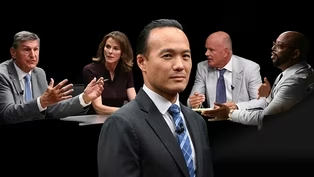
Breaking the Deadlock: AI: Who's In Control?
Video has Closed Captions
As AI advances, who will control whom: people or technology? (30s)
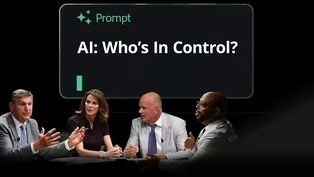
Breaking the Deadlock: AI: Who’s In Control? — Open
Video has Closed Captions
The AI revolution is here. Who benefits, who loses, and who decides? (1m 3s)
 New
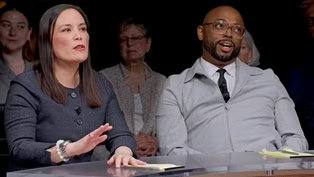
Video has Closed Captions
A protest. An AI prediction. Should officials trust a machine to stop violence before it starts? (2m 52s)
Providing Support for PBS.org
Learn Moreabout PBS online sponsorship New Episode
- News and Public Affairs

Top journalists deliver compelling original analysis of the hour's headlines.

- News and Public Affairs

FRONTLINE is investigative journalism that questions, explains and changes our world.
 New Episode
 New Episode
 New Episode
 New Episode
 New Episode

 New Episode


 New Episode


Support for PBS provided by:
Funding for this program was provided in part by grants from The Rosalind P. Walter Foundation and by a grant from Anne Ray Foundation and by contributions from viewers like you. Thank you. Location furnished by The New York Historical.