

Coming Home: From Shadowland to Spiritworld
11/2/2026 | 1h 24m 46sVideo has Closed Captions
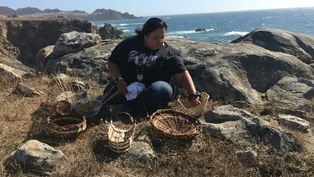
A Kashia Pomo elder guides seekers reclaiming homeland and a mysterious trip to Russia.
After 170 years of displacement, a Kashia Pomo elder guides two young tribal members on journeys reclaiming ancestral land, renewing ceremony, confronting historical trauma, and searching in Russia for ancient connections to their women gone missing.
Problems playing video? | Closed Captioning Feedback
Problems playing video? | Closed Captioning Feedback
Coming Home: From Shadowland to Spiritworld
11/2/2026 | 1h 24m 46sVideo has Closed Captions
After 170 years of displacement, a Kashia Pomo elder guides two young tribal members on journeys reclaiming ancestral land, renewing ceremony, confronting historical trauma, and searching in Russia for ancient connections to their women gone missing.
Problems playing video? | Closed Captioning Feedback
Where to Watch Coming Home: From Shadowland to Spiritworld
Coming Home: From Shadowland to Spiritworld is available to stream on pbs.org and the PBS app.
♪♪ ♪♪ -Close your eyes.
Think back 200 years.
Thousands -- not hundreds -- thousands of Kashia people walking on this land where you're at, going to the coast, going up to the forest area, hanging out right where you're -- literally right where you are standing and sitting right now.
♪♪ [ Birds crying ] ♪♪ -My grandpa says that this place was so special because that's where our people first came to be.
♪♪ Creator took every spirit, and He shot them down into the water, and they ended up at the foamy side of the water.
And that's when the people came up out of the water.
[ Birds chirping ] ♪♪ ♪♪ They call it Kashia reservation, but the old name is Su Nu Nu Shinal, which is "Huckleberry Heights," because if you walk around in the forest here, there's a lot of huckleberries up here.
[ Birds chirping ] We had thousands of people.
And then, before we moved up here, we had only 200.
It's a place where people became stronger.
And now we're back to growing.
When I was a kid, our tribe was so poor.
We lived in a house that had no running water, no electricity.
We had an outhouse, and we had to pack our water.
When I tell people that, they're like, "And how old are you?"
You know?
And they're like, "Wow.
No, that's not right."
And I'm like, "No.
That is right.
That's how we lived."
[ Cat meowing ] ♪♪ Seeing the roundhouse rebuilt signifies a community coming together, because there's so much divide nowadays.
♪♪ I was raised in two worlds.
And when I'm out in the world of this Western society, I have to show people we are not just a history.
[ Chimes ringing ] Is it okay if I record, Grandpa?
-Yeah.
[ Phone chimes ] My name is Otis Orman Parrish.
I'm a member of the Kashia band of Pomo Indians.
I don't know I have a title.
Being an elder means that I'm probably one of the oldest of the tribe.
♪♪ Your great-grandmother, Essie Parrish, she taught me so much about her culture, our language.
So I can teach young people, and that's pretty much what I do.
Last year of my mother's life, she told the story to me.
She said, "You need to remember this and tell the young people."
[ Woman vocalizing ] We were in a place called the before-world.
Everything that exists here now was in this before-world.
[ Singing continues, voice echoing ] ♪♪ [ Birds chirping, squawking ] [ Speaking Kashia language ] -Long before people existed, there were animal people.
♪♪ -[ Speaking Kashia language ] -Of these, one of the most intelligent, craftiest, and powerful of all is coyote.
[ Coyote howling ] -[ Speaking Kashia language ] -Coyote gathers a great number of tail feathers from various birds and arranges them in a circle.
-[ Speaking Kashia language ] -"Let them be people," he says four times.
-[ Speaking Kashia language, voice echoing ] ♪♪ [ Indistinct conversations ] -Suddenly, coyote hears talking and laughing.
-[ Speaking Kashia language ] -These are the first people -- the Kashia people.
[ Wind whistling, man singing ] -[ Speaking Kashia language ] ♪♪ -Coyote gathers everybody and says, "Now you are all ready to go to Earth."
-[ Speaking Kashia language ] ♪♪ -"Human, animals, fish, plants -- You are all members of one family."
-[ Speaking Kashia language ] ♪♪ -"Remember, if you take something from your family, you must give back."
-[ Speaking Kashia language ] -"This is the great law of reciprocity."
♪♪ -The great law of reciprocity.
When we go out there and pick berries and food and stuff, we have to give back, even today.
[ Group singing ] -My Kashia name is Bidu'kele, and it was given to me by my uncle.
♪♪ He gave me that name because he said I was a big kid and I would be a big kid, and I'd be like an oak tree.
I'd just be a strong person.
In our belief, that's what the oak tree is.
It sustained our culture through hard times with the acorns, and the branches are huge.
♪♪ As a young boy, I got started into dancing because my whole family was dancers.
There's a misconception about Native people that everybody dances, and they don't.
You know, it's just like in the modern world -- Not everybody's a dancer.
Some people love it.
Some don't.
And it's the same thing, but everybody's involved.
♪♪ My family was really, really culturally rich.
♪♪ But then when I hit about -- I don't know -- about 13, 14, I just kind of got caught up in the modern world, and it just... I never denounced my culture, always stayed connected, but it just -- I wanted to play football and baseball and all those things that all my friends were doing.
So then I left it, you know, and I just left it behind.
♪♪ And then, 12 years ago, my mother passed away real abruptly.
Three days later, my dad's sister died.
It just kind of put our world into...I don't know.
The Kashia word for this is tulus.
It's a whirlwind, you know?
And it just seemed like... I don't know -- things just didn't fit, and it was a real troubling time for me.
[ Men singing ] ♪♪ Not long after that, I started waking up with these... At first I thought they were dreams, but I was hearing these songs, these dance songs.
I just ignored it, and next night, same thing, and they were kind of intensifying.
They were telling me, "Hey, you know, you're a dancer, and you need to get back.
Your culture needs you now."
In our culture, we don't question.
It's just when they call you back, you just do it.
And those doors will open, and you'll move in that direction.
[ Birds chirping ] -My dad's a humble guy.
He's, you know, pretty quiet in general.
He talks about things that he cares about, but he doesn't go out of his way to necessarily meet people.
It's hard to explain to an outsider when something is right.
-Hey, Kay.
-Hey, Dad.
-[ Speaking indistinctly ] -It's hard to, you know -- Like, we know this needs to get done because it's a cultural thing, it's a spiritual thing, whatever.
And it's really hard to get that across to people.
I think culture is something that's constantly evolving, and I think it's evolving to fit the time.
-Start learning how to do -- You know, we did some, but... This is the mate for that one.
Gonna be in it.
[ Flute plays ] -[ Laughs ] -See, that's what you're... -Let me see that.
-But it doesn't matter where that pitch is, because it's just how they're cut.
-As much as we would like to, we can't live the way that our ancestors lived prior to contact because it's just not possible for us anymore.
And we kind of almost fantasize sometimes about what that life would've been like, to be able to, you know, just live your culture 24/7.
Are those for Kaia?
-Yeah.
Well, these are the... these are the little ones I'm doing for her.
-They're cute.
-I think they work.
[ Flute plays ] -[ Laughs ] You know, I don't know.
Just be unapologetically who you are without having the constraints of society on you to, you know, have a job and to be able to pay your bills and that kind of stuff.
How many whistles do you think you made so far?
-Uh, that work?
[ Both laugh ] This is a personal necklace that I had this... You know, I'm just gonna say it.
I had this vision when I was sitting here in the garage not even thinking about stuff.
But as most of us do as human beings, I was having a little... kind of, like, personal conflict.
Just things that kind of make you think.
So I was sitting here, and this vision, just like if you turned on a TV and you started watching a show, came in my mind about this necklace.
Because it represents that, you know, we're always gonna come to that fork in the road in our life.
♪♪ Since then, I've cut these into abalone, 'cause this will be an abalone necklace.
Even if I travel along through life -- 'cause we all have these things -- if I follow all the guidance from my ancestors and elders, when my days end, I'm gonna be here.
♪♪ The dancing is how we identify with ourself.
So if that was gone, if that was lost, we'd just be anybody.
Just having that there waiting for me when I got my stuff together and things had to happen for the right reason, it was there for me to come back to.
But if my aunt and uncle hadn't been so vigilant about that, where would I go?
I'd be lost, because people try to think, like, being Native is, like, you just throw on this costume and you can do it and it's that easy.
But, you know, it's not.
It's who I am.
I earned the right to put that stuff on.
I earned the right to make it.
♪♪ [ Engine humming ] -You don't own land like you own a car.
I guess you can buy it the same, but you don't own it the same.
We agreed when we came here -- One of our founding principles is shi'o, reciprocity.
[ Birds chirping ] You should probably try and take that Fort Ross Road home, though.
♪♪ ♪♪ -Creation of the world, to us, was from coyote.
[ Coyote barking ] There's a huge mural on the wall, and it's at the ocean -- Sebastopol -- and there's a coyote facing the water.
He has a stick laying by him, and there's a line drawn in the sand.
And what that represents in that story is that coyote used that stick to tell the ocean, you know, "This is the line.
You can't come any farther than this."
♪♪ And he's also a trickster.
And that's kind of how we explain some of the oddball things that happen in life.
♪♪ -I'm blessed to come from a tribe that didn't get removed and taken to Round Valley.
That's not our story.
But for 200 years, we've had to ask somebody else for permission to go to our coast.
[ Waves breaking ] -[ Speaking Kashia language ] ...Dino Franklin.
In my language, I'm saying, "Hello.
How are you?
My name is Dino Franklin Jr."
I am the tribal chairman, or the chief, of the Kashia band of Pomo Indians.
-I've been telling everybody you're gonna be there, 'cause we have a huge issue.
-My brother was the chairman, Reno Franklin.
Believe it or not, the first time that I got involved, he was the one to nominate me.
He's always pushed me out there.
It was something that I believe I was called to do, but it just took me a while to answer that calling.
There's nothing that happens by chance.
-Dino is one of my dearest friends.
I've known him since I was 15 years old.
He was like the big brother to me.
He always watched out for me.
Dino is a counselor, and he just really has grown in his humanness.
He always says, "You were tough.
You were always tough."
-I finally get to, I guess you would say, take on the burdens of the tribe.
Last time I was up here, we had some discussions with the individuals who were here... I don't feel like I'm, like, the smartest person, but I do feel like my heart is there, that I would never want nothing to hurt my people.
Susan, you wanted to talk about some things and you wanted to bring up something with the community.
-You know, the research and restoration for the abalone, it would bring a lot of options that we could do.
-There's a lot of history with our tribal members and the Richardson family.
And it goes back, you know, deep.
♪♪ [ Birds crying ] -My relationship to the Kashia tribe started as a baby.
I went to grammar school with some.
We played sports together.
I hunted with them.
I fished with them.
So I've had a pretty good rapport.
Then, when I ran the store for my dad, they wanted a job, and we needed help.
It was good, although they didn't like having all that groceries in front of them and then come payday, they had to give me all their paycheck back to pay for the groceries.
But it was beneficial to both of us.
I don't like the terminology that the press uses once in a while when they say "Tribe gets back land that was stolen from them."
That's...That's a little stretching it out.
♪♪ My great-grandfather was Herbert Archer.
Went by "H.A."
He was the original Richardson to come to Stewarts Point, in the late 1800s.
The land that H.A.
acquired was land with redwoods on it.
Old-growth redwoods make quality lumber.
He wasn't a farmer.
He was a harvester.
And he wanted timber.
He was a land baron.
♪♪ I recently found a document dated in the late 1800s that says he purchased 160 acres for $10 gold.
-My great-grandfather worked for the Richardsons, and then my grandpa and his generation were good friends with Arch Richardson, and they all went to school together.
All this whole community around here, our families know each other.
♪♪ -Before my dad passed, he put our ranch on the market.
But before it went on the market, he offered it to the tribe.
-Asked us, "What would you guys be able to pay for it?"
And it was a $6 million asking price, so, you know... We're not a gaming tribe.
We're not a wealthy tribe by any means.
-And they just couldn't come up with the money to buy the place.
As much as they'd love to have it, they couldn't come up with the money.
-Land's really expensive.
We never had anybody to help us.
We have no money.
We had no collateral.
We had nothing.
♪♪ ♪♪ We're a matriarchal society.
So in my house, mom is word.
♪♪ My husband and I, Robert Morgan, have been married for 24 years.
He just supports me in everything that I do, you know?
And I the same with him.
Money moves, huh?
-Well, hello, nephew.
The handsome boy.
Old D-Rock.
-We have three children together.
♪♪ We just... We've always been in love.
[ Birds chirping ] I have twin girls.
When my twins were 18 and my son was 16... ...one of my girls, my daughter Susanna -- She was the joy of our family.
You know, she was the laughter.
She was... She was the life of the party, like her dad.
Walk in a room, and she'd make everybody laugh.
She was goofy, funny.
Well, she and her boyfriend were going to the movies.
♪♪ They took a back road, and the back road was kind of gravelly.
♪♪ They fishtailed, and her fiancé lost control of the vehicle, and as they were fishtailing, they went down into a dip in the ground where the water -- They have water on the side.
They hit a culvert, and then they flipped.
My daughter was brain dead on impact.
They tried several attempts to save her, but it was unsuccessful.
So they declared her dead at the hospital.
And she was pregnant with our grandson.
So every year, we just get together and, you know, remember her and take that time to, you know, not be alone with the memory of that night.
So we kind of just get together and have a good time, 'cause she was always a person that always wanted to have fun.
She loved to sing.
So we just try to get together and have a good time in her memory.
[ Singing in Kashia language ] ♪♪ It was shameful to be a Native.
You were called the N word.
You were treated horribly.
So my mom took us away, and we were raised down in Los Angeles.
We moved to Florida.
Then we came back.
You know, my mom remembers being treated so badly because she was Native.
They would call her ugly.
She wasn't pretty like the white girls, and she wasn't skinny like the white girls.
And, you know, and my mom remembers all that.
And, you know, to hear that from my mom and then all of a sudden now, in today's society, they could holler at me from a truck and get out of their truck and try to race over to me and make my husband have to defend me, you know?
Which is really sad for me and scary for me at the same time.
♪♪ -I couldn't go to schools and speak my language.
Even in the '60s and stuff, it was still forbidden.
So in school, I got sent home a couple times.
This is probably -- maybe about my fourth-grade years.
I wouldn't say the Pledge of Allegiance from school.
-I pledge allegiance to the flag of the United States of America.
-I was a young man, and I didn't even know why.
It just didn't feel right to me.
-♪ Go Go Gophers ♪ ♪ Watch 'em go, go, go ♪ -♪ Two little Indians, no others near ♪ - ♪ Colonel, he vows these two soon disappear ♪ -There was this cartoon called "The Go Go Gophers."
-♪ What can two Indians do?
♪ -[ Babbling ] -The Gophers were these Indians, and they were kind of really stereotypical in a way, like, "Him say..." -You got'um plan?
-[ Babbling ] -There was these cavalry guys, and they were coyotes.
-Cha-a-a-a-rge!
-I really loved that cartoon.
I always watched it.
And the reason I liked that cartoon was because it made me feel like it was okay to be Indian.
[ Thud, rumbling ] -[ Laughing ] -I was living in a world where you're watching John Wayne shoot all these bad Indians and the cavalry destroying all these camps, and, you know, in school, they're teaching all, you know, General Custer was his hero.
So you're living in a world where society is telling you you're a bad person because you're Indian.
[ Hoofbeats, indistinct shouting ] But the Gophers always outdid the cavalry.
They always outsmarted them.
They always did something and made the cavalry look stupid.
♪♪ That's the one thing in my life that really made me feel like I was okay.
-Watch our next adventure.
It ought to be a honey, too.
-It impacted me so much.
I tell my kids about it.
They all know it.
I don't think society understands how the actions and the teachings influence and impact kids at young ages.
-I have to believe for myself that there's a bigger plan in play, but... sometimes that's difficult, too.
I look back on everything that we've lost, and, I mean, outside of just land and territory, cultural practices and teachings and... I mean, there's items of regalia that are in a museum that even our elders don't know what they were for.
♪♪ We need to say, "This is the history of our tribe, and this is how we move forward."
♪♪ [ Birds crying ] -[ Speaking Kashia language ] -One day, people see a big bird floating on the water.
[ Indistinct shouting, oars thudding ] -[ Speaking Kashia language ] -The Kashia wonder who these people are.
-[ Speaking Kashia language ] -They have white skin.
-[ Speaking Kashia language ] -The Kashia say, "Well, I don't know what we're gonna do now."
-So the Russians were there, and they used men to help build a fort.
My great-grandmother said they didn't get paid.
They gave them food.
-The Russians came, and we signed a treaty, so they actually had an agreement to stay with us.
-The late-18th and early-19th century saw a period in which quite a trade was developing, especially by Yankee traders who were coming around to the Pacific coast and obtaining sea-otter skins from the Natives, taking them to China, and realizing a tremendous profit.
The Russian interest really increased in coming to California.
-They were so many, the sea otter, they would turn the ocean black.
And they were almost driven into extinction.
I was asked about it -- "Well, why did you guys allow the Russians to come in and do that?"
And I said, "Well, you got to understand.
My people had no concept that human beings can do something like that."
♪♪ -So in 1841, when the Russians left... -...15 of our women left with them.
And they were crying when they left.
My grandmother didn't care too much for Russians, because she said they stole their people.
-There was a lot of intermarriage between both the Russians and the native Alaskans and the Kashia women.
Don't blame them.
Our Kashia women are pretty damn awesome.
-When the Russians left, some of the women married Russian men, so they went back with them.
Some part of the story says that the women were taken.
So, you know, whose story is true, we will never know.
-After that, the Spanish and the Mexicans came in there and just raised all kind of heck.
And they came in and raped the women and just abused them.
-Right around that time, we started to slowly pull away from the coast because we realized that we'd be killed if we went there.
The last 150 years, we had to ask somebody else for permission to go to our coast.
[ Birds chirping ] -The councils kept trying to go after land.
I was on the council at the time, and this opportunity opened up.
There was Bill Richardson.
Him and his sisters owned a piece of land in our territory.
-The family approached us, and they were really serious about selling this time.
And by that time, we had made some pretty good connections with some outside organizations and brought everybody in and started the process of fundraising.
Because symbolically, for us, this could never come out of our own pockets, you know?
This piece of land had to be given back as a way of making that right.
♪♪ ♪♪ ♪♪ ♪♪ -Fort Ross is older than the state of California.
The Kashia as a people are older than Fort Ross, and certainly the land is even older still.
So it's wonderful to be here for the 200th anniversary.
-Draw your rivers and prepare to spring.
[ Shot echoes, group singing in Russian ] ♪♪ -In 2012, the Russians had their 200 bicentennial.
♪♪ Kashia needed a presence at Fort Ross.
This ain't all about the Russians, you know?
That we were here first.
And so we basically took our dance group up there and just, you know, just kind of forced our way in.
All we could do was mow the grass into a circle.
They wouldn't let us take the grass off.
-We're very proud to be here and able to dance on the land our ancestors danced on.
And we're very proud and honored to have the Russian delegation here with us, because that's our history together.
[ Applause ] -I'm very proud to represent our people who came to this land 200 years ago.
But, of course, the Kashia are the first people who lived in this land for many centuries.
And I hope this is the beginning of a new era when Kashia, Russians, Americans will work together and go forward together.
[ Applause ] [ Group singing in Kashia language ] ♪♪ ♪♪ -I mean, for sure, a lot of it was PR, but there is that... that agreement of what the history was.
Our tribal people and the Russian people, we each have our own stories, so we left it as, you know, we're gonna find this middle ground.
And that takes a lot.
[ Laughs ] [ Machinery rattling, group singing in Russian ] ♪♪ ♪♪ -There's a part of history that we know in documents at Fort Ross or documents that we have, and then there's a place where it disappears.
So you have to find every missing part of it.
And the closer you get to something, the further it feels away.
[ Wood creaking ] -The bicentennial celebration was a big deal for us, you know, as a tribe.
And it started in motion some wheels.
-Did you find a parking spot?
-Yeah.
-For the first time in a long time, the meeting of tribal government with Russian government officials.
It opened up doors.
-Thank you so much for bringing this out and preparing all this.
-Okay.
I recommend we start with blini.
It's Russian pancakes.
You should try it.
-Growing up, we were always taught that Fort Ross is a meeting place and also a place to educate each other.
-And it still is that.
-Yeah, it's still that way.
I mean... -I grew up during the Cold War, and, you know, Russians and Americans weren't friends.
And to realize that there was this Russian influence in this beautiful part of California, that was a real awakening, and I had to change the way I think about things.
-You know, I will say the Cold War was only 70 years, but before that, after Fort Ross, Russia and America were allies.
-Our tribe, we're interested in going on a trip to Russia.
I know some members just can't wait.
I mean, we've got 851 members.
We got quite a few that want to go.
-I supported this trip because I see this as a good opportunity to remind Russian people about our history, about our good relationship with Kashia Indians, and I want this relationship to continue.
♪♪ -At first, it was kind of like, "I might not.
I might.
I might not.
I might."
And then, all of a sudden, this poem came to me, and I was like, "I'm going."
-Do you need our passport too?
-Do you need this?
-No.
-'Cause you checked... ♪♪ [ Indistinct conversations ] [ Bells chiming, tolling ] ♪♪ -Somebody will read that poem, and they'll be a descendant from our people.
And just having that connection, it's mighty to me.
It just touches my heart to know that maybe someday one of them will read it and come home.
[ Applause ] To my ancestors who went over into Russia, this is a message to you.
I send out a message on the wind.
I send out a prayer on the rays of the gleaming sun, wherever you may be, and give you a yearning to come and find an embrace that has traveled over a hundred-plus years.
May the song sent out into the world find your spirit and let you know we have come.
[ Applause ] [ Bells chiming, tolling ] -[ Speaking Kashia language ] -Hello.
[ Laughs ] -Zdorovat'sya.
-[ Speaking Kashia language ] I grew up during the Cold War.
-Russians were supposed to be the bad people.
When I got there, I found out different.
They're not.
They're just like us.
And they felt the same way about us, you know, until they actually met us.
-When I went to Russia, I didn't know what to expect.
-[ Singing in Kashia language ] -You know, I was taught that they're these gruff people, and when I got there, they were loving and kind.
And they love reading.
They love history.
They love poetry.
They love singing.
And, you know, that's, like, a part of my heart.
[ Music ends ] [ Cheers and applause ] -Thank you.
-You're very welcome.
Thank you for helping us out.
♪♪ -Kuskov was a very important person in our history, our culture, our religion.
Without him, another people would've came through, and we would've -- We would not have that anymore.
♪♪ ♪♪ [ Drums playing, group singing in Kashia language ] ♪♪ -He was a big part of the Kashia being able to preserve our culture, our religion.
-It was Kuskov who made sure that the Kashia people were protected under that Russian flag.
[ Camera shutter clicking ] -He came and changed our area and changed the history of our people.
♪♪ ♪♪ ♪♪ -Going to Russia was a great change for me.
It turned me into a different person, I think.
In Russia, I found that history is, like, really important to the people and having everything for hundreds of years.
But it brought it to life, like having to run after history.
We ask you to be with us and walk with us today as we pave the way for the future, as we make history for our Kashia people.
[ Flute playing ] -I went because we had artifacts there.
My grandmother said that her great-aunt was one of the ladies that came here.
So I'm here to find anything that's saying that she exists.
♪♪ -The Kunstkamera has the largest collection in the world California Native regalias, basketry.
I don't know if they call them artifacts or what.
But they're not artifacts to us.
They're living things.
♪♪ ♪♪ -When I walked in, I was able to feel all the energy that was put into those items when they were made and just to feel as if those people were there, sitting in that room, waiting for us to come in.
We weren't able to see them or talk to them, but we were able to feel them there with those artifacts.
They're still there.
-The baskets have their own spirit, and when the people were making them, everything that they felt and everything that they thought, if they had positive thoughts, negative thoughts, it went into the coils of that basket.
So it's forever trapped in it.
-You can feel them.
When we die, like, all my stuff will be sent with me.
Everything that I own, no matter how valuable it is in the modern world, will be buried with me.
-My hope is that someday we will find somebody, you know, somebody from that bloodline.
-It's been a while.
Almost a year since we got together last.
-Yeah, huh?
-Yeah.
You know, Dad had some health issues, and then we were kind of doing your own.
-Well, that's what happens.
-The number-one thing is to get your health back.
-Yeah.
-Otis is gonna say a prayer.
-[ Speaking Kashia language ] ♪♪ [ Group speaking Kashia language ] [ Indistinct conversations ] -You need lettuce?
-Oh.
[ Laughs ] -Everybody you're looking at is related somehow.
-Yeah, but it doesn't mean I know who they are.
-I was still back in my old school days, struggling.
[ Laughter ] -This is Grandma.
-Mrs.
Knapp.
-Oh, Mrs.
Knapp?
-Yeah.
-Otis knows a lot of things that a lot of other Kashia people don't know.
He's one of those kind of people where when you tell him something, he remembers.
You can see the skill that his mom had, that he has it too.
He's a great teacher in his own right.
-Do you know who these ladies are, Otis?
-Who's the baby?
Is that Tiny?
-Tiny!
-Tiny.
-Yeah.
-Her oldest daughter.
Wow.
-Teeny Tiny.
-Tiny's the one that died from the... -Lupus.
-Oh, yeah?
-He has a lot of knowledge about Metini because he did that kind of archaeological study and stuff like that.
It's great having him there, and I'm trying to pull as much out of him while he's still here on the earth.
You know, everybody calls that Fort Ross area Metini.
And we saw that sign, and I think that was where you tried to tell them up there how to pronounce the... So I listened to these recordings of Bun, and he said "MEH-tini."
And I was like, "That must be how you say that."
But even then, knowing that, to try to get yourself to use that in the white world and around people that -- or even our own people refused to say it the right way.
They just all want to say mah-TEE-ni.
-I've been corrected by them.
-Yeah.
Kaylee and I finally made the decision together.
It's like, "You know what?
We're gonna use the way the people pronounced it.
And if people are gonna make fun of us, that's just what they're gonna do."
-It's called kneeling place.
-Kneeling place.
Yeah.
-Kneeling place.
-Pretty deep meaning.
You could see why.
You could see why it would be named that.
-We lost so much more than I'm ever gonna be able to pick up.
And I think that's one of the most important things.
I can see in my niece now.
I'm doing everything that I can already just to speak what little bit of the language that I know to her.
[ Man speaking Kashia language ] -Mehp'i.
-Mehp'i.
If it's not us, nobody else is gonna preserve the culture.
-But, you know, she's our future, right here.
[ Laughs ] She may be the next spiritual leader.
I don't know.
♪♪ [ Switch clicks, projector whirring ] ♪♪ ♪♪ [ Group singing in Kashia language ] -I remember Uncle Moss and them said that Hedrick used to be an amazing dancer.
-He was.
They were all.
They were all good dancers, those young guys.
♪♪ See how he dances?
That's the old-time-way dance.
You don't flick the feathers.
-Yeah.
-When you turn, you make the feathers flick themselves.
-Our old people used to say the quick movements of the dancers represent those of a bird as it looks about.
-All the dresses that they're wearing, did Grandma Essie make them?
-The women?
-Mm-hmm.
-Those came in a dream for her.
-Maru means to dream something.
The creator gives the dreams to the maru dreamers.
I am a yomta, a prophetess of the creator.
And when He places a yomta upon this earth to be a witness for Him and to represent Him, He places within that yomta all the mysteries of life.
♪♪ -Your grandmother, Essie Parrish, she was born with the ability to heal people.
She said she was given that gift.
In our tribe, they're called dream spiritual leaders, prophets.
-Someday, the whole world will know about me and the tradition of my people.
-My Great-grandmother Essie was instrumental in holding on to the culture.
And at the time, that was taboo.
And so she took a great risk.
[Group singing in Kashia language ] [ Flutes playing ] -Long ago, the people were very faithful.
I speak of our ancestors.
No matter how long and how far they had to travel, they were there for the dances, regardless of rain, storm, and snow.
They were told by the dreamers to be good, to help one another, and to love your neighbor.
Let us remember and think how we were so proud.
[ Drums playing ] -Being able to look back at those recordings and see my grandmother doing her work and keeping culture, religious ways, and our language alive is one of the things that makes me proud to be who I am.
♪♪ Through my elders, through my Grandfather Otis, just hearing the stories, the teachings that they've given me, I feel like I've always known her.
-The Richardsons were ready to harvest that land.
They felt strongly that they needed money, and the tribe and those that were involved were taking too long.
The problem with them harvesting trees on that land -- and this is where the dilemma came in -- was the minute they cut one tree was the minute all the funders would back out -- conservation groups, people with money to spend, philanthropists, and so forth.
They were very adamant about that.
"You cut a single tree, we're not going to fund this project.
That's why it was so important to come up with a formula that would work for both the funders and for the Richardson family, to keep them sustained up until the point that the actual sale was made.
It came down to final minutes, where the very next day, if there was not going to be any exchange of funding for the Richardsons, they were gonna have to harvest in order to survive the winter months.
Nobody had a solution for that.
-Generations upon generations, they've gone to certain areas along our coastal territory and they have gathered.
And to hear my family tell me that, "Oh, we can't go there 'cause we don't have permission," or, "Oh, we got chased off last time"... Yeah.
It's hard to get land back.
It is, you know?
And it's a hard fight.
But as long as the truth is told and people hear it so it'll never be repeated.
-We'll never know how many of our relatives were murdered for trying to go and do things that they've always done, that they did for, you know, 12,350 years.
♪♪ -And Bill and Uncle Lester felt like we need a place to dance at Metini.
So anyway, we just had the grass.
Well, Brett convinced him to let us take it off.
I said, "They have to remember that dirt is our church.
It's where everything comes from."
Your house wouldn't be your house without the earth that we live on.
So the state parks allowed it.
♪♪ We couldn't take any equipment out there.
Nothing.
It was all with square-point shovels.
♪♪ We had the ladies out there, everybody.
And just, you know, those weeds were just brutal.
When we get everything done, we'll do the edging and clean it up.
-Okay.
That was something that I knew I wanted to be a part of.
♪♪ When I'm, you know, 80, 81, whatever, and I have grandkids and I'm considered an elder of the tribe, I'm gonna be in a position where I can talk about that circle.
Culture is something that's constantly evolving, and I think it's evolving to fit the times.
I mean, obviously we would like to.
We can't live the way that our ancestors lived prior to contact because it's just not possible for us anymore.
♪♪ [ Birds chirping ] [ Chimes ringing, "I Saw Three Ships" playing ] ♪♪ -Yeah.
They go down here, Kaia.
[ Music continues, drill whirirng ] All right.
♪♪ -High five.
Thank you for your help, missy.
-There's a spiritual magic to Christmas.
♪♪ I mean, what else transforms the world?
When human beings can put their soul and their mind into something positive, it's a pretty magical thing.
There is something to it.
-Whoa!
You're beautiful.
-[ Laughs ] [ Fan whirring ] -Whoa!
♪♪ -One year some lady came by, and she invited us to her church.
I said, "Oh, we're not Christians."
She goes, "Well, I was just thinking 'cause you got the nativity scene there, I thought maybe you guys were Christians."
And I said, "Well, I don't have to believe in it to want to do something good for somebody."
And that's why we do it.
This is for our community.
♪♪ -Mom redid him recently.
And I made a big stink about making Santa and the elf on it darker.
Because all of the elves we have and all the Santas that we have and even that reindeer are white, and I think that's messed up.
We need some racial diversity in our display.
So this is the beginning of the racial diversity in our display.
And even then, it still has blue eyes.
♪♪ ♪♪ [ Projector clicking ] -Northern part of the Santa Rosa Valley, a lot of people were killed off intentionally, just not to have Indian people on their land.
-It was gruesome to me.
It was scary.
People had that much darkness in them.
It was more of a realization of what really happened to the Pomo people in our territories.
-Martina phoned me here last night -- What do we know about this?
-Martina wanted to know that?
-Yeah, she wanted to know that.
-Because that would've been so quick.
That massacre was like... They didn't even know it was coming.
-Isn't it, like, Duncan or something that talks about that?
-Yeah.
The guy is Clayton Duncan.
-Yeah.
-Meeting Clayton and hearing his story of his ancestors just hit me in a place that was really hard to hear, just knowing that these people are territories that touch our territory.
All our people know each other.
♪♪ -All right.
This is "The Voice of White Plume."
We're broadcasting out of a colonized town called Clearlake all around Xabatin.
And my colonized name is... Clayton Earl Duncan.
-Oh, this is cool.
Yeah.
-This is what they did to survive.
My great-grandma was 6 years old.
And her first introduction to America's freedom, justice, and liberty and the pursuit of happiness was cannonballs, musket balls, swords, knives.
They came to kill her.
-It didn't happen thousands of years ago.
It happened just a few generations ago, and it's horrible to have to carry that story and tell people the truth, where that story was almost covered up completely.
[ Birds chirping ] -We're here in what they call Upper Lake.
We're on this place they call Bloody Island.
The original name is Badon-napo-ti, and it means "old island."
When I was born, in 1950, we stayed with my great-grandma for four years.
She kind of, like, raised me.
All my life, I heard this story about Bloody Island.
"A quarter-mile west is the island called Bo-no-po-ti.
It was a place for Native gatherings until May 15th, 1850.
On that date, a regiment of the U.S.
cavalry massacred nearly the entire Native population of the island.
Most were women and children."
When I hear stories like that, I think about freedom, justice, and liberty.
-For them only.
-I mean, even people today, they say 40% of America don't even know we exist.
You know, 'cause they don't teach this, right?
So they wanted complete extermination of us so there wouldn't be people like us talking about it and bringing this out.
It makes them uncomfortable.
Okay.
We'll go over to the island.
♪♪ About 400 people were slaughtered.
And it took about five days to gather these bodies, all around this island over here, all around here.
And this part right here is the only open part that, you know, can go.
Okay.
I'm gonna play you the story now.
This story I heard all my life.
-My name is Mildred Duncan.
I'm affiliated with the Robinson Rancheria.
I'm a Pomo Indian.
My grandmother was one of the survivors of Bloody Island.
She was 6 years old when this happened.
[ Gunshots, indistinct shouting ] The soldiers and vigilantes came over to kill the Pomos -- any Pomo they seen.
So they went to this island.
The leader said, "Welcome, my good man."
And he said, "Don't harm my people," and they shot him.
Then they started killing women and children, old people.
The babies, they would stick their bayonets in and throw them in the water.
My grandmother would be telling the story, and she'd be crying.
[ Voice breaking ] I get emotional when I think about what they did to my people.
She was hiding in the tuhrees.
She was breathing through a storah.
And when she seen it was getting dark, her and her mother, the blood was all over, and the water was red.
She said her and her mother came up out of the water.
Everybody was gone.
[ Bird screeching ] ♪♪ It makes me cry just to think of all the things they went through.
I have a big family now, and it wasn't for them saving themselves, we wouldn't have even been here.
♪♪ [ Speaking Kashia language ] Thank you.
[ Speaking Kashia language ] Thank you.
♪♪ -I think in some sense, that changes me to want to tell more of the truth.
In conversations that I have about the history of our people, like, the past, the horrible things, I just don't go deep into that conversation of the horrible part.
And I think that maybe I will dive a little bit deeper, because the truth does need to be told.
♪♪ -I think it's high time everybody knew what happened.
The Indian Protection Act was signed into law by the first governor of California.
But that name, it was wrong.
-It had nothing to do with protecting anything.
It was to get what they wanted legally -- taking land and killing Native Americans.
-Bloody Island was part of a broader policy for exterminating Native people in California.
♪♪ ♪♪ When I think about all the bad things that happened to our people -- Like, it was no different than what happened in other places in California.
But what -- what... made me so emotional about it... It was sorrowful, but it was more like, "I'm getting pissed off about this."
-Mm-hmm.
-I have a lot of hate.
-Yeah.
-But it's not hate...to people.
It's what they did.
-Yeah.
It's hate for what they did.
-Yeah.
It's what they did.
All of us have to live with that -- our ancestors, what happened to them, you know?
-I always teach the kids that what that is is, like, science puts our DNA into a category of, like, the building blocks of humanity.
-Yeah.
-But I tell the kids it's more like a library.
All that suffering that our ancestors did is burned in there, and we carry that in us all the time.
Every emotion that your family experienced, even in the past, is integrated in that DNA.
-History is never just that.
It's actually a living story that still continues on to this day.
[ Birds chirping, group singing in Kashia language ] -So, we were in the backyard, Dino's family and my family, and we were having hand games.
Hand games is an old traditional game.
It's like the greatest game of Which Hand.
[ Laughter ] You have one white bone and one white bone with a black stripe, and you have to guess the black bone.
And you have a set of 10 sticks.
You have to win those sticks by guessing the other people.
So it's a game our people have played for thousands of years.
-[ Singing in Kashia language ] -Sometimes you'll see people wear scarves to cover their eyebrows because their eyebrows give them away.
Some people will sit really still because their movements give them away.
♪♪ The people used to come together like that at gatherings long, long ago, and they would play these games.
It's gambling but in a really fun way.
[ Group singing in Kashia language ] ♪♪ -Just now, I mean, we fight for our tribal members.
We fight for our kids.
We fight for our culture.
We fight knowing that we're fighting the good fight, I believe.
One thing that's been happening huge up here is the movement with getting our people -- you know, breaking out the generational-trauma issues.
You know, I was raised with my grandma.
That was hard.
That hit hard when she finally told me the truth.
You know, she was... she was raped up here in the north.
She was going through her trauma, and in that, she passed her trauma on to us, right?
And that trauma, we talk about generational -- It comes in our stories or our rules.
So I want my kids to hear the truth sometimes, because awareness is better for them in the long run.
It'll be their best weapon.
It'll be their best weapon to keep that from happening to them, right?
-I used to avoid those conversations because once you know and once you have the knowledge of what had happened, you have to put yourself in a different place, right?
You have to teach.
You have to show what is right and what is wrong, and you have to become an advocate.
♪♪ -She just knew so much about life.
As a young kid, I used to think I could do this... do it the same way and... She taught me how to do it, but I should have learned more.
I should have paid attention to what she would tell me.
-Our old people used to say the quick movements of the dancers represent those of a bird... -A lot of times, you know, it just -- Something else got in the way.
[ Group singing in Kashia language ] ♪♪ I thought I knew it all, but I didn't.
[ Projector clicking ] ♪♪ -I just recently did a quilting story.
They wanted to do a wall with MMIP -- missing/murdered Indigenous people.
And so I was thinking of somebody I could do.
What Indigenous person that I know has been murdered or missing or anything?
And... And it took me a long time.
I didn't even know where to start.
[ Drum playing ] [ Woman singing ] It was something that I completely blocked out.
I blocked it away, I put it away, and I forgot about... I guess not forgot.
I just...blocked it away.
My uncle was murdered.
♪♪ And I just remembered seeing him in his casket and how his face was so disfigured, how his face was stapled together.
They took a sledgehammer to his face.
Nothing ever happened with that case.
My cousin was murdered on our reservation.
Nothing ever happened with that.
He didn't make it past 18.
I remembered that one, and that always stayed with me.
But I don't know how I didn't tell.
I really opened my eyes.
And then my cousin was murdered up in Point Arena.
♪♪ I guess we're just so used to just letting all of this rest that it doesn't even shift us until something like MMIP comes up and then we have to look at it.
We have to open those doors and say that this is what's happening to our Indigenous people.
They do not just disappear.
They're murdered.
-We need to stop staying silent.
We need to do the right thing.
We need to protect the women.
And I give prayers that Khadija be found.
-Khadijah Britton.
-Khadijah Britton.
-Khadijah Britton.
-Khadija was taken by her boyfriend by gunpoint, and there was witnesses, and she was never seen again.
Her family had her added to the list of the MMIW.
Those cold cases, federal agents, police do nothing about it.
Sheriffs do nothing about it.
These women are forgotten by everybody except for their families.
[ Group singing ] ♪♪ MMIW -- translated, it is "missing/murdered Indigenous women."
♪♪ This movement is so important.
And it takes me back to those women who left this continent.
It takes me back to those women who left on those boats when the Russians left.
For me, it's become that.
Those first women in our tribe are part of MMIW.
♪♪ [ Projector clicking ] ♪♪ ♪♪ ♪♪ ♪♪ -I went to Russia and while we were there, we came across this one basket, and one of our tribal members said, "Hey.
There are seeds in this basket.
This is a Kashia basket."
♪♪ So, you know, I contacted Reno in the middle of the night.
And he said, "Go for it.
Take out the seed.
Just do it carefully.
Don't hurt the seed."
When we were taking out the seed, four fell out.
-I was kind of thinking, "Well...unh, is this right?"
And then, you know, the other three just jumped.
And so then there was four.
Four is one of our sacred numbers.
At that point, we knew it was time to bring them home.
-It's kind of like a miracle.
Why was it there?
Why was it... And usually when they have baskets like this, they'll... clean everything out.
But not this one.
Why?
Was it meant to be brought to us at a later date?
I would think so.
-Thank you so much.
-Thanks, man.
Thanks.
Right on.
Guys, shake his hand and tell him thanks.
They've come a long ways.
The seeds were returned to us.
We had life that came back to us, was returned to us from Russia, that was hiding inside of the basket for all those years.
♪♪ For us, it was the final piece of the puzzle.
-We reap what we sow.
We've always been good people.
We've always done good.
We've always just kept pushing forward through all the struggles.
And those seeds were like, "Here.
Here's your gift."
♪♪ -I don't think that it's coincidence.
I think there's something bigger at play, and I think that even ties into our dance circle.
If we just stop maintaining it and let everything overgrow, we're the only people that are gonna care, 'cause we're the only people that really care now.
-We worked for a very long time at fundraising, getting everybody together.
Some great foundations that really stepped up and stepped in.
At the beginning of last year, we thought that we were at a place where we could actually start the final process.
So we were to weekly meetings with the landowners and all of the different agencies.
And it's kind of crazy, 'cause we were waiting for the appraisals to come in.
-We had the players at the table.
But it was a simple idea of, "What if one of these groups who are helping the tribe out were to come up with a down payment that would count towards the cost of the land and they could have it into their account by tomorrow?"
And so it was a look around the table like, "Yeah.
What if one of them can do that?"
And the call was made, and an answer came back that yes, we will have that funding.
[ Birds chirping ] -All my life I've been taught that there's these people that take, take, take and take some more until there's nothing left, until the people are almost completely gone.
Their children, their great-grandchildren, and their great-great-grandchildren came together in some way, and they helped us buy this land.
And that's the most beautiful thing, to see that things do come full circle and there is healing and there is forgiveness.
♪♪ [ Blades scraping ] -I look up to Jerry Pinola.
He's spiritual.
He gets time with the creator, and when he gets a vision, he shares that vision.
And part of that right now is what needs to be done at Metini.
-When I do this, most people see dirt and filth.
To us, this is ama c'iskan, it's beautiful land.
♪♪ Our ancestors worshipped here for thousands and thousands of years.
♪♪ -[ Group speaking Kashia language ] ♪♪ -He heard it was time to close that circle, so that circle is now closed.
♪♪ It has completely grown back.
He was led to the new circle.
He was led to that place so that there could be a little bit more privacy.
Because it was time to stop dancing in the shadow of the fort.
-You're in the right place if you're the FBI.
Mobilized Indians.
Brought your help with you, huh?
-Yeah.
-And then I got the barbecue... For my family, it's about this.
It's about the dancing.
It's about the dancing and staying connected.
And I'm just one of those persons that I dance and I make the stuff too.
And I understand through people like my dad and Otis what it takes, you know, what you have to be, the frame of mind you have to be in.
And in today's world, getting to that place -- Because everything I do -- If I'm angry and I'm doing that whistle, my spirit enters into that whistle.
-Good morning.
-Good morning.
How are you?
-I'm good.
Good to see you.
-Good to see you.
Hi.
I'm Laura.
-Sergio.
-Sergio.
-Hi.
Nice to meet you.
Sergio.
Okay.
Your grandson.
-My grandson.
Yeah.
-Anyway, so, you know, things kind of came about, and we just didn't know what we were gonna do.
And, you know, Otis mentioned this about Ya-ka-ama.
Started thinking about it, and I was thinking about my history here and my family.
I could still see my Uncle Lanny and Aunt Bev and Elsie standing right there.
♪♪ Right there, singing.
♪♪ -What?
What?
Oh!
Thank you!
I will hold it for you.
♪♪ -I didn't know how cold it was gonna be.
-Yeah.
-It just seemed to me, the more I thought about it and talked to my wife about it, it's like, "Yeah... ...it's a new beginning."
♪♪ -It came down to a wire.
Finally, we got this one call, and they told us, "We got the last 2.5 you need."
We were so amazed.
I mean, we were speechless.
We were sitting in our council meeting, and we were like, "Wow."
You know, "Wow."
That...you know, people really are good.
People are good still.
-The state pitched in over $1 million.
The county pitched in $2.9 million.
And the rest was raised through private donations.
-We didn't believe it until the day that the papers were signed and it was, like, over in our hands that the land was ours.
I still -- I just can't believe it.
♪♪ -It was so beautiful being up here, huh?
-Yeah.
The doors are wide open.
We could go anywhere.
We could do anything.
-I believe we can.
I really do.
-We have mineral rights.
We have water rights on the land.
I mean, this land has all the food we need.
You know, we took care of everything on this land, and it went out of our hands for so long, and now it's back in our hands, and now we're able to get it back to where it needs to be.
-Get back to our stewardship duties.
-'Cause we can't take everything.
-No, we can't.
And we didn't take everything.
And that's why we continue to practice that even today.
This world is just all about take, take, take.
[ Birds chirping ] -They're gilled.
You can eat these.
-Have you ever had a maitake?
Have you ever found one?
-Just the ones I -- I'm pretty sure they were.
Up on the hill.
-You're getting them all over the place, and this is the right environment right here, is these pines, these fir trees.
See the difference?
The fir.
-Oh, that smells good.
[ Birds chirping ] -I'm not a hunter.
I don't like killing things.
And turkeys molt every year, and if you find out where they like to molt, the herds, you can just walk up and pick these up off the ground.
It took me like five years to amass this many good ones.
Turkeys take care of me, and I appreciate that.
We always shi'o them, give something back.
You know, that's just kind of how our culture is, you know?
[ Indistinct conversations ] [ Drums playing, group singing in Kashia language ] ♪♪ ♪♪ ♪♪ [ Music continues, flute playing ] ♪♪ ♪♪ ♪♪ [ Music ends ] -[ Exhales deeply ] [ Birds chirping ] -Go ahead and open your eyes again.
That's who we are.
[ Group murmuring ] Why is this moment so important to Kashia?
What does this moment mean to Kashia Pomo people, generations before and generations after?
[ Men singing in Kashia language ] [ Down-tempo music plays, singing continues ] ♪♪ ♪♪ ♪♪ -As we watched our lifestyle, our culture, everything be attacked, the erosion of our opportunity, of our place, of our sense of presence, of where we're at, for 200 years, our people did one thing, and it's consistent -- Kashia people stayed steadfast to who they were in their culture, their language, their traditions, and who we are.
And we stand in this place today a complete people.
♪♪ -I'm very appreciative of being able to celebrate on this land that has always been our territory.
But today we're all home.
And, you know, we could say we did it by ourselves, but it took all of these people here today.
And today we truly are, once again, coastal people.
We are a coastal tribe.
We are Kashia.
[ Speaking Kashia language ] And I am so thankful.
Thank you all.
[ Applause ] -So here's the sign.
[ Laughter ] And you will see this sign on both entrances to the property.
[ Applause ] ♪♪ [ Man singing, voice echoing ] ♪♪ ♪♪ ♪♪ -We're gonna go to the ocean without asking anybody.
[ Latch clicks ] We can get resources from the land without asking anybody.
That's how it was originally meant to be when the creator made the land for us.
We have it back.
♪♪ [ Coyote barks ] ♪♪ ♪♪ ♪♪ -I'm gonna be involved in helping keep this place up for the community, you know, which is something, my family and I, we're not afraid of hard work.
For 13 years up at Metini, which is up at Fort Ross, my family and I took care of that dance circle up there and did all the maintenance.
We didn't ask for anything back.
We just did it.
And it was beautiful.
Any time you make a change, it's never easy.
But this necklace, it just reminds me that I'm on this path and everywhere I go in my life till I end up here, I'm gonna come to this fork in the road.
And it's gonna be which way do you go?
Do you go left or you go right?
And sometimes one of them is the easier path, and sometimes one's the rough path.
But you don't learn nothing on the easy path.
If I stay the course and I stay focused on what my cultural plan is, I'll end up back here.
This is the spirit world... with my ancestors.
♪♪ It's where I want to be.
♪♪ -When you ask for something and you have this feeling about that thing being there already, that's the key to prayer.
♪♪ It was taught to me by the spirit world, but also taught to me by the old people too.
[ Birds chirping ] We are still here, alive and kicking.
And we'll continue to be here.
Our color may have changed, but in here and up here, we're still Kashia.
♪♪ ♪♪ -I have no idea what the ship looked like.
But I imagine in 1800 there was a wooden ship.
There's one of the women.
She's leaving, so I'll put a board here.
The world was changing so quickly, so fast, and... we couldn't make heads or tails of it.
♪♪ [ Wind whistling ] The tribe will never rest until we know where these women went.
And there was more than three women.
There was more than their children.
There was so many more.
If we could find them or some bloodline, some descendants, I feel like maybe my soul could rest.
♪♪ ♪♪ ♪♪ ♪♪ ♪♪ ♪♪ ♪♪ ♪♪
Video has Closed Captions
A Kashia Pomo elder guides seekers reclaiming homeland and a mysterious trip to Russia. (30s)
Providing Support for PBS.org
Learn Moreabout PBS online sponsorship











Support for PBS provided by: