

New Mexico & Colorado - Life Along the Rio
Season 2 Episode 2 | 54m 32sVideo has Closed Captions
Pati travels Colorado to New Mexico, finding the Rio Grande and the lives it sustains.
Pati journeys from Denver’s jazz-filled Five Points south into the New Mexico desert. Along the way, she picks up the Rio Grande near its source and follows it down. She finds music, farming, adobe building, and traditions that outlasted centuries.
Problems playing video? | Closed Captioning Feedback
Problems playing video? | Closed Captioning Feedback
Support for PATI JINICH EXPLORES PANAMERICANA is provided by Marriott International, Wells Fargo, La Costeña, Visit Tucson, New Mexico Tourism, Casa Madero, Visit Albuquerque, Arizona Community Foundation, and Tourism Santa Fe.
Support provided by:


New Mexico & Colorado - Life Along the Rio
Season 2 Episode 2 | 54m 32sVideo has Closed Captions
Pati journeys from Denver’s jazz-filled Five Points south into the New Mexico desert. Along the way, she picks up the Rio Grande near its source and follows it down. She finds music, farming, adobe building, and traditions that outlasted centuries.
Problems playing video? | Closed Captioning Feedback
Where to Watch Pati Jinich Explores Panamericana
Pati Jinich Explores Panamericana is available to stream on pbs.org and the PBS app.
Buy Now
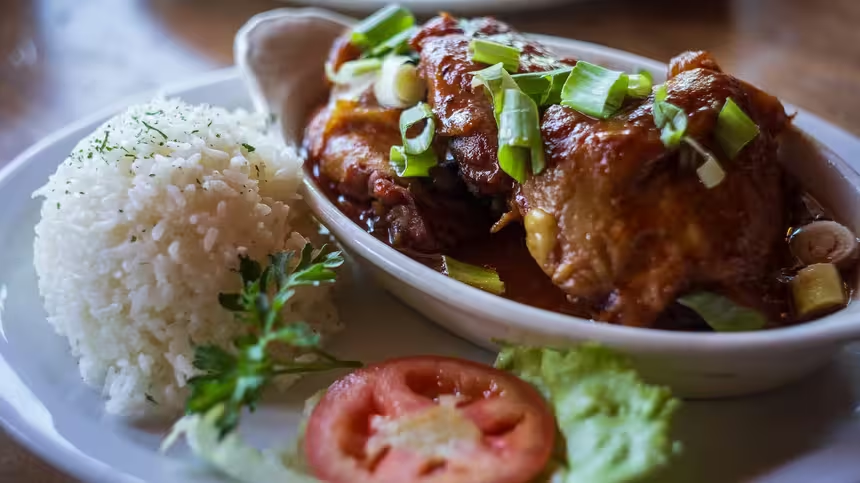
The Pati Jinich Recipe Collection
Find Pati Jinich recipes from this series and more on PBS Food.Providing Support for PBS.org
Learn Moreabout PBS online sponsorship[wind blowing] [guitar music] - Mike?
Hi, how are you?
- Hey!
We can actually go up the hillside.
I've got a pretty cool vehicle.
PATI: This looks like a complicated thing to drive.
It's actually really easy.
Do you want to drive it?
- Can I?
- MIKE: Yeah, it's super easy.
- Are you kidding me?
- MIKE: Yeah.
[engine rumbling] PATI: My life's work has been about forging bonds between my homeland of Mexico and my new home of the U.S.
Oh, yay!
Now, I'm embarking on a journey inspired by the Pan American Highway, a network of roads connecting the Americas and a symbol of collaboration across countries.
Join me as we share meals, make friends, and reimagine what it means to be American.
I'm Pati Jinich, and this is PanAmericana.
[water rushing] PATI: Water has always fascinated me.
It begins as snow high in the mountains and slowly finds its way downhill, becoming streams, rivers, and eventually oceans.
[music] It never asks where a border begins or ends.
It simply keeps moving, adapting, shaping the land and the people who call it home.
As I continue my journey along the Pan American Highway, I'm leaving the wide open landscapes of Montana and Wyoming behind and following the water south from the towering peaks of Colorado into the deserts of New Mexico.
[music] My first stop is Denver, but I'm not here for the ski resort or the camping.
I'm here for Five Points, a side of the city built on jazz clubs, soul food, and generations of African American history.
TENIA RENEE NELSON I'm meeting up with two locals BROTHER JEFF FARD who are part of the artistic and cultural fabric of Five Points.
who are part of the artistic and cultural fabric of Five Points.
The nickname for Five Points is the Harlem of the West.
PATI: Of course.
Okay.
BROTHER JEFF: This neighborhood had a larger concentration of Black businesses and culture and community than Harlem.
This whole environment was music, music, music.
TENIA: This historic place is called the Rossonian, and this is actually where a lot of Black Americans got to hang out here in around the '30s, '40s and '50s.
Local legend musicians played here, as well as famous musicians like Duke Ellington and Billie Holiday and Miles Davis.
BROTHER JEFF: Even though it was a segregated environment, a lot of the patrons inside of the Rossonian were white patrons.
Most of the musicians could not stay downtown.
They could only stay in the homes in Five Points.
How has Five Points changed?
You're starting to see a resurgence of segregation.
As you walk around, you'll start seeing less and less of individuals that look like me.
[piano music] I always tell people that Five Points is always here.
Yeah.
Whether the change and whatnot, I'm still going to rep Five Points.
It's so, so important to me.
BROTHER JEFF: This is a very rich community in terms of culture, in terms of legacy.
And it's important for us to make sure that we keep the continuation going.
DANAE: Thank y'all so much.
We're gonna keep this thing going.
Y'all feeling all right?
Y'all ready to dance and have some fun?
DANAE SIMONE [Danae singing] ♪ You're not, you're not, ♪ [Danae singing] ♪ You're not, you're not, ♪ ♪ You're not supposed to do this ♪ [crowd cheering] Hello, Brother Jeff, how you doing?
- You are everything.
- You are such a star.
The mayor just walked in, the Five Points mayor just walked in y'all.
Y'all make some noise for Brother Jeff, our community OG right here.
[cheering and applause] PATI: Tenia pointed me to the Black American West Museum and to Rod, a retired fire chief who knows this history from the inside.
So this was the home of?
DAPHNE RICE-ALLEN Dr.
Ford, who was the first licensed Black female physician here in Colorado, 1902 to 1952.
TERRI: She attended the delivery of more than 7,000 babies.
- PATI: That's insane.
- Here's one of our babies.
PATI: Oh no, really?
RODERICK "ROD" JUNIEL So, oh, so she brought you here.
So, oh, so she brought you here.
She brought me into the world.
Was this in a hospital?
Was this home visits?
RENEE: She practiced out of her office, as well as house calls, DR.
RENEE COUSINS KING Retired Pediatrician because she was not afforded privileges to serve in hospitals because of her race and her gender.
Take me back to a weekend in the Five Points neighborhood.
What was it like?
TERRI GENTRY The membership of the Ku Klux Klan in Colorado exceeded 50,000.
And every day, our ancestors had to confront something horrific.
And that Ku Klux Klan included the mayor of the city, the police chief of the city, the fire chief of the city.
Most of the council people of the city were a part of the Ku Klux Klan.
[traffic noises] From 1957 until 1969, there were no Black firefighters hired.
And in 1970, the city of Denver was sued.
The judge decided that for every white firefighter hired, you had to hire a firefighter of color.
And I decided this would be a good job for me.
How?
Why?
Because it had good benefits, it paid well, it was challenging and rewarding, and it was something that I thought I would be good at.
- How old were you then?
- 24.
And you rose through the ranks?
Rose through the ranks and became chief of the department.
TERRI: First Black fire chief of Denver Fire Department.
Wow.
It was something that I know I would not have been able to accomplish without all of the support that I got.
Our community was wonderful.
PATI: [sizzling] They sent me to one of the most beloved places to eat in the neighborhood, Welton Street Cafe.
[music] FATHIMA: We've been serving the Five Points community for 40 years, so my shirt says 40 years and Five Points.
- PATI: Is that you?
- That's me.
I'm right here.
You see my name right here?
- Queen Fathima.
- Still a queen.
FATHIMA DICKERSON Co-Owner, Welton Street Cafe So you're born and raised Five Points.
- Born and raised Five Points.
- And your parents came from?
FATHIMA: St.
Thomas.
So when my parents started, it was specifically Caribbean.
That's what put us on the map, are those pates.
PATI: A pate is a fried turnover filled with fish, meat, or vegetables.
Fathima's parents grew up eating them in St.
Thomas.
When they came to Colorado, the pate came with them.
In Five Points, it went on the menu next to the catfish.
And somewhere along the way, they added cheese.
[drum music] [sizzling] FATHIMA: We make the dough, we make everything that's in it.
- And it's soul food.
- Yeah.
That was fast.
Mmm.
The whole Dickerson family has a hand in keeping Welton Street going.
I'm daughter number five.
When you have a lot of kids, you open a restaurant and put them all to work.
[laughs] FLYNN & MONA "MAMA" DICKERSON PATI: Mona and Flynn work alongside their children.
Fathima runs the front.
Her twin brother, FATHIM DICKERSON Co-Owner, Welton Street Cafe Fathim, runs the kitchen.
And their sisters, Cenya and Chereka, help lead the business.
CENYA DICKERSON Co-Owner, Welton Street Cafe CHEREKA: Cenya got a bachelor's in science, CHEREKA DICKERSON a master's in education, and then she got her educational specialist degree to become a principal.
PATI: The sisters have gone on to earn graduate degrees, but they keep bringing their talents back here to their family, the restaurant, and the Five Points community.
That one's calling my name.
Give me that hot sauce.
Mmm, fabulous.
The food business, the restaurant business, is so stressful and hard, and people working for other people, but here is your family.
FLYNN: If we didn't have the neighborhood support like this, I wouldn't have done it.
But being in this business, we go anywhere people know who we are from the neighborhood, and it makes a big difference.
[all singing] ♪ Happy birthday to you ♪ ♪ Happy birthday to you ♪ [cheering and applause] - What is this?
- Oreo.
Oreo cheesecake.
Is this in your menu?
Is this just for you?
No, I just be playing around with stuff and... This is delicious.
I know, they taste them, so they got me making them now.
My doctor tell me don't eat none of this stuff.
He said, don't eat the food you cook.
I said, well, how am I supposed to do that?
How am I supposed to eat?
What does he say you need to eat?
Carrots.
Rabbit food.
[laughter] PATI: Leaving the vibrant Five Points neighborhood in Denver, I traveled more than 4,000 feet up to the serene Rockies, to Breckenridge, a historic mountain town built on gold, found in the Blue River in 1859.
A hundred thousand people came west, chasing it.
Most of them didn't get rich, but they all had to eat, in the snow, far from anywhere.
I want to know what they ate and how a town built on gold ends up living off snow instead.
MIKE SHIPLEY Owner of Country Boy Mine Mike at Country Boy Mine is helping me find out.
What brought you to Breckenridge?
MIKE: Adventure, really.
It was one of those things.
We were living in Australia and thought we'd have to go and live in a mountain place and ended up getting a mine.
Now we mine tourists.
When they first found gold in Colorado, they would pan up and down these rivers.
- PATI: Okay.
- MIKE: And they'd find some gold, and they'd go a bit further up the stream, they'd pan, they'd find some more gold, and they'd pan, and suddenly there wouldn't be any gold.
And they worked out it was actually washing down from the hillside and joining the stream at that point.
And that's when they started looking through the mountains to find gold, going into the mountain to find out where it's coming from.
We can actually go up the hillside and see where the first tunnel was dug.
- So we can go higher then?
- MIKE: Yeah.
Oh yeah, yeah, yeah, let's.
I thought we would go hiking up the mountain.
PATI: This looks like a complicated thing to drive.
It's actually really easy.
Do you want to drive it?
- Can I?
- MIKE: Yeah, it's super easy.
- Are you kidding me?
- MIKE: Yeah.
Yay!
Thank you for the trust.
You don't know what you're doing.
MIKE: I'm here with the door ready to get out.
It's fine.
[engine rumbling] PATI: I told you I learned to drive in Mexico City.
MIKE: Which is great, right?
That's gonna be the most dangerous city in the world to drive.
[rock guitar music] Mike, you have no idea how happy you're making me.
[laughs] This was a ridiculous, ridiculous amount of fun.
Tell me about the gold rush and the impact of mining in the area.
One of the big things was you'd get a sudden surge of people trying to get here desperately.
At first you wouldn't have family here, you'd just have men coming to make their fortune.
Then bit by bit they'd get a schoolhouse, they'd get somebody to teach and it started to build a community.
But again with any big bust or boom that community then starts dropping away.
What's the status of mining today?
You can't mine now.
So mining has stopped.
Most of the easy to get, the big stuff is gone.
It got harder and harder, and then they stopped, and now the laws stop you.
JONATHAN BELLEW Mine Superintendent PATI: With Jonathan leading the way, I'm heading underground to the place where a miner's meal starts to make sense.
I'm curious how working in these conditions shaped not only what people ate, but how food had to adapt to survive the journey with them.
What was life like for miners here?
JONATHAN: Horrible.
These guys were pulling 12 hours a day down here in a damp, dusty, gross environment.
Their joints ached, their lungs started filling up with rock dust.
PATI: Even in these unforgiving conditions, the miners had one thing to look forward to.
Tell me about the food.
The pasty itself was, like, number one.
- PATI: The thing.
- JONATHAN: The thing.
They'd take, like, a pie pastry crust, and they would put carrots, turnips, some sort of protein, and, you know, as I've heard it, if the miner's wife loved them enough, maybe a little bit of butter and some gravy in there, all right?
They would put that in their miner's lunch tin.
The very bottom of that would be coffee or tea, okay?
And then they would have their pasty, and then they would have all of that together, and they would come underground, and they would hang it on the wall underneath their candle.
They light the candle, that candle would heat up the coffee or tea, steaming that pasty.
By dinner time, you've got something warm to eat down here.
And, you know, I speak from personal experience.
A warm meal down here will breathe some life right back into you.
PATI: It is Mike's wife, CLAIRE PREEN Claire Preen, who is hoping to do an elevated homage to CLAIRE PREEN the pasty in a soon-to-open restaurant she hopes will bring its first Michelin star to Breckenridge.
They're so beautiful, and they're still warm.
So the whole purpose of these is to pay homage to the Cornwall tin miners.
And traditionally, the Cornish pasty would have sort of minced meat in it, but this is slightly elevated.
We have a pavé of sweet potato.
We have some local elk fillet.
We have a mushroom duxelle, which has also got some chicken pâté stuff through it.
PATI: That sounds insane.
- MIKE: Just go for it.
- Yeah.
And John's not shy there.
Mmm.
Mmm.
Mmm.
Mmm.
Mmm.
- And the snow.
- Mmm-hmm.
The men who roped this mountain came from Cornwall.
They came for the ore, and they brought the pasty.
Meat and potato folded into dough, carried down into the dark.
Generations later, Mike came from that same place.
Kind of the same promise, same mountain.
I keep heading south to the San Luis Valley, where the peaks open up into wide, flat farmland.
The Rio Grande begins in these mountains, and almost no rain falls here, so every crop depends on snowmelt and the water underground.
Families in this valley have made a living one harvest at a time.
Here in Alamosa, the Cody family farmed barley for four generations.
Then the barley stopped paying.
JASON: In 2005, the farm wasn't doing good financially.
We turned the dairy tank into a malting system JASON CODY JOSH CODY We turned the dairy tank into a malting system and started malting barley for craft beer, which was blowing up at the time.
And so the malting company was the piece that came in and allowed us to keep the farm.
We'd been malting that grain and selling it to other people to use in their beers.
And so we thought, maybe we should have our own beers.
[laughter] For us, the brewery was very much the culmination of everything.
PATI: Talk to me about water here.
This water that we farm with in the valley is all Rio Grande River water.
For Mexicans, the Rio Grande is such a big thing.
- JOSH: I believe that.
- I don't think many people know that it starts deep in Colorado.
Yeah, it flows down here and then they divert it for farming.
People own shares of the water.
PATI: People respect that?
JASON: Yeah, they do.
They have people who control that.
JOSH: This year's a hard year, though.
WAYNE: We're pretty much out of water as far as our usage out of WAYNE CODY Farmer the Rio Grande.
WAYNE CODY Farmer Because the water levels are so low.
Because the water levels are so low.
JOSH: Welcome to the brewery.
This building was actually a shop when we were growing up.
There's actually an image over here you can see on top of this cooler that shows my dad leaning against this pickup right here.
- PATI: What?
- JOSH: Yes.
- This is Little Wayne.
- Yeah, that's Little Wayne.
- Look at Big Wayne.
- Exactly.
[laughs] PATI: It's amazing that you're all involved in the brewery.
JOSH: He's quite a bit to that story as well.
We weren't always here, but my dad had a terrible accident where he suffered a traumatic brain injury while working on the farm.
- What were you doing, Wayne?
- We don't know.
No one was watching.
You don't know what happened and you just lost consciousness?
- No memory.
- Who found you when you had the accident?
JOSH: An undocumented worker.
Yeah, that milked cows from my neighbor.
And they come up on me and it kind of saved my life.
Wow, so you guys came back.
Correct.
It changed all of our lives.
It did, it did.
Bringing our families back to the farm, and there was no question about it.
It wasn't if, it was how.
Your boys love you, Wayne.
JOSH: This is called the mash tun, and the mash tun is currently full of malt that has actually already been used.
Oh, the smell.
So what you're smelling is very unique.
I want to, like, jump in there and have breakfast.
Actually, breakfast is the perfect word, because maltodextrin sugar is the most common ingredient in breakfast cereal.
WAYNE: Just kind of push them in there.
Oh, like a tea bag.
JOSH: When most people consume a beer, they don't realize how far away from the agriculture they are.
We always tell people when they drink the beer, they're tasting us and our partners on tractors, out in the field, irrigation days, late nights.
That's what they're tasting.
They're not just tasting a product on the shelf.
[guitar music] [laughter] KRIS: We've been making sausage for five generations.
So you are the fourth, you're the fifth?
I'm the fourth and that's the fifth.
Oh yeah, that's your son.
So nice to meet you.
Nice to meet you, too.
KRIS GOSAR Owner of Gosar Sausage My great-great-grandfather had worked in meat houses in Yugoslavia.
He had production in the Wyoming area.
And my dad wanted to be a farmer and broke off on his own and moved us to the valley.
PATI: Which one is your favorite?
[laughs] That's hard.
We have a Bavarian, which is from our roots, the Yugoslavian roots.
I think the pork green chili is fantastic.
PATI: Yes.
The chile verde with the aioli is perfect.
And your traditional Yugoslavian sausage with the brown mustard, it's perfect.
And I think here you have two things that show where you come from and how your family has adapted to where you are.
- That's beautiful.
- Thank you so much.
KRIS: Oh, it's a pleasure.
PATI: I don't know how it happened, but after touring the farm and the brewery and eating these locally made sausages, I still hadn't tasted the beer.
- Oh, wow.
- I really like it.
Oh, that's really good.
- It's so light.
- JOSH: Yeah.
It's so fresh.
It's very, like, tangy, acidic.
- Yeah.
- Citrusy kind of?
JOSH: Yes, exactly.
PATI: You guys are pastors in different churches.
Right, yeah.
And you brew beer.
JOSH: Yes, exactly.
Explain.
Correct.
You know, one of the beautiful things about being German is that you get the opportunity to brew beer and work in the church.
Yeah.
Yeah, that's a Lutheran tradition.
[music] PATI: You've been farmers for four generations.
Correct.
But I hear your dad just sold the farm.
JASON: He did.
That's right.
Not by choice.
We were successful in holding on to what we loved for 17 years.
That meant the world to us.
It meant the world to my dad and mom.
JOSH: And getting our parents to a stage where retirement was a realistic thing.
You know, and I think we successfully did that.
Not quite like we hoped to, if you know what I mean.
PATI: Yeah.
Yeah.
JASON: There's no... Tough words.
Were you hoping to keep the farm?
- Oh, definitely.
- For your grandkids?
Oh, yeah.
Yeah, I had no idea it would end with me.
Without these guys, it wouldn't have lasted that long.
You know?
And we made it, I don't know how many... - 20.
- But 12 months.
26.
Well, we made it 19.
Anyway.
It's totally true.
- Yeah.
- It's 100%.
Yeah, that's a true story.
Well, cheers to that.
Cheers to this incredible brewery.
Cheers.
Cheers.
Salute.
And are you so proud of your boys?
Very much so, yes.
Quite a journey.
PATI: The brewery carries on what they started, rooted in this land, shaped by its water, and still bringing family and community together as they find a new way forward.
[music] As I leave Colorado for New Mexico, I make my way to Taos, where the ground itself has been building material for over a thousand years.
Laura and Mateo moved here to build their first home out of it.
Welcome to our home.
That is so beautiful.
So is your home in progress?
- LAURA: Yes.
- Why did you decide to move from Texas to New Mexico?
I got a job working for the governor in Colorado on a universal preschool launch.
And so that was just like a really good opportunity.
That's what took us to Denver.
And we thought, oh, we could live somewhere in rural Colorado.
So trying to find kind of a quieter town like where we grew up.
We are on land that has been historic farmland in the valley.
Before we started building the house, one of the primary things that were here was the acequias.
PATI: Where does the acequia even begin?
So the acequia begins up there on top of the mountains.
The snow melt flows into rivers, rios that start flowing down from the mountains into the valley.
Off the rivers then branch the acequias.
And the acequias are man-made then?
LAURA: Yes, they were channels that were dug, some cases centuries ago.
MATEO: A lot of people think of the water as sacred and kind of holy coming from the mountain.
And these communities have been connected because of the shared water, because of the Rio Bravo, and have decided where to have a homestead or where to build, in our case, an adobe house, based on where the water is available.
And what led you to want to build an adobe home?
There's something kind of spiritual about being in the earth, you know, being sheltered by the earth.
There's something grounding about it.
- PATI: Yeah.
- And when you think about the people who have lived in adobe here for centuries, it's such a forgiving medium.
It doesn't have to fit this idea of perfection.
Like, there can be some texture in the wall and... Every brick is different.
It's not the exact same measurements.
PATI: Adobe absorbs the heat.
MATEO: The idea is that it kind of acts like a battery.
The sun will charge up those bricks, and then on that same kind of lag, it will release that energy overnight when you need it most, especially in the cold winter.
Let's go take a look.
Come on in.
You walk in the front door, and then what goes here?
LAURA: Yeah.
- So living room.
- PATI: Okay.
We'll have a wood stove for the winters over here.
And then kitchen, you can see this kitchen sink has the view.
- Oh, yeah.
- LAURA: Right.
We want to introduce you, Pati, to all of our friends in the community that's going to help us build today.
So do you just call, do you send a message?
Hey, come help me.
Kind of.
Yeah.
We send a lot of text messages.
Yeah.
So this is everyone.
All the people here we invited because they've either already helped us on this project or provided a lot of mentorship.
So these are people we've looked to for help and for guidance, and so we're excited that everyone's here.
We're really honored that they're willing to help us on this, QUENTIN WILSON Adobe Builder & Educator and we're really excited to have Quentin here.
My instructor, Kurt, who's based in Germany but also helps with Adobe in Action, learned from Quentin.
I think Quentin's a good example of the generation that kind of helped keep adobe alive.
What would you say are some things that can help you identify an adobe-loving person.
Like what things do you share in common?
Dirty fingernails?
[laughter] I think earth building people or adobe people are definitely thinking about the natural environment and how it interacts with the buildings.
That perceptiveness, openness to seasonalities, that's a certain type of person.
- You ready?
- Oh yeah.
So I'll take these off.
MATEO: Yeah, time to shed a layer.
[guitar music] LAURA: Hello, mixer crew.
We're going to load the mixer on that side, and then I'll spin it, and then we'll empty into wheelbarrows on this side.
PATI: And this is dirt from here?
LAURA: Yes, from that big pile.
Wow.
That came from the foundation.
PATI: So you're sifting la tierra.
So you're going to mix this with?
- With the sand.
- PATI: It's like mixing two different kinds of flour.
- LAURA: You got it.
- PATI: So you're making like a dough.
- The mortar is like the glue?
- Yeah.
- Okay, okay.
- The glue that holds the wall together.
It's the frosting between the layers of the cake.
Okay.
[laughs] Normally, I kind of point towards the top right, and then it'll mix in as it spins.
Ah, nice.
PATI: I see you have a builder here.
LAURA: Yes.
Are you ready to make some bricks?
PATI: Yes, I want to learn.
So the process is just like when you made the glue, but you're just adding hay.
That helps the bricks have more strength.
We're ready to put the mud into the form, and you really want to pack it to get good compaction around all of it.
One, two, three.
Nice and slow.
Good result.
You got your Texas sheet cake.
Warm?
[piano music] Friends, neighbors, and a few people who just love adobe.
[saw whirring] And a few steps away, Henrietta has been cooking for all of us in an adobe oven.
HENRIETTA GOMEZ At what time did you start today?
I made the dough for the bread, for the bun, at four o'clock in the morning.
Yes.
Thank you, thank you.
Whoa, what a beautiful sight, Henrietta.
Mmm.
Mmm.
If you bake this bread in the oven, it'll come out looking like this, but the taste is different because of the wood.
It's like the juniper or the cedar.
You have two types of chilies.
We have red and green chili.
The red chili is bison meat from my tribe, the Taos Pueblo tribe.
PATI: So it's bison meat in red chili.
HENRIETTA: Red chili and pozole.
Mmm.
Mmm.
HENRIETTA: It's not spicy?
PATI: No, pero está exquisito.
- And the green chili?
- HENRIETTA: Chicken.
This is hatch green chili.
PATI: These smell so delicious.
This is so spicy!
This is much more spicy, I love it!
[marimba music] MATEO: I want to say thanks to each of you that helped with the build today, that have been welcoming us into this community and being great neighbors.
We just feel so, man I'm going to get emotional, [laughs] just feel really, really privileged and really blessed to have so many people that are that have our back and are supporting us.
So, sorry.
[laughs] So, yeah, let's not talk and cry too much, and let's jump into the meal.
And thank you again, Henrietta, and your whole team.
We're really honored to have you here.
HENRIETTA: I want to welcome you.
This is the land of the Red Willow people.
I'm really happy to be here.
I'm happy that I was able to, along with my daughters and Kevin, to be able to prepare this food so that you can enjoy yourselves.
PATI: In Taos, I build with my hands, mixing earth with water, the way it's been done for generations.
An hour south in Española, they're teaching kids to cook the same way, hands in the food.
The program is called Cooking with Kids.
It reaches more than 6,000 children across northern New Mexico.
I believe cooking is a life skill, and the earlier you learn it, the better.
Cooking with Kids invites chefs to come cook with the kids.
It's my turn today.
CARMEN: Cooking with Kids started with a mom.
LYNN WALTERS, PHD Founder of Cooking with Kids She realized that school meals CARMEN BENSON VICTORIA MONTOYA could be healthier and fresher, and so she set out to introduce new, fresh, beautiful culinary dishes and get them on the lunch line.
And unfortunately, a lot of that food went to the trash because she realized it's not just about fresh, beautiful food.
It's giving kids an opportunity to get comfortable trying new foods.
PATI: They needed to be involved.
- VICTORIA: Exactly.
- To be invested in it.
- VICTORIA: Exactly.
- Is it... the kids cook, the kids learn?
VICTORIA: So the kids do it all.
We are just simply guiding them.
We do an introduction, we talk about the country where we are, teach them, you know, a little bit of language.
They read their recipes.
We have a table set up where they do their shopping based on their recipe.
They do it all.
OLIVIA: My name is Olivia.
- My name is Amos.
- My name is Manuel.
Luna.
- Autumn.
- My favorite food is either spaghetti or chicken alfredo.
Mi comida favorita es tamales.
CARMEN: I am so excited to welcome a very special guest to our community, Chef Pati.
Thank you for having me.
Hi, kids!
PATRICIA: The top cuisine in PATRICIA ROMERO Educator, Santa Fe County Morocco happens to be couscous and tagine, Morocco happens to be couscous and tagine, which is two of the things we're making.
CARMEN: The schools really appreciate that we are reinforcing priority academic standards.
We're reading our history, science, you know, what reactions different foods have together.
Geography, because you take them around the world.
- CARMEN: Yes.
- I know this is, like, not intuitive, but if you hold it from the blade, it becomes like a part of your hand.
To chop, you leave the tip on the chopping board so your hand becomes like a machine.
When you chop, you want your fingers to fold.
You don't want the tips to be like that because you risk cutting, but if you go like this, you're protecting your fingers.
CARMEN: The teamwork and just social-emotional learning that kids get from working together.
VICTORIA: You see that confidence boost that the kids have from the beginning of the year until the end.
PETRA: The more rewarding thing PETRA VELARDE that I can see when we are cooking is when one of the kids comes and say, Miss Petra, I do not like lettuce.
I would not eat it.
And then when they are eating it, she's like, can I have seconds?
This is delicious.
I want more.
And because they made it themselves, they eat it.
- PATI: Right.
- PETRA: And they always say, I'm going to make these for dinner tonight when we go home.
- PATI: Oh, that's happening.
- That's a beautiful thing.
[sizzling] CARMEN: These experiences that kids are having, they're bringing it home immediately, and it's impacting the choices they're making now.
But we know as they grow into adulthood, it's really going to carry with them as well around their relationship with food.
And within 30 years, we've had kids that were the very first ones, a lot of them have become chefs.
We hear back from them, we just started the alumni club.
So that... Oh, that is amazing.
So they can connect and help each other out.
Yes, we planted that seed in them.
- PATI: Yeah, yeah.
- VICTORIA: We gave them a safe place for it.
[music] PATI: Chef Victoria wanted to show me around Española.
Wait till you see what we're gonna be on.
PATI: What?
Chef Victoria, what is this vehicle?
VICTORIA: This is a trike native to Española and our culture.
This is what we ride around on a Sunday afternoon.
PATI: So the kids think like you're the coolest teacher and the coolest chef.
Sometimes.
[engine revving] PATI: Next thing I know, we're joined by more of Española's lowrider community.
I enjoyed taking the backseat, but it's time to get back on the driver's seat.
I wasn't going to stop in Santa Fe, but I couldn't drive past it.
A road ran from my hometown of Mexico City to this town for almost 300 years.
1,600 miles following the same river I've been tracking all week.
Santa Fe is where it stopped.
So am I. And I have my little camera with me.
I want to make a mini movie and keep as much of this as I can.
You're in my movie!
Wait, now you're in my show!
- Hi!
- Hi.
Nice to meet you.
PATI: No wonder why so many stories use these as their Shangri-La.
People here are warm and welcoming.
- ¡Hola, hola!
- ¡Hola!
¡Hola!
Gracias por venir al programa.
Bueno, te admiro mucho.
¡Gracias!
She watches the show!
Whoa.
[guitar music] Oh my gosh, that shirt.
Who's getting that shirt?
Who's getting that shirt?
Wow.
The chiles everywhere.
I'm continuing south to Albuquerque, the biggest city in New Mexico, built in a bend of the Rio Grande, where the water was good for farming for centuries before the Spanish arrived.
They built an outpost here in 1706.
I'm going to meet one of the last fresco painters, who spent decades putting the history of this region into wet plaster.
There's so much about this place I don't know, and he spent his life painting it.
FREDERICO: Hi, Pati.
FREDERICO M. VIGIL Fresco Master Come on.
Wow.
Let me just say, I'm in awe of the sound.
Even your mm-hmm is like the mm-hmm.
Wow.
The sacred spot here.
PATI: When you stand in Frederico's sacred spot of his Mundos de Mestizaje, North America's largest concave fresco.
You're surrounded by 3,000 years of history and the cultures that gave voice to this region.
But thanks to a perfect little echo, it's your own voice that comes into focus.
FREDERICO: We were looking for a wall to do a fresco as to who we are.
Somos mestizos.
We're mixed races, mixed bloods, mixed genetics.
There was a gentleman called Mr.
Ed Lujan.
He was the chairman of the board of the center.
So he opened that door and he said, Frederico, here's your wall.
Y a mí me espantó.
He almost fainted.
It was empty and, what can we do?
Tell me a little bit about the process.
Well, it's fresco.
It goes back about 3,000 B.C.
It takes five coats of plaster.
They called it a miracle wall in the beginning because it took two years and six months to have the design approved.
Wow.
This is what history will be for the people of Albuquerque.
This is what they'll know about their history.
Do you feel a heavy weight?
Well, I was fortunate to have seven scholars.
So they're responsible.
I'm just a painter.
Well... Of course, Frederico is far more than just a painter.
He's a storyteller, a cultural historian, and one of my new favorite people.
I'm just going to lay down here.
- That's what they do.
- And they do?
- You can?
- You can, yeah.
PATI: So, Frederico, how long did it take from beginning to end?
To make a long story short, it took about ten years.
- A decade.
- A decade, yes.
So every time you walk into it and you lay down, I'm like, what do you feel?
Life is a dream.
It's a dream that I'm with the master painter looking at his master wall.
FREDERICO: Pati, I would like to invite you to come and see the project that we're working on now at the Convention Center on the history of wine.
PATI: In 2017, the city of Albuquerque commissioned Frederico to paint a massive 2,500-square-foot fresco at the Convention Center.
No, bueno, I feel like now I'm walking into your bakery.
Good afternoon.
[piano music] FREDERICO: A lot of people, we weren't taught our history.
New Mexico is the oldest wine region in North America.
PATI: Frederico, the world knows about Michelangelo and people flock to the Sistine Chapel.
Here is Frederico, the master, and you're doing this incredible work.
Pati, first, that's a major compliment.
It's the same process, that's about as far as we get.
PATI: Fresco begins with the earth, with river sand and slaked lime, crushed together to make a plaster that forms the base of everything.
Before any painting can begin, the wall must be built up patiently, layer by layer, each one smoother than the last.
Three coats all the way around.
- Okay.
- Except where it's painted, there's five coats.
PATI: Before the final coats of plaster are applied, Frederico uses a red pigment called sinopia to do his drawings on the wall to scale.
When you're ready to paint, you make a cartoon.
So these are called cartones.
That's an Italian word.
That's where the original word cartoon came from.
Oh, wow.
Yeah.
If you see the cartoon, this is one that you'll see the image over here.
PATI: Fresco painters use these cartoons to refine their shapes and lines before committing to them permanently on the wall.
¿Y tiene que estar fresco?
- Sí.
Por eso se llama fresco.
- Fresh.
It took me so long to get to it.
[laughs] It's hard to understand.
PATI: By painting directly into the plaster, the colors become part of the wall itself, allowing the work to last for generations.
But Frederico hopes it's more than just his murals that endure.
How many fresco master painters are there?
Now there's not that many fresco artists because it's not being taught anymore in the universities.
So we here in Albuquerque, we're teaching the young, amazing, talented young artists, and we are going to have in Albuquerque fresco masters coming out of here.
What's it like to work with Frederico?
DR.
DAVID NARANJO Apprentice It's incredible.
It's amazing.
FREDERICO: What do you do?
ONEL ENRIQUE ARAUJO REYES Apprentice The biggest thing with it is to not be afraid and to trust in what you've learned.
Being there to learn, paying attention to everything you're doing, that's really what's important.
Cheers!
Cheers.
Salud.
I'm so happy to be here, so grateful.
Lightly, over here where there's a mountain, leave room where you want to put water and sky.
PATI: As Frederico guides me through the process, I can't help comparing it to cooking.
Just like a family recipe, these techniques are passed from one generation to the next.
[music] Continuing my way through Albuquerque, I'm finally visiting a place I've wanted to see for a long time.
Longer than I've been making this show.
I'm Jewish and Mexican, so I've always been fascinated by the Sephardic story.
Jewish communities with roots in Spain who carry their traditions with them across the world.
Casa Sefarad is a place dedicated to people finding their way back to their Jewish past.
ESTEBAN: Bienvenidos, Pati.
ESTEBAN RAEL Director Nahalat Shalom Bienvenidos a Nahalat Shalom.
Muchas gracias por recibirnos.
Es nuestro placer.
Now show me what it looks like inside.
The woodwork is stunning.
ESTEBAN: This was a Baptist church.
We purchased the building and started renovations and Hershel will tell you a little bit more about his inspiration ¡Ay, me encanta!
Feels like you can just be many things here, do many things here.
ESTEBAN: We have 12-step groups.
We have a Waldorf school that comes.
- See.
- I love this space right here because you can see where the church was, no?
And the altar.
And here you have the bima and the Torah.
And having it in one space is very special because growing up in Mexico City, I used to go to the churches with my nana and with my friends.
And then I used to go to the synagogue, to the temple, with my grandparents.
And so it was one or the other.
- In here, it's like... - It's both.
It's both.
And it feels really nice.
Esteban, what has been your journey into this congregation, into Judaism?
I grew up, you know, basically Christian.
My ancestor, Alonso Rael de Aguilar, came from Spain to avoid the Spanish Inquisition.
PATI: He was convert, and then he became Catholic?
Yes, but they still did a lot of very Jewish things.
It wasn't unusual to have like the virgen by the door, but inside of the bulto there would be a mezuzah.
There would be like a scroll inside of the bultos, so you could touch the virgen like as if you were touching the mezuzah.
PATI: In Jewish tradition, a mezuzah holds a handwritten scroll and is placed on the doorway of a home as a reminder of faith and family.
Hershel not only designed the new structure of the synagogue, but he also makes wooden mezuzahs.
HERSHEL WEISS Founder & Director, Casa Sefarad Hola, Hershel!
Finally!
- Muy bienvenida.
- Hi!
Welcome to Albuquerque, welcome to Nahalat Shalom, welcome to my woodshop.
PATI: You have such a beautiful space, and all of these are things that you've made?
- HERSHEL: Yes.
- And that's the entrance?
HERSHEL: That's a model I made for the entrance to understand how it goes together.
The arches are, you know, based on the time period of Islamic Spain, Córdoba.
Trying to give the synagogue a Spanish Sephardic feeling.
PATI: So how long have you been doing woodworking?
Well, I started as a boy.
Born here in New Mexico?
No, I was born in New York City.
How did you grow up?
HERSHEL: I had an Ashkenazi father and a Sephardic mother, and the Ashkenazi culture dominated the Sephardic culture.
PATI: Ashkenaz is the old Hebrew word for Germany.
Sepharad is the Hebrew word for Spain.
Ashkenazi Jews come from Central and Eastern Europe.
Sephardic Jews come from Spain and Portugal and from everywhere where they went after Spain expelled them in 1492.
This Jewish-Spanish connection is something that I have an old, deep yearning for.
Because my mom's first language was Ladino.
PATI: Ladino is Old Spanish mixed with Hebrew.
The Sephardim went on speaking it for 500 years in exile.
Your mom's first language was Ladino.
It's so beautiful.
But she didn't share it with me.
The customs were not shared with me.
I've had to learn.
I didn't know where my people were even were from.
How did you find your space here in this community?
Coming to New Mexico and meeting Spanish speaking Jews.
Also with this history of hiding, which it wasn't exactly the same in my family, but the Sephardic part though, was the hidden, was the partially hidden part.
It's interesting, because here I am with you on your wonderful show.
I had a long thought process about, you know, letting you guys in and came to this understanding that the healing is to go against the secrecy.
I don't think it's a healthy thing to perpetuate secrecy, even though it's a deep cultural thing.
Some things in our cultures are not.
They need to go.
- They need to change.
- I'm with you.
HERSHEL: So, I mean, this is why I'm I'm happy that you're here.
Thank you for having us.
Definitely, Judaism is a journey.
HERSHEL: It is, it is.
And I appreciate you sharing yours.
Thank you for sharing with my team too.
And I know you do beautiful things.
HERSHEL: Do you want to learn something?
- I do.
- I think you know what these are.
Yes.
Did you grow up with mezuzot?
I did, I did, and we have at my home.
These particular ones come from tree branches.
I make it smooth, and then we carve the letter, and that's what I can show you.
- It wants the letter.
- The Hebrew letter Shin, and it stands for Shaddai, which is one of the names of God.
In my mezuzot, I try to carve so that the letter shin conforms to the grain and the shape of the particular branch.
Oh, that's beautiful.
- So they flow.
- Right.
That's a beautiful metaphor.
There's nothing prescribed about how the case has to be except that it has to hold the scroll.
- And protect the scroll.
- Correct.
And that the scroll is in a way hidden in it.
It sort of is hidden, yeah.
Maybe we're just meant to be in hiding forever and ever.
I hope not.
But if Jews are supposed to be in hiding, then you're just saying, here we are.
- Right.
- PATI: This is a Jewish home.
No, this is a good point.
Part of what it says inside is, you shall teach these words to your children and put them as a sign on your doorposts.
- Yeah.
- So it isn't saying, hide it.
It's saying, put it there.
PATI: Yeah.
Yeah, my thinking was so wrong.
It's not hiding.
It's saying, show it.
- So you want to try?
- PATI: Yes, I do.
But I have three sons.
- I'd love to make three.
- Okay.
Am I holding it correctly?
- HERSHEL: Yep.
- Yeah?
You got it.
[music] PATI: Thank you.
I'm so happy you're doing this with me.
This community made me feel like family, and it's serendipitous that they're hosting their monthly Shabbat.
Bienvenidos.
Buen Shabbat, everyone.
This evening is very special.
NOOR Chef & Owner, Nora's Cafe Our friend, Noor, will be preparing an exquisite spread for us.
Welcome, Pati.
Thank you for being here.
WOMAN: Now we come to the challah.
Do you do these every Friday?
Uh, once a month.
There's still one.
HERSHEL: Just made it.
Okay, everyone, this is the Sephardic Borderlands Ensemble.
- Please welcome them.
- Yeah!
[applause] [band playing] [singing in Ladino] [singing continues] PATI: Hello, Noor!
- Nice to meet you.
- So nice to meet you.
Thank you so much for making these peas.
Thank you so much.
So, Noor, you're from New Mexico?
My mom's side is from New Mexico.
I'm Spanish roots, and we have a little Sephardic in us as well.
My dad's side is Palestinian.
- What a great mix!
- NOOR: Thank you so much.
This one is mashikusa, which means stuffed squash.
And then we also have warak enab.
They're stuffed grape leaves with the same mixture of onion, garlic, spices, and rice.
And we have tabbouleh salad, which is with bulgur wheat, green onions, tomatoes, lemon, and oil in it.
And for dessert, there's Dubai chocolate baklava.
MAN: Thank you.
I want to hear more stories.
How did you all find your way into the community?
ADAM HOROWITZ PATI: Adam, are you from New Mexico?
Born in Santa Fe, grew up elsewhere.
Came back to Albuquerque like eight years ago.
This place was the one that made sense to find home in.
There's a really beautiful radical lineage here.
I'm so grateful.
BETH: I grew up in Massachusetts BETH COHEN Cantor and Boston and very traditional conservative Ashkenazi community.
So for me, it was just so fascinating to learn a whole other part of my Jewish heritage that I didn't even know about.
LEILA: My mother comes also to Nahalat Shalom LEILA FLORES-DUEÑAS and she's happy to finally finish finding those roots.
And like for me, I just feel like I finally found home.
[music] HERSHEL: Pati has been here all day.
We've been talking about a lot of things, and one kind of recurring theme has been secrecy and hiding.
And I'm curious for you, like, what has it been like for you to be here all day experiencing this?
It's been very moving.
You know, we travel with our Judaism.
It's a journey that I connected deeply with my grandparents and their stories.
And it's all stories of fleeing and persecution and trying to find a home.
And I feel like in the end, we're all just longing to belong.
And we're all hankering for a home.
And that has been a constant theme as we've traveled through the Americas.
It's the people that have come to the Americas.
But it's also the people that have been here forever that have wanted to make this their home and they haven't been able to.
It's just very humbling to learn and connect with all these stories.
And I think it should bring us all together.
Thank you, thank you, thank you, thank you.
And remembering that we're all really underneath the same.
STEFANIE SOPHIE SHEFIA COHEN Sephardic Service Leader We're not just at this table, but everywhere.
So thank you for helping us to remember that as well.
Cheers.
Cheers!
Salud!
Salud!
[water rushing] PATI: I was meant for all things to meet, but I wasn't meant to be your geography, a line, a border.
I was meant for all things to meet.
This poem by my friend Richard Blanco was written about the Rio Grande itself, but I think it speaks to all rivers.
Though they may be used to divide the land, they unite the people in both ancient and new.
[music] Through my journey here, I've come to realize that the Rio Grande carries far more than just water.
It carries our humanity, our stories, memories, and the reflection of every soul I've met along its shores.
Wow!
Oh, wow!
Let me just say, I'm in awe.
And like the Rio Grande, my journey must continue on.
[Latin music] [Latin music continues] [flamenco guitar music] [guitar music continues] [music continues]












Support for PBS provided by:
Support for PATI JINICH EXPLORES PANAMERICANA is provided by Marriott International, Wells Fargo, La Costeña, Visit Tucson, New Mexico Tourism, Casa Madero, Visit Albuquerque, Arizona Community Foundation, and Tourism Santa Fe.