
Hiseerie
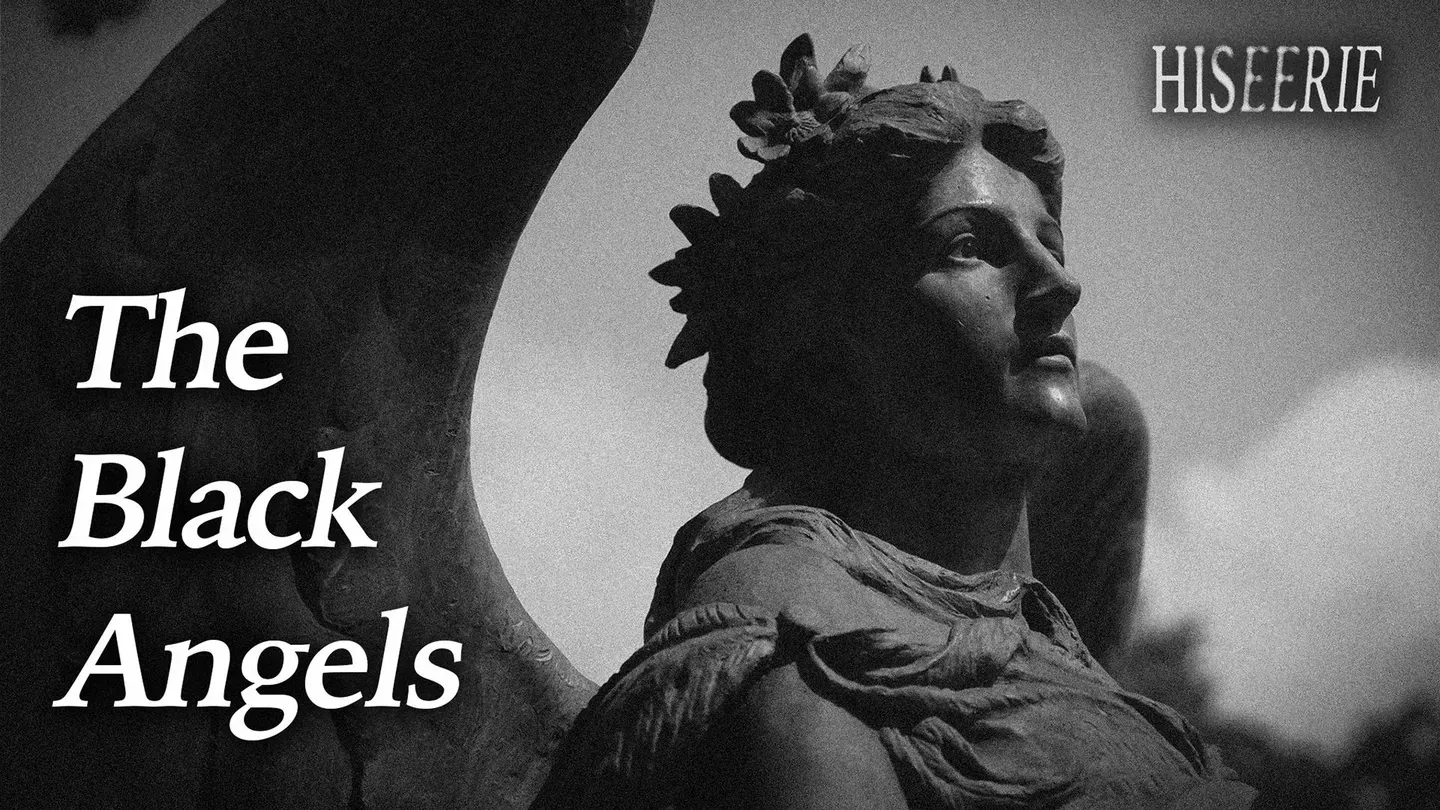
The Black Angels
Season 3 Episode 3 | 25m 8sVideo has Closed Captions
Join us for a deep dive into the history of two statutes that bookend the state of Iowa.
Join us for a deep dive into the history of two statutes that bookend the state of Iowa. One in Iowa City and the other in Council Bluffs, these two black angels share a past of dark secrets and urban legends.
Problems playing video? | Closed Captioning Feedback
Problems playing video? | Closed Captioning Feedback
Hiseerie is a local public television program presented by Pioneer PBS
This program is produced by Pioneer PBS and made possible by the Margaret A. Cargil Foundation and viewers like you.
Support provided by:

Hiseerie
The Black Angels
Season 3 Episode 3 | 25m 8sVideo has Closed Captions
Join us for a deep dive into the history of two statutes that bookend the state of Iowa. One in Iowa City and the other in Council Bluffs, these two black angels share a past of dark secrets and urban legends.
Problems playing video? | Closed Captioning Feedback
Where to Watch Hiseerie
Hiseerie is available to stream on pbs.org and the PBS app.
Providing Support for PBS.org
Learn Moreabout PBS online sponsorship- Hi, I'm Mickey.
- And I'm Ryan.
- [Both] And this is "Hiseerie".
(suspenseful music) (suspenseful music fades) - [Mickey] We grew up watching paranormal investigators, like Zach Bagans on "Ghost Adventures," Ryan and Shane on "Buzzfeed Unsolved," and "Ghostfiles," and Sam and Colby on YouTube.
The semi-casual investigations, people just trying to connect with those who are no longer around, or something we just can't understand, and diving deep into true crime cases.
All throughout history, different cultures have believed in the paranormal.
Divine gods, spirits, aliens, shaman, and witchcraft, just to name a few.
Supernatural occurrences are reported all over the world and have become ingrained into pop culture.
Since the beginning of humanity, people have been questioning the bigger picture of existence.
What's really out there?
Aliens, ghosts, Bigfoot?
Well, we wanna try it ourselves in our own backyard.
So, come with us and explore the paranormal and macabre side of the great Midwest.
- We're from Pioneer PBS in Granite Falls, Minnesota, and we share love for the paranormal and more macabre side of history.
- Tonight, we're gonna share the story of two angels that call Iowa home.
If you enjoyed this episode and wanna support us in our station, check out our Patreon for more behind-the-scenes and full-length investigations.
(foreboding music) First and foremost, this episode does have a trigger warning for murder and suicide.
If you're not up to watching, we'll see you in the next one.
There are two statues nicknamed the Black Angel in Iowa, standing on either side of the state.
- Both angels are shrouded in urban legends and true stories with sad and dark pasts.
(foreboding music continues) The first angel rests near the middle of Oakland Cemetery on a western slope of Iowa City.
- Originally, the statue was cast in bronze.
The material was chosen, so that at the golden hour, the sun would be reflected over the graveyard with a protective benevolence.
Almost immediately after being erected, the statue would oxidize, making the angel appear black.
- [Ryan] The angel stands on a granite base with a bohemian inscription and a projecting slab.
- [Mickey] Under the slab are repositories with the remains of three individuals.
- Within two decades, the statue garnered several urban legends.
- One of the most popular tales is that of an unfaithful wife and her grieving husband.
(foreboding music continues) It was said that a young woman died unexpectedly and her grieving husband commissioned a statue of a white angel to watch over her grave.
However, because the woman was unfaithful in her marriage, it said that the angel turned black because of her sins.
- The legend was expanded to include a reversal of the angel's color.
- [Mickey] The angel was cursed to remain draped in black until an innocent pure woman received her first kiss under the angel's gaze.
This would let the sinner's soul of the wife finally rest, and the angel returned to its original white color.
- In the 1950s and '60s, the angel became a staple to the student body of the University of Iowa.
- At this point, the legend lost some of the purity with the shift of the culture at the time.
Instead of looking for an innocent girl to wipe away the sins of another woman, it became any woman being kissed under the statue was a rite of passage.
Any girl on the campus wasn't considered a true co-ed until you were angel-bonded.
The angel's also been the site of many weddings during the 20th century, which I think is very iconic.
(foreboding music continues) - A different story told the tale of a murdered boy.
- In this version, a minister killed his son when he went astray from the teachings of the church.
During a heated argument, the father had picked up an ax from a woodpile and struck his son.
Because the father's actions were considered righteous in the eyes of the church, the ax did the damage, but left no mark, causing the death to be classified as natural.
- No one suspected the father of the crime, so he began to just live his life in freedom.
- However, the guilt weighed on him so heavily that he was looking for any way to cleanse himself of his sins.
He had the statue of a white angel built over the grave of his son, but much like the unfaithful woman, his sins were so dark and so heavy that the angel turned black overnight.
- Some students would come to claim that the inscription said, "The black angel walks to mourn this misdeed every," and then whatever date that they needed to put in place.
- Which like, this is just a side note, but this is literally saying that killing your son is the equivalent to cheating on your husband.
And that's crazy.
- That's absurd.
(Mickey laughs) - It's the same, same level.
A minister killing his child with an ax is the same as maybe unfaithful woman, which it doesn't really matter.
Neither of these are true, but still it's upsetting.
When the minister died, it said that his soul was rejected by both heaven and hell, so he became stuck in between in the angel's eyes, always looking over his mortal sin.
(foreboding music continues) - Another story of the angel's origins is a woman who led a life of sin and was buried under the angel.
Overnight, the angel changed from white to black in revolt of her dirtying the elements.
- Being a woman sucks, like literally.
(both chuckles) Other superstitions that come with the angel is that if you kiss under the angel's gaze at exactly midnight on Halloween, you will die in seven years.
Another one and probably the most popular one today is that if you kiss the statue, it'll result in instant death.
The true story of the angel is much more simple and just tells the tale of a grieving mother.
This was a regular family in the late 1800s, so there's not many exact dates or really specifics on when things happened or how things happened, just that they did.
This is a combination of all the historical documents that we could find to give the story as much justice as we could.
Teresa Feldevert immigrated from Czechoslovakia to Iowa City, arriving in New York in sometime during November of 1877.
- She came to America with her son, Eddie Dolezal, who she had with her first marriage.
- In Czechoslovakia, Teresa had been a practicing physician, but when she came to America because of her heritage and her gender, her medical license was revoked.
She ended up working as a midwife for the rest of her life.
Eddie died on January 14th, 1891 at the age of 17.
- He was working as a drug clerk at Boerner Bro's Drug Store when he died.
- On Friday the 9th, Eddie left work complaining of feeling sick.
When he got home, it was found that he had contracted spinal meningitis.
It only took Eddie five days to succumb to his disease.
- Originally, Eddie was buried in a different spot in an Oakland Cemetery using a tree stump monument for a grave marker.
- The stump is inscribed with Eddie's name and a poem beneath reading, "Like a bud just opening, commenced my life to be, but death came without mercy, without pity.
The Lord had sent for me.
I was not granted time to bid adieu.
Do not weep for me, dear mother.
I am at peace in my cool grave."
After her son's death, Teresa would move up to Minnesota and marry a man named Joseph Picha, and then would move west to Oregon for a few years before turning back to Iowa City.
Back in Iowa, she met a man who was a wealthy farmer and pioneer named Nicholas Feldevert, who she ended up marrying until his death in 1911.
She worked with August Geringer, a publisher in Chicago, who put her in touch with Mario Korbel to design the monument.
- [Ryan] The monument ended up costing $5,000 which is close to 85,000 in today's money.
- When the monument was delivered, Teresa refused to pay because it didn't fit their arrangement that they had originally agreed upon in their contract.
The contract said that they needed to also reproduce the stump that marked his original grave.
The matter eventually would go to court, and they would side with Korbel, meaning that she did end up paying the full $5,000.
- The statue was officially recorded as being erected in 1918, but locals claim that as early as 1911, it was erected as soon as it was delivered.
- The body of Eddie Driscoll and the ashes of Nicholas Feldevert were both moved to repositories under the statue.
Six years later, Teresa would pass, and her dying wish was that her ashes would be split, half going to her homeland and half being buried with her husband and son.
It's debated heavily if she was truly penniless when she died or if she had her money split between different charitable organizations, but she is listed as a donor for the local library as well as a few other businesses.
Because when she passed she had no money or living family members, her ashes remained unclaimed in the undertaker's parlor until almost two decades later when her ashes would eventually be buried next to her husband's.
- On the base of the monument, there's an inscription in Bohemian reading, "Rodina Feldevertova," which translates to "The Feldevert family."
- [Mickey] Below the phrase is Nicholas Feldevert with 1825 to 1911, and then Teresa Feldevert, 1925 to nothing.
Her death date has never been added, still, almost a hundred years later.
The second inscription also written in Bohemian translates to, "My labor completed and only to the world's good.
My hands are folded, my head sinks, my spirit to distance flies, where after hardships, my lasting reward awaits."
- The second angel is in Council Bluffs, Iowa.
- [Mickey] Its home is right outside Fairview Cemetery, and although it's not a grave itself, it still is a memorial monument.
This angel was also cast in bronze.
- [Ryan] It holds a basin of water in one hand and wears a crown of laurel.
The angel stands on a ship's prow with garland swag, carved in pink marble.
Under the platform is a reflecting pool.
(calm mysterious music) - [Mickey] Ruth Anne Dodge was married to Grenville M. Dodge.
who was a general in the Union Army.
- [Ryan] He served as an intelligence chief to Ulysses S. Grant.
- [Mickey] The Dodge's had three daughters, Anna, Lettie, and Ella.
The sisters would commission the memorial monument after their mother's death.
- The imagery is from a reoccurring dream that their mother had before she passed.
- Ruth had the same dream three consecutive nights where she was sat alone on the rocky shore of a lake.
She described it as peaceful, but with a brooding stillness.
She said it was as if nature had held her breath while she sat there.
- [Ryan] The water in front of Ruth was foggy, and a boat would sail through the thick fog towards her.
- The boat was covered in roses and although it had no sail, it looked as if it would move steadily towards the shore.
- Standing at the bow of the boat was a beautiful young woman.
- Ruth said that the woman seemed to be staring right at her, but yet through her at the same time, and that she was holding a Grecian urn full of water.
The woman on the boat would use her empty arm to try and invite Ruth to take a drink from the urn, but Ruth refused the first two nights, and when she did, the vision would disappear.
- On the third night, when the woman on the boat offered, Ruth took the drink.
- She told her daughters that as soon as the water touched her lips, it was like she was freed from all her burdens, younger and uplifted.
She believed that the water had given her immortality past earthly life.
- Ruth and Dodge would die only a few days later in 1916 from cancer.
- The daughters hired Daniel Chester French, a sculptor, to make the monument for their mother.
- The angel was erected in 1920.
(calm mysterious music continues) - Before diving into the creation of the angel, let's cover some urban legends around it.
One of the first urban legends was that the stairs change in number depending on if you're approaching or walking away from the angel.
- There also seem to be effects on technology.
Some report that their batteries are drained instantly, and others report that they've lost footage or files are corrupted.
It said if you touch the angel, it will put a curse on you, although no one can really give an answer as to what kind or how long it's gonna last.
- Regardless if the angel is cursed or not, or even if it comes alive at night, the story of its creation is full of trauma and sadness.
(calm mysterious music continues) Daniel Chester French was an American sculptor who was known as one of the best artists in contemporary America.
The same year that the Ruth Ann Dodge Memorial was erected, French sculpted the seated Abraham Lincoln for the memorial in Washington DC.
So it's kind of a big deal.
- That's, yeah, that's a major one.
French was a prolific sculptor and has many pieces across the United States.
He used many of the same models for many of his pieces.
- One of these models was Audrey Munson, who posed for nine to 11 of his sculptures, including the Black Angel.
(calm mysterious music continues) Audrey Munson is credited as America's first supermodel.
She posed for almost a hundred sculptures throughout her life.
She has 12 statues still standing in New York City alone.
- In 1915, a newspaper released this quote about Munson, who was only 24 at the time.
- "Long after she and everyone else of this generation shall have become dust, Audrey Munson will live in the bronzes and canvases of the art centers around the world."
Munson's parents divorced early in her life, moving around for a while before settling in Washington Heights in New York City.
- At 17, Munson would work on Broadway on smaller parts.
- One day in 1909, Munson and her mother were window shopping when photographer and socialite, Benedict Herzog, asked her to pose for him in his studio.
If she had done this in the '60s or '70s, she'd be dead.
That's a serial killer line.
(Ryan chuckles) But this is apparently '99, so it's okay.
- [Ryan] Herzog would introduce her to his friends in the art world which led to her national success as an actress and model.
- Munson would say that Herzog had proposed to her in order to protect her from the art world, but he died suddenly after intestinal surgery in 1912, right when she was about to accept.
- In the mid-1910s, Munson would work on various films and continue as model.
- She's one of the first two women to appear fully nude in a film that wasn't labeled as pornographic.
Munson's was filmed first, but the other came out a few months before hers.
The film was released in 1915 under the name "Inspiration," and Munson portrayed the nude model for a sculptor.
- The release led to conversations around censorship law.
- There was a reluctance to ban the film because if they did, then it was believed that they would have to ban all nude Renaissance-era art.
- The only film she has appeared in that has survived till today is her second film, "Purity," which was released in 1916.
- It was believed to be lost, but recovered in 1993 in the French National Cinema Archives where it was in a pornography collection.
- The rest remain lost media.
In 1919, Munson's life would take a turn for the worst.
(calm mysterious music continues) - Munson and her mother had moved into a boarding house in Manhattan owned by Dr.
Walter Wilkins.
Wilkins became obsessed with Munson, and on February 27th, 1919, would kill his wife, Julia, by bashing in her skull.
- [Ryan] Wilkins told the police an elaborate story of three burglars that broke into his home.
- Many of the details that Wilkins had told the police were proven to be false pretty fast in the investigation.
This included that he had told the police that the burglars stopped to drink whiskey out of his special cups, which when the investigators looked at were still coated with dust.
- The objects he claimed to have stolen from his house were all found in their respective places.
- Wilkins had claimed that the only physical altercation he had with the burglars was being hit upside the head with a blackjack.
However, he ran to his neighbor's house in order to call police with ripped and bloody clothing.
(calm mysterious music continues) Like, (laughing) what the are you doing?
During the investigation, police found no evidence of robbers trying to escape the area.
There was no footprints, no tire tracks, and even checked for boat sightings in the area.
The murder weapons, a bloody lead pipe and hammer were found wrapped in blood-splattered newspaper clippings.
Wilkins said that he had never seen the paper before, but the rest of the pages from the edition were found in his coat pocket.
- It does get worse.
Oh, my gosh.
(Mickey laughs) - Like, I genuinely, what did he think he was doing?
Like, it would have better if he was just like, oh, I got home.
Like it would have been better (laughs) if he just said I wasn't there.
- Oh, my gosh.
- Keeping the rest of the newspaper in your possession.
- Not even in your possession, like on your person.
- Yeah, and there's no witnesses or anything.
Like there's no reason he didn't say.
'Cause like if you want to think of like someone saw him leaving the scene or something, but no, like he introduced the first witnesses when he ran to his neighbors.
- Right.
- No one else knew what had happened.
Yeah.
He's a really smart guy.
(laughs) - Wilkins' official statement to the press was, - [Mickey] "I know I am under police suspicion in connection with the murder of my wife.
She was a good wife, a good nurse, my companion, and the person from whom I got my money."
- There it is.
(Mickey laughs) Oh.
This guy is a gentleman.
Julia had come from a wealthy background when she was killed.
Wilkins told the police that her will had been written in 1903 before the couple had met.
- Because of this, her money would have been split between relatives and not gone to Wilkins.
However, this was another lie, as Wilkins was in possession of her will from 1915, which stated that he was her main beneficiary.
- Wilkins attempted to flee the area, but was picked up in Penn Station.
In an attempt to go unnoticed, he would shave his signature lamb chops.
- It was rumored that Wilkins committed the murder to free himself for marriage with Audrey Munson.
During the investigation, it came to light that Dr.
Wilkins had actually been married twice previously.
Both women accused him of infidelity and laziness.
As a doctor, he never treated patients, but instead worked as a snake oil salesman.
A Battery Park police officer recognized Dr.
Wilkins during the trial as a man who was selling water from the ocean as sterilized deep sea salt mineral water.
He would sell his creation for $2 a bottle, which in today's money is $32.
- [Ryan] Wilkins was tried and convicted for the murder of his wife and sentenced to death on the electric chair.
- [Mickey] Before his execution date, Dr.
Wilkins hung himself in the bathroom of Mineola Jail.
- [Ryan] Despite Munson strongly denying any relationship with Dr.
Wilkins, the story quickly became a scandal.
- Munson and her mother would move to Canada for a short while, hoping that the scandal would disappear.
- However, it marked the end of her career.
(calm mysterious music continues) - By November 1920, she could not find work anywhere as an actor or a model and had taken up a job as a ticket taker at a dime theater in Syracuse, New York.
- [Ryan] The following year, Munson released a series of 20 articles covering the anecdotes of her career and warning to other models.
- These articles all turned out to be ghostwritten, which came to light during a publicity stunt gone wrong.
Agent and producer, Alan Rock, claimed publicly to be paying Munson $27,500 to star in a movie about the articles.
However, Munson was never paid and barely knew anything about the production, which didn't really exist anyway.
Munson filed a lawsuit against Rock, but the court ultimately took Rock's side as it was labeled as a publicity stunt which I still don't really understand.
So, I still don't, I don't get it at all.
I don't.
- No, I don't get that either.
It was clear.
Munson was falling into a depressive state and desperate for the life that she had.
- During the summer of 1921, Munson would lead a nationwide search with the help of a newspaper publication to find the perfect man to marry.
In August, she concluded the search and said that it was okay because she didn't want to get married anyway.
She was a baddie, okay?
In October, Munson was arrested at Royal Theater in St.
Louis on moral charges for her nudity in the 1916 film that had been recently re-released.
On May 27th, 1922, Munson would attempt suicide by ingesting a combination of mercury and bichloride, but would ultimately survive.
- [Ryan] Audrey Munson's fate would be to live a long and lonely life.
- [Mickey] In 1931, Munson's mother would petition for her to be committed into a mental asylum.
- She'd be admitted to a psychiatric facility on her 40th birthday.
- For nearly 65 years, Munson remained at the St.
Lawrence State Hospital for The Insane.
She was being treated for depression and schizophrenia.
- She died at 104 years old.
- During her 65 years there, Munson would only ever have one visitor.
She was buried in New Haven Cemetery in New Haven, New York.
She only received a headstone in 2016, nearly 20 years after her death.
Because the scandal had happened at the same time when the Ruth Anne Dodge Memorial was supposed to be unveiled, the family canceled any celebration or public fanfare about the event.
The angel just simply showed up one gloomy, rainy day and has been there ever since.
If you enjoyed this episode of "Hiseerie" and want to support us or our station, you can find more behind-the-scenes content and full-length investigations on our Patreon at Patreon.com/Hiseerie.
- If you like this video, like, comment, and subscribe down below.
- (thuds) Ow, we did it.
(laughs) Sorry.
Aren't those good stories though?
- They are.
- And I had never heard of any of them.
I never even heard of the Black Angel, even though I've been to both of those.
I've like been to Iowa City, and I've been to Council Bluffs.
- I'm surprised I've never heard of the one that is like so well known with the University of Iowa.
- [Mickey] Exactly.
I never heard of any of these.
- Mm-mm.
(suspenseful music) (suspenseful music ends) (foreboding music) (foreboding music continues) (foreboding music continues) (foreboding music continues) (foreboding music continues) (foreboding music fades)












Support for PBS provided by:
Hiseerie is a local public television program presented by Pioneer PBS
This program is produced by Pioneer PBS and made possible by the Margaret A. Cargil Foundation and viewers like you.