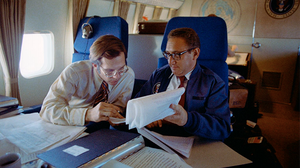
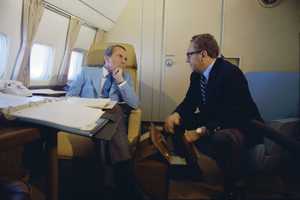
Intent on disrupting North Vietnamese supply lines, Henry Kissinger and Richard Nixon authorized the secret bombing and invasion of neighboring Cambodia in 1969. The campaign set off a series of events that destabilized the nation—and paved the way for the Khmer Rouge's rise to power.
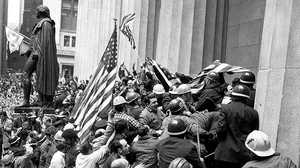
At the dawn of the 1970s, blue-collar workers were re-shaping New York City's skyline. But they were also building an America that would leave them behind.
In December 1969, the United States Selective Service conducted its first draft lottery since World War II, fueling a nationwide firestorm between those conscripted to serve and those who found a way out.
Did you know that just decades after the Civil War, a multi-racial political alliance won control of North Carolina? In the 1890s, Black North Carolinians saw an opportunity to “fuse” together with the largely white Populist party for common goals. Enter: the Fusion government.
Professor at George Washington Law School Mary Anne Franks and Professor at University of Southern California Steven J. Ross speak with historian Adriane Lentz-Smith about whether the First Amendment makes Americans more vulnerable to political extremism.