‘Like Being Put on a Death Row’: Where to Watch FRONTLINE’s Documentary on the Haiti Deportation Crisis
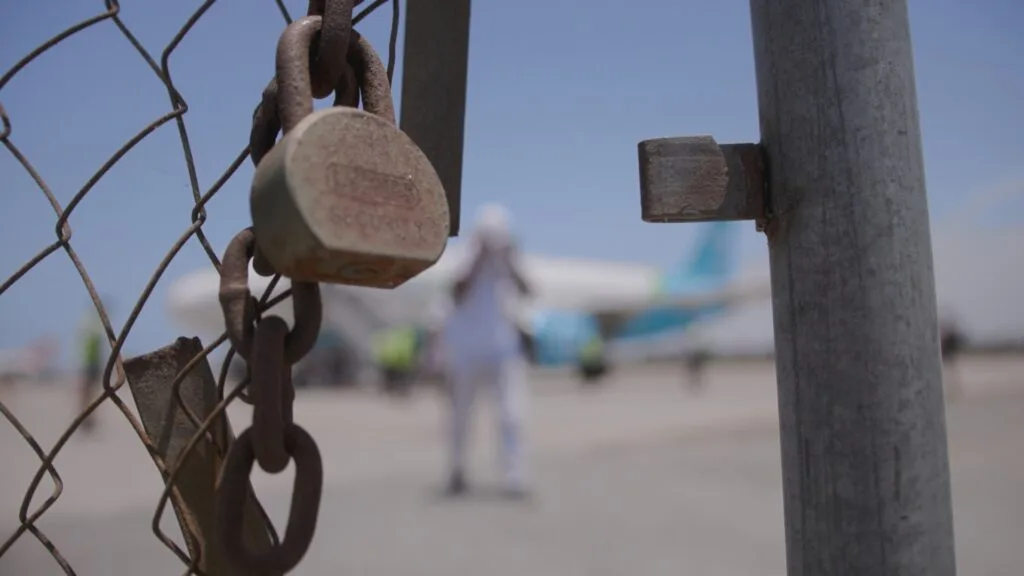
Amid ongoing gang violence and instability in Haiti, the Trump administration ended immigration protections for Haitians in the United States. We investigated how the policy shift is playing out in the U.S. — and the realities on the ground in Haiti.
October 22, 2026
Share
Earlier this year, as part of its immigration crackdown, the Trump administration revoked the temporary legal status of hundreds of thousands of Haitians who had fled violence and upheaval for the U.S.
The administration said Haiti was now safe enough for them to return home.
But what is the reality on the ground?
A new FRONTLINE documentary goes inside Haiti in search of answers — and it’s streaming for free now in the PBS App, on YouTube, and at pbs.org/frontline.
From Adam Desiderio and Sebastian Walker, the award-winning filmmakers behind Strike on Iran, Haiti Deportation Crisis is a rare, up-close look at the extent and impact of gang violence in Haiti, the efforts to combat it, and the rising fears among Haitians in the U.S. of being sent back.

Walker and Desiderio were the first foreign journalists to film with the Gang Suppression Force, a newly-established international military mission backed by the U.N. and countries including the U.S. They were also the first foreign journalists on the scene after gangs carried out a major attack that made headlines around the world.
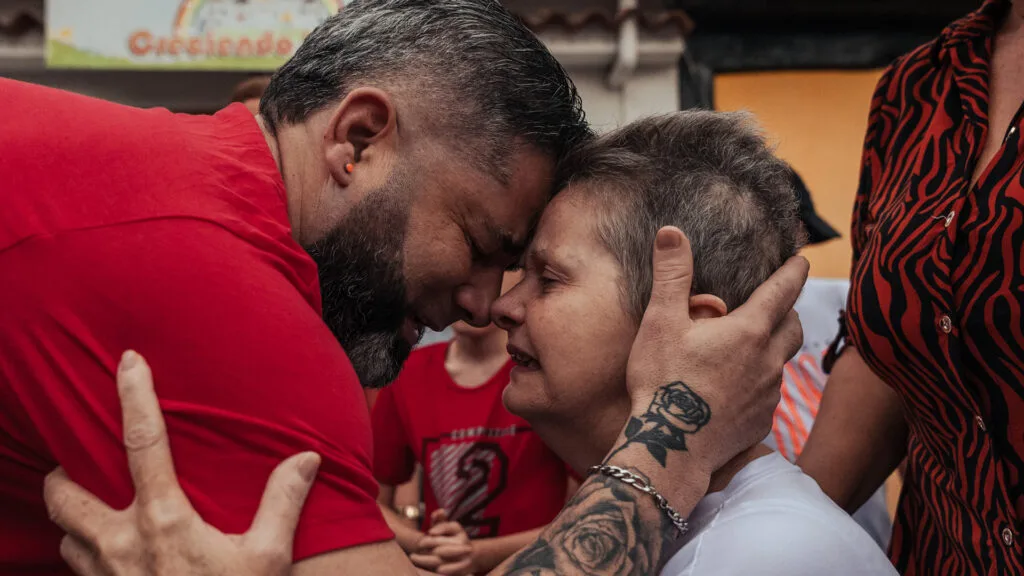
“The kids are traumatized,” one woman told Walker and Desiderio of the impact of the attack, in which at least 47 people died. “They’re not in their right minds because people were killed right in front of them.”
In vivid detail, Walker and Desiderio’s reporting shows how armed gangs now control large parts of Haiti, how massacres and mass kidnappings are devastating families, and how the Gang Suppression Force’s efforts to stem the violence are playing out so far.
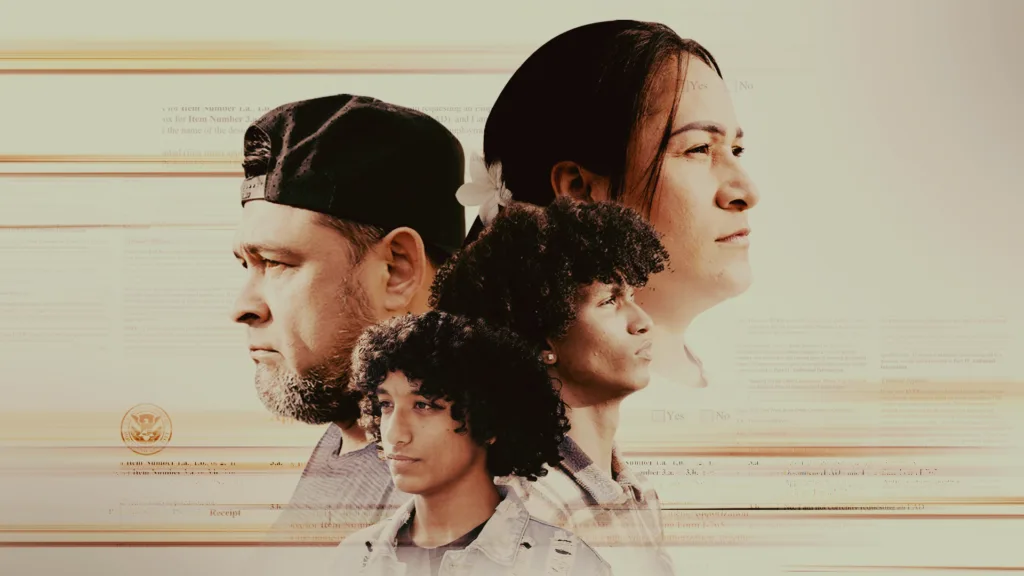
Unfolding against the backdrop of the end of Temporary Protected Status (TPS) for Haitians, what emerges is a visceral documentation of life inside a country many Haitians in the U.S. warn is more dangerous than ever — and where they fear they’ll be kidnapped, ransomed, or killed if they’re deported.
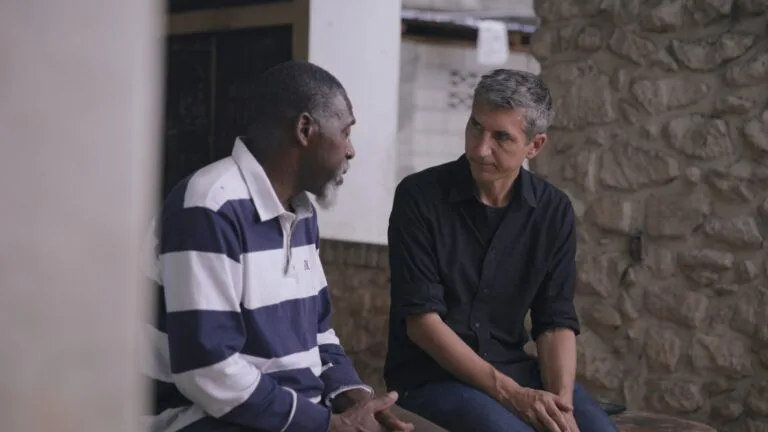
“It’s like being put on a death row,” one Haitian man living in Springfield, Ohio, told FRONTLINE.
As Haiti Deportation Crisis explores, the U.S. government first granted TPS to Haitians in 2010 after a devastating earthquake destroyed much of the country’s infrastructure. Since then, successive U.S. administrations have renewed it, as Haiti faced widespread hunger, the assassination of its president, and escalating gang violence.
The Trump administration has said the protections have gone on too long and are no longer justified, with U.S. Secretary of Homeland Security Markwayne Mullin telling Haitians in the U.S., “If you want to rebuild your country, go back and rebuild it.”
At the same time, the administration has acknowledged that “gangs have taken over” in large parts of Haiti, called the security situation there “dire,” and supported the efforts of the Gang Suppression Force.
In the documentary, Walker asked a former Trump DHS official, Jonathan Fahey, about the apparent contradiction.
The U.S. had provided displaced Haitians with protections for 16 years, Fahey said, and other prosperous nations could step up and take Haitians in.
“To the extent there is a moral obligation, the United States has certainly more than met our obligation,” Fahey said. “The United States has done far more than anyone to address this, not only humanitarian aid, but other types of things to make the lives better for the Haitians in Haiti, but also the Haitians in America.”
Now, the threat of deportation looms for those Haitians in America, and the documentary examines how the end of TPS is impacting communities in the U.S. with large Haitian populations. A prime example is Springfield, Ohio, where around 15,000 Haitian immigrants have arrived since 2020, and residents are sharply divided about whether they should be able to stay.
One resident’s perspective echoed Fahey’s: “You know, the old saying at the bar: you don’t have to go home, but you can’t stay here,” he said. “You know, we have given 16 years of benevolence.”
Another resident, a pastor, advocated for the rights of Haitians in Springfield — and for a better understanding of the reality on the ground in the country they fled.
“I really think that if most Americans really understood what’s going on in Haiti, their hearts would change,” he said. “But they just, they don’t realize how bad it is.”
Watch the Full Documentary | Haiti Deportation Crisis
Haiti Deportation Crisis premiered Oct. 20, 2026, on PBS and online. Watch the documentary in full anytime at pbs.org/frontline, in the PBS App, on YouTube and on PBS Documentaries on Prime.Journalism powered by your support — and accessible to all.
Watching our “Scammed” documentary revealing how the global scam industry operates? Exposing the truth is where accountability begins. Help keep reporting like this paywall-free for everyone with a gift of $5 or $10 today.

Senior Digital Writer, FRONTLINE
Support provided by:
Learn More
Related Documentaries






Latest Documentaries




Related Stories
‘Nobody Has Safety’: What a Gang Attack Reveals About Life in Haiti Today
Haiti Deportation Crisis
Related Stories
‘Nobody Has Safety’: What a Gang Attack Reveals About Life in Haiti Today
Haiti Deportation Crisis
Explore
Policies
Teacher Center

Jon and Jo Ann Hagler on behalf of the Jon L. Hagler Foundation
Corey David Sauer
Koo and Patricia Yuen
FRONTLINE is a registered trademark of WGBH Educational Foundation. Web Site Copyright ©1995-2025 WGBH Educational Foundation. PBS is a 501(c)(3) not-for-profit organization.
Funding for FRONTLINE is provided through the support of PBS viewers and by the Corporation for Public Broadcasting, with major support from Ford Foundation, and Fialkow Family Foundation. Additional funding is provided the Abrams Foundation, John D. and Catherine T. MacArthur Foundation, Park Foundation, Heising-Simons Foundation, and the FRONTLINE Trust, with major support from Jon and Jo Ann Hagler on behalf of the Jon L. Hagler Foundation, and Corey David Sauer, and additional support from Koo and Patricia Yuen. FRONTLINE is a registered trademark of WGBH Educational Foundation. Web Site Copyright ©1995-2026 WGBH Educational Foundation. PBS is a 501(c)(3) not-for-profit organization.