Guy Fawkes Day Explained
Every November 5th, Brits gather for bonfires, fireworks, and other festivities to mark Guy Fawkes Day. "Remember, remember! The fifth of November." But what exactly is being celebrated? The holiday dates back more than 400 years to a failed plot to assassinate England’s King James I and blow up the House of Lords. The history has even found its way into episodes of MASTERPIECE shows. Read on to discover the story behind Guy Fawkes Day, how it’s celebrated today, and which MASTERPIECE series have drawn inspiration from the holiday.
What is the History Behind the Guy Fawkes Holiday?
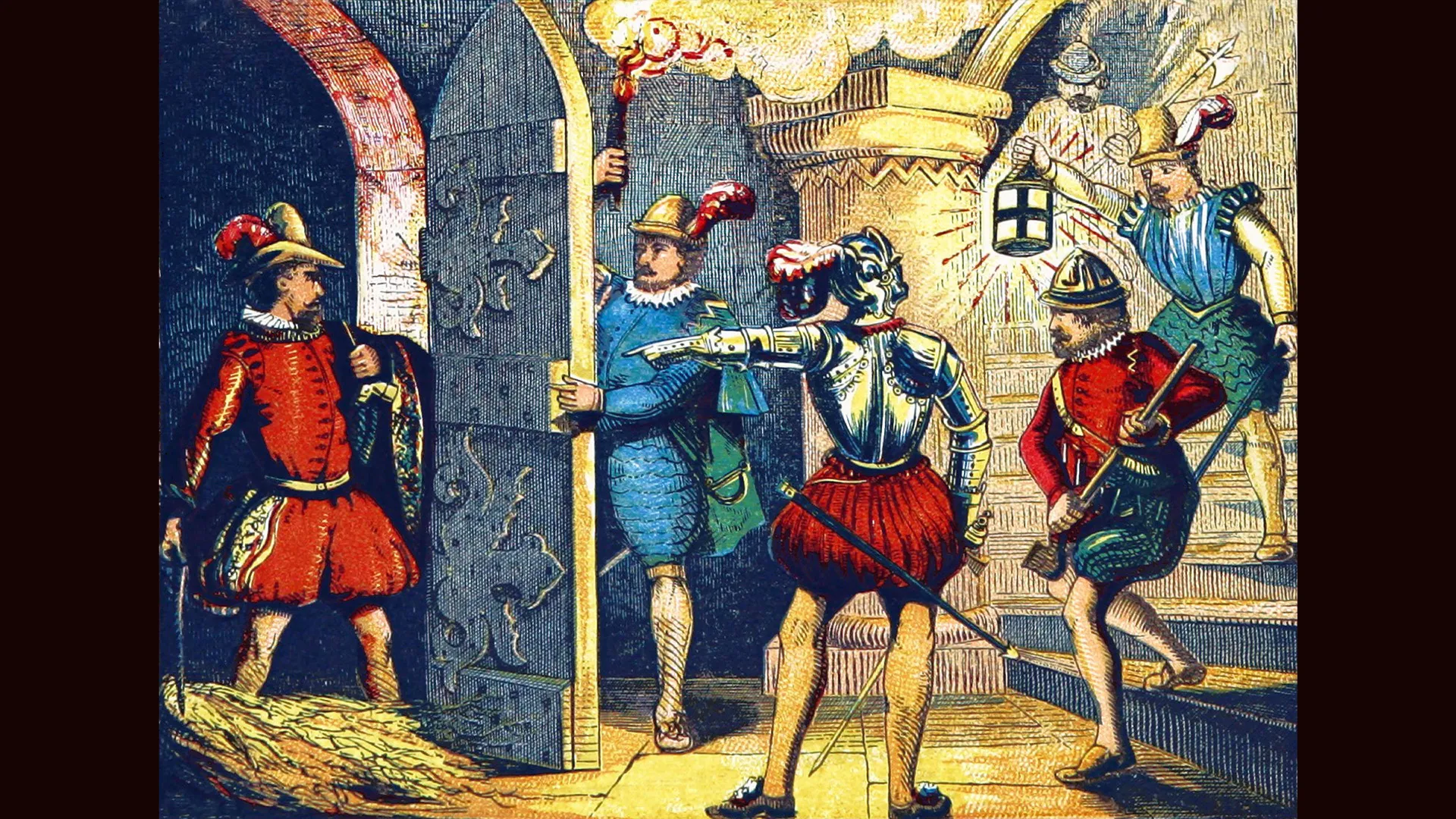
Guy Fawkes Day (also known as Bonfire Night) is an annual British observance held on November 5th to commemorate the foiling of the 1605 Gunpowder Plot. A group of Catholic conspirators, including Guy Fawkes, tried to blow up the Houses of Parliament and kill King James I, a Protestant monarch. The plan was thwarted when guards discovered Fawkes in the basement beneath Parliament with 36 barrels of gunpowder.
To understand the conspirators’ extreme plan, it helps to recall the religious tensions of the time. Following Henry VIII’s break with the Roman Catholic Church in the 1530s, English Catholics faced increasing restrictions on their faith. Under successive Protestant monarchs, Catholic worship was restricted, priests were imprisoned, exiled, or executed, and people who refused to attend Anglican services faced fines. Many Catholics hoped for greater religious freedom, but those hopes were repeatedly frustrated. The Gunpowder Plot was not the first attempt to challenge England’s religious policies, but it became the most infamous.
Who Exactly Was Guy Fawkes?
Guy Fawkes was not the mastermind behind the 1605 Gunpowder Plot, but he became its most enduring symbol; a hated traitor who, centuries later, took on the unlikely status of a folk anti-hero. Fawkes was a 35-year-old professional soldier who had fought for Catholic Spain against Protestant Dutch forces in the Netherlands. His familiarity with explosives made him a valuable recruit. Plot leader Robert Catesby enlisted Fawkes to oversee the gunpowder stashed beneath Parliament and light fuses on the day of the planned attack.
The Fate of the 1605 Conspirators
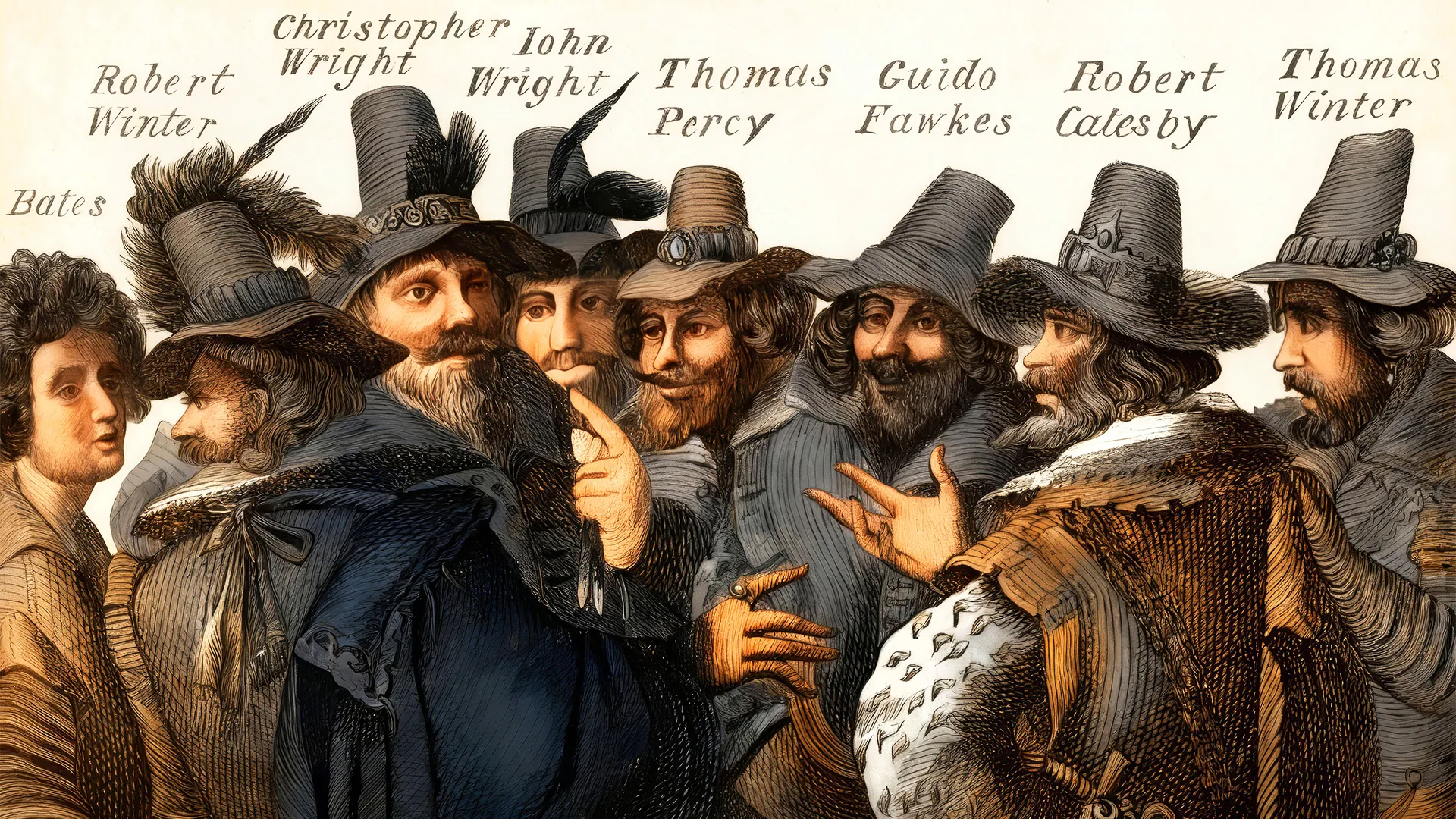
Guy Fawkes was arrested in the early hours of November 5, 1605, after being discovered in a House of Lords cellar with the barrels of gunpowder. Under torture, he eventually revealed the names of his fellow conspirators. In the weeks that followed, some of Fawkes’s compatriots fled, others were killed in armed clashes with authorities, and those captured faced trial and brutal execution. Convicted of treason, several were hanged, drawn, and quartered.

The Evolution of Guy Fawkes Day Celebrations
Parliament almost immediately made November 5 an annual day of thanksgiving to mark the failure of the Gunpowder Plot. The Observance of 5th November Act called for special church services, while bonfires became a symbol of celebration. Over time, however, Bonfire Night often took on a darker, anti-Catholic tone, with crowds burning effigies of the plotters and even the pope.
During the 19th and 20th centuries, the holiday gradually shifted away from religious division, evolving into a communal celebration. Today, Guy Fawkes Day is marked with fireworks, bonfires, and sparklers. Families gather to watch the displays, eat traditional treats like parkin cake and toffee apples, wear masks, and sometimes still burn straw-stuffed effigies known as “Guys.” What began as a political and religious observance has become a familiar fixture of British autumn.

MASTERPIECE Shows and Guy Fawkes Day
Several MASTERPIECE programs have aired episodes referencing the 1605 Gunpowder Plot.
In Endeavour Season 2, Episode 3, “Sway,” the city of Oxford prepares for Bonfire Night in early November 1966. The holiday serves as the backdrop to a storyline about a serial killer. While the city focuses on fireworks and bonfires, the killer takes advantage of the noisy public crowds and festivities to target women, strangling them with silk stockings.
In Miss Scarlet Season 1, Episode 3, “Deeds Not Words,” private investigator Eliza Scarlet goes undercover in a radical Victorian-era suffrage group, which Scotland Yard is monitoring. As she investigates, Eliza uncovers the women’s plot to plant a bomb inside Parliament, drawing parallels to the 1605 Gunpowder Plot. The threat is described as “Britain’s biggest plot since Guy Fawkes.”
In Sherlock Season 3, Episode 1, “The Empty Hearse,” Sherlock Holmes returns to London two years after faking his own death. His brother Mycroft needs help investigating an imminent, terrorist attack planned for Guy Fawkes Night. Meanwhile, John Watson is drugged and kidnapped, then hidden in a massive bonfire pile. Sherlock and Mary Watson eventually rescue him, and Sherlock discovers that the plot involves a subway car rigged with explosives and parked directly underneath the Houses of Parliament.